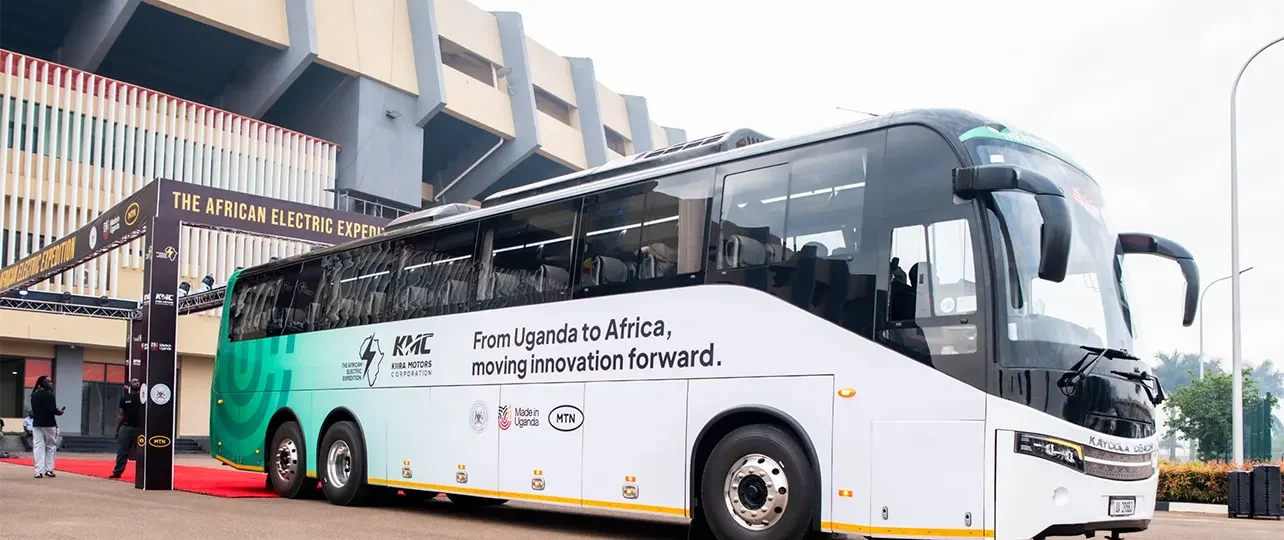

ON a morning in late 2025, a sleek electric bus rolled out of Kampala and pointed its nose southward. It had 7,125 kilometres to travel through six nations — Tanzania, Zambia, Zimbabwe, Botswana, Eswatini, and finally South Africa. There was no fossil fuel in its engine. There was no European badge above its windscreen. It was built in Jinja, Uganda, by Ugandan hands, from a vision incubated in a Makerere University laboratory. When it crested the slopes leading toward Table Mountain and descended into Cape Town, it carried something more than passengers. It carried proof.
That proof has since been priced. Kiira Motors Corporation has secured a contract to supply 820 electric buses to South Africa – a deal valued at $250 million. It is the largest single export contract in Uganda’s automotive history. It is arguably one of the most significant intra-African manufacturing deals of the post-AfCFTA era. And for those who have long argued that Africa must trade with itself to industrialise itself, it is the argument made flesh.
“African solutions can solve African challenges — redefining the future of transport, climate action, and industrial growth.”
Kiira Motors Corporation
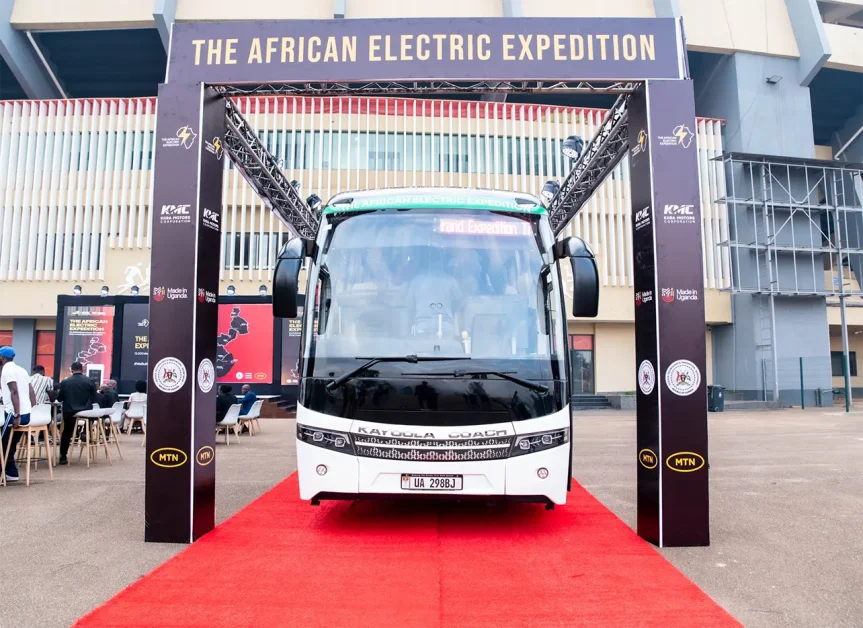
The deal did not arrive by accident. It was engineered – literally and commercially – through a daring marketing expedition that doubles as a stress test few manufacturers anywhere in the world would attempt. The Kayoola E-Coach 13M departed Kampala on 20 November 2025 under the banner “From the Pearl to the Cape.” It crossed mountain ranges and arid plains, navigated congested border posts and variable road conditions across half a continent, and arrived in Cape Town with its performance data intact: an energy efficiency of approximately 0.84 kilowatt-hours per kilometre, validated across 7,125 kilometres of real African terrain.
The commercial result was swift. During engagements in Johannesburg, Kiira Motors secured commitments for the sale of 450 electric buses — the first tranche of what has since expanded into the full 820-bus, $250 million package announced by Uganda’s Minister of Science, Technology and Innovation, Dr Monica Musenero Masanza. The minister did not name the South African purchasing entities – that detail remains to be formally disclosed – but the contracts, she said, have already been signed.
The Bigger Picture: AfCFTA in Action
It would be a mistake to read this deal only as a Ugandan success story. It is an African one. The Kayoola expedition was explicitly framed as a validation of the African Continental Free Trade Area’s objectives – to accelerate intra-African trade in manufactured goods, not just raw materials. For too long, the continent has exported primary commodities to the Global North and re-imported them as finished products at multiples of the original value. The Kiira-South Africa deal inverts that logic. A landlocked East African nation manufactures a high-technology product and sells it to the continent’s most industrialised economy. The trade flow runs South-South, not South-North.
The numbers are instructive. Africa’s intra-continental trade as a share of total trade has historically lagged far behind that of Europe or Asia. AfCFTA was designed to change that calculus by reducing tariff barriers and harmonising trade rules across 54 nations. But treaties alone do not build factories or move buses across borders. It is enterprises like Kiira Motors – state-backed, technically credible, commercially ambitious – that breathe life into the architecture.
The trade flow runs South-South, not South-North. That is the point. That is the revolution.
Made in Uganda: The Industrial Backstory
Kiira Motors Corporation is a state enterprise established to champion Uganda’s domestic automotive value chain. Its lineage is academic: the Kiira Electric Vehicle Project was conceived at Makerere University’s Centre for Research in Transport Technologies, and Africa’s first electric vehicle rolled out of that collaboration in 2011. Four years later came Africa’s first hybrid vehicle. In 2016, the continent’s first solar electric bus. The Kiira Vehicle Plant in the Jinja Industrial Park was formally commissioned on 27 September 2025 — just weeks before the Cape Town expedition departed — representing nearly two decades of sustained public investment.
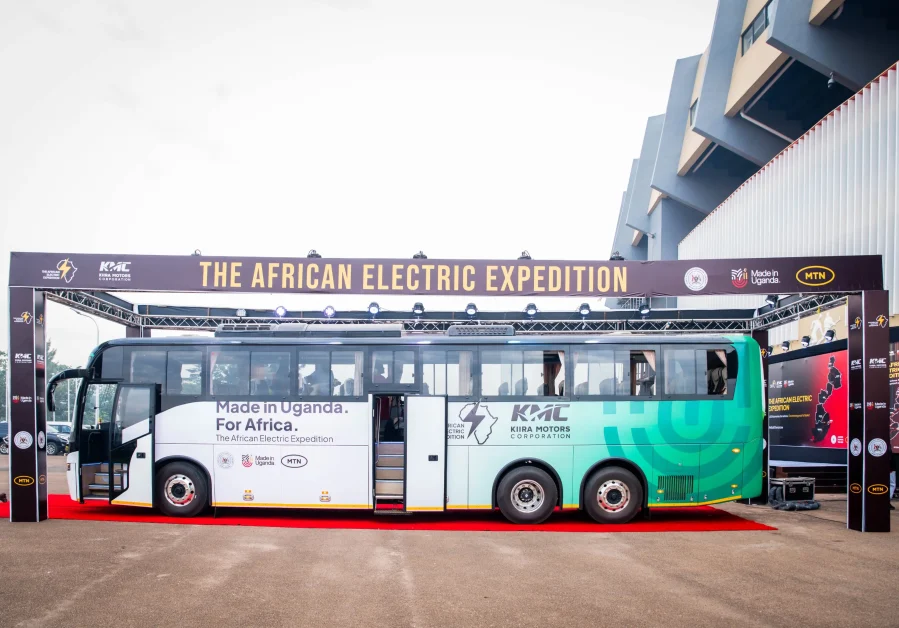
That investment has produced a product competitive enough to win a quarter-billion-dollar export contract. The Kayoola E-Coach 13M is a premium inter-city, high-floor electric bus built for long-distance travel. It runs on zero emissions. Its operating costs are a fraction of diesel equivalents. Its bamboo flooring is sourced locally. Its body and structure draw on Ugandan materials. By 2030, the company aims to localise 65 percent of all parts and components, reducing the country’s dependence on vehicle imports that currently cost Uganda approximately $730 million annually.
To fulfil the South Africa orders, Kiira Motors is seeking $143 million in additional financing to ramp up production at the Jinja plant. Delivery is estimated within six to twelve months of capital being secured. The company has set an ambitious continental target: 30,000 buses for the regional market by 2030, supported by its partnership consortium of Tondeka Metro, RentCo Africa, and technology partner Golden Dragon.
South Africa’s Electric Transition: A Market Ready to Be Led
South Africa is at a crossroads in its public transport story. Its cities are congested. Its emissions profile is under pressure. Its bus fleets are ageing. The country’s own electric vehicle ambitions have been hampered by energy supply constraints and the slow pace of infrastructure investment. Into that context arrives a continental neighbour with a validated product, a proven range, and a price point shaped not by European or East Asian cost structures but by African manufacturing economics.
The significance of that positioning should not be lost. When South African bus operators or municipalities purchase a Kayoola E-Coach, they are not just buying a bus. They are funding a Ugandan factory, employing Ugandan engineers, circulating capital within the continent, and demonstrating to every sceptic that African-made goods can meet African needs at scale. They are also, perhaps without fully intending to, writing a chapter in the longer story of what African economic sovereignty can look like.
The trade flow runs South-South, not South-North. That is the point. That is the revolution.
The Cautions That Must Travel Alongside the Triumph
Responsible journalism demands that the caveats accompany the celebration. As of the time of writing, the identity of the South African purchasing entities has not been publicly disclosed. The $143 million in additional financing Kiira Motors needs to scale production remains to be secured. Delivery timelines, as with any large-scale manufacturing commitment, are contingent on capital flows, supply chains, and operational ramp-up realities. Charging infrastructure across the Southern African corridor is still developing. These are not reasons for scepticism about the deal’s significance — they are reasons to watch its execution with the same rigour we brought to celebrating its announcement.
What is not in doubt is the milestone. The contracts are signed. The expedition validated the technology. The performance data is public. And the direction of travel — a Ugandan manufacturer exporting electric vehicles to South Africa — is one that would have seemed implausible to most industry analysts even five years ago.
Africa’s Industrial Future Is Being Built Now
There is a version of African development that remains permanently aspirational — always on the horizon, always deferred by the next crisis, the next conditionality, the next explanation of why the continent is not yet ready. The Kayoola bus driving through Cape Town is not that version. It is the other one: unglamorous, technically demanding, publicly funded at considerable political risk, and now commercially vindicated.
Dr Musenero said it plainly when the expedition reached its destination: “This achievement proves that Uganda can build world-class technology that performs reliably across Africa.” She was right. But the proof belongs to more than Uganda. It belongs to every African government, development bank, and private investor that has ever been told to wait — to import rather than manufacture, to consume rather than produce, to defer the industrial future until some unspecified moment of readiness arrives.
That moment is here. It arrived in Johannesburg with 450 buses on order. It arrived in Cape Town with a contract worth a quarter of a billion dollars. It arrived in Jinja, where a vehicle plant is preparing to scale. The African Mirror will be watching every kilometre of what comes next.