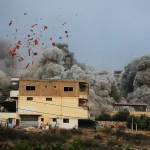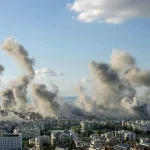

CEASEFIRE that was supposed to silence the guns in Lebanon has done little to stop the killing. Since the truce between Israel and Lebanese armed group Hezbollah came into force on 17 April, at least 380 people have been killed, more than a million and a half displaced civilians cannot return to their homes, and humanitarian workers are being shot while responding to emergency calls.
That is the verdict of the United Nations refugee agency UNHCR and the International Federation of Red Cross and Red Crescent Societies (IFRC), who briefed reporters in Geneva on Tuesday in terms that left little room for diplomatic ambiguity.
“Civilians in the south of Lebanon and parts of the Bekaa Valley are really living with the same fear for their lives as before the ceasefire,” said Karolina Lindholm Billing, UNHCR Representative in Lebanon. “Many of the displaced are not even allowed to return by the Israeli army in areas it controls in the south.”
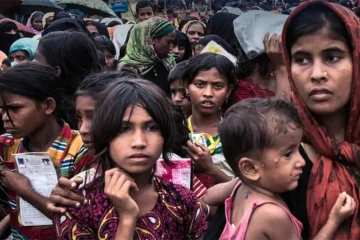
The war erupted on 2 March when the Israeli military launched operations against Hezbollah in response to rocket fire, three days after Israel and the United States began their bombing campaign against Iran. Since then, around 1.8 million people have been uprooted across Lebanon — a country of fewer than six million people — in one of the most severe displacement crises the region has seen in decades.
“They were even more devastated than before after seeing their homes completely destroyed.”
Karolina Lindholm Billing, UNHCR Representative in Lebanon
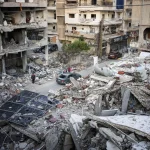
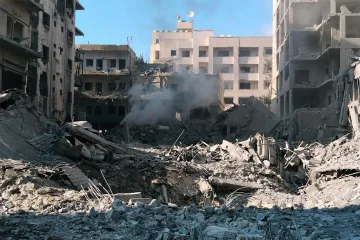
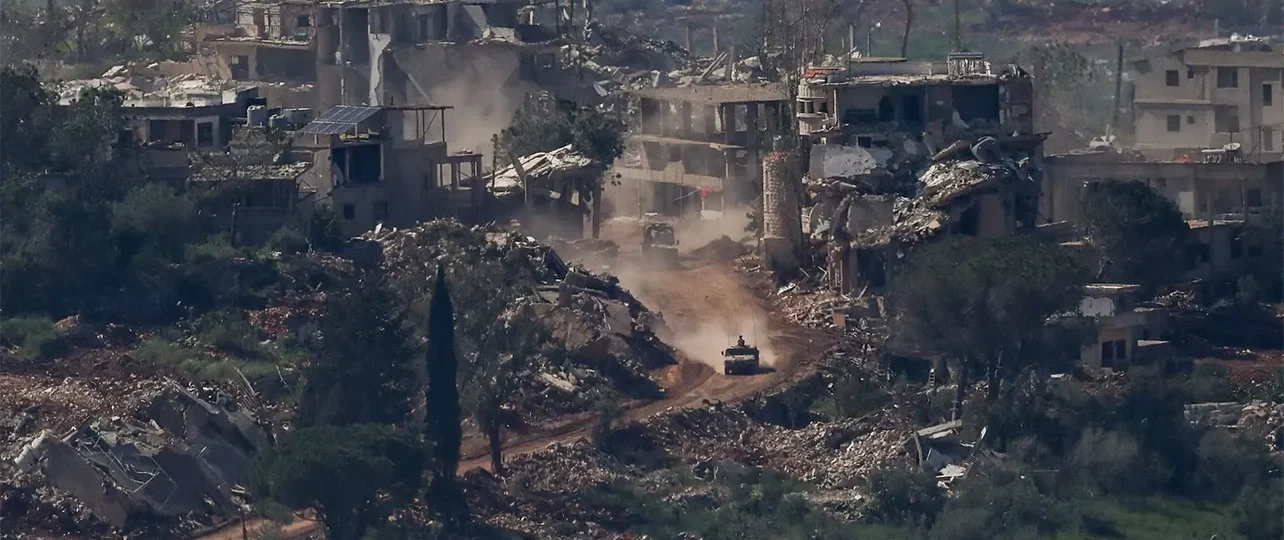
Lindholm Billing described meeting families in Nabatieh and Tyre who had risked return journeys after the ceasefire announcement, only to find their properties reduced to rubble. She recounted one encounter that has become, in miniature, the story of a nation. “One man showed me a photo on his phone of his demolished house,” she said. “He is now sleeping on the floor of a classroom that serves as a collective shelter — with nothing to return to and a very uncertain future.”
Homes and public services have suffered what the agency described as “widespread destruction” across large parts of the country, affecting hundreds of thousands of people. Water, food, and healthcare — the most basic guarantors of human life — remain inaccessible for vast sections of the population.
MEDICS IN THE CROSSHAIRS
The plight of Lebanon’s emergency responders has become one of the conflict’s most damning indictments. International humanitarian law explicitly protects civilians and medical personnel — prohibitions that are being violated daily, according to the IFRC.
“Every time they go on an ambulance mission, they hug each other and say goodbye to one another, unsure if they will return safely,” said Tommaso Della Longa, IFRC spokesperson, describing what he witnessed when he visited volunteer paramedics in southern Lebanon last week.
Two IFRC Lebanon paramedics — Youssef Assaf and Hassan Badawi — have been killed or died from injuries sustained while responding to emergency callouts in the south in the past two months. Their deaths represent not an aberration, but a pattern.
“In Lebanon, Youssef and Hassan were killed while saving lives. The emblem did not protect them, nor their protective equipment.”
Tommaso Della Longa, IFRC Spokesperson
“In a normal world, Red Cross volunteers would not need flak jackets or helmets in ambulances — the emblem should protect them,” Della Longa said. “But this is not a normal world.”
The Red Cross emblem, recognised under the Geneva Conventions as a symbol of protection, has historically commanded deference from warring parties. Its systematic disregard in Lebanon represents a serious breach of international humanitarian law, one that has drawn no meaningful international accountability.
DIGNITY STRIPPED
Beyond the body counts and the rubble, humanitarian workers say the ceasefire has inflicted a deeper wound: the systematic erasure of dignity. “Families forced from their homes speak not only of loss but of their dignity being taken away,” Della Longa said.
He argued that a genuine humanitarian response must move beyond the delivery of food parcels and medical supplies. Restoring dignity, he said, requires “listening, involving people and enabling them to support one another” — an acknowledgement that the trauma of displacement is not merely logistical but profoundly human.
“The ceasefire has not restored norms or livelihoods,” he added, “nor does it guarantee basic needs such as water, food or healthcare.”
Lebanon has now spent years as a theatre of proxy conflict, geopolitical competition, and compounding crises — including a catastrophic economic collapse, the 2020 Beirut port explosion, and successive wars that have hollowed out state capacity. For the 1.8 million now displaced, the ceasefire offers neither safety nor a horizon.