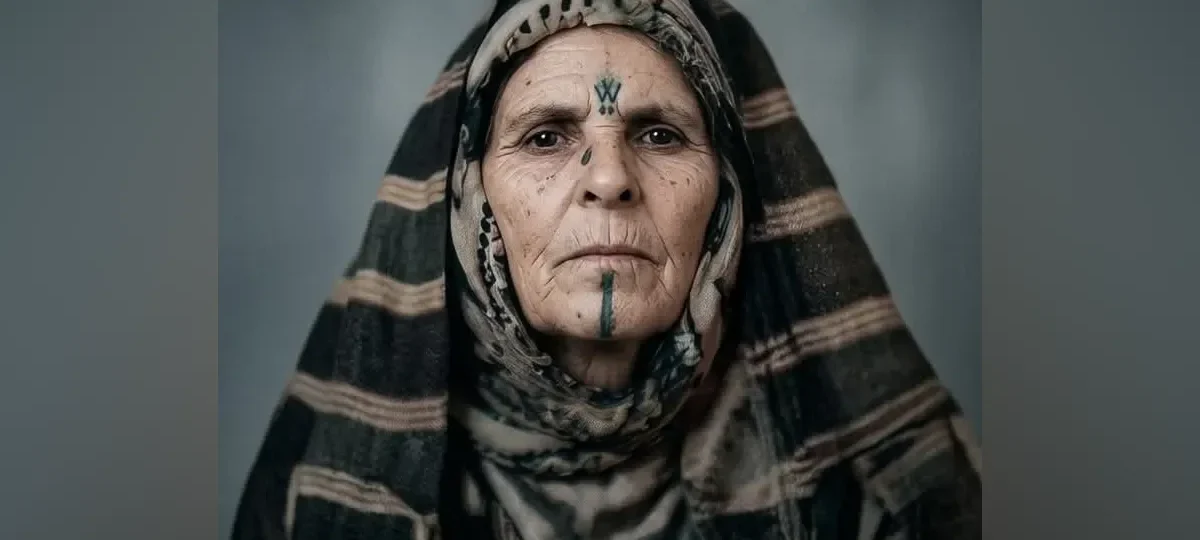

EDITOR’S NOTE: IN Arabic, Sultana means a woman of authority – a queen, a noble female ruler. The woman whose story follows was named Sultana by people who could not yet know the terrible regal weight the name would carry. She ruled nothing but the love of her children. She commanded nothing but her own endurance. And yet, in the geography of Libyan memory, she stands as tall as any sovereign who ever sat upon a throne.
This narrative is told as a son’s conversation with his mother – a conversation that has happened, in one form or another, in every Libyan household that survived the Italian colonial campaign of mass incarceration, forced displacement, and genocide. It is a story of one family. It is the story of a nation.
THE WEIGHT OF HER VOICE
A son sits down with his mother
There is a particular quality to the light in my mother’s kitchen late on a Saturday afternoon – the way it falls across the table in long, amber bars, the way the air smells of cardamom and something older, something unnameable. It is in this light that my mother becomes someone else. She becomes the keeper of a wound.
I had come to her with a recorder, a notebook, and the project that had consumed the better part of two years: a reckoning with what the Italians did to the Libyan people in the years between the wars. Not the diplomats’ version. Not the footnote in the European textbooks. The real account – the one written not in ink but in the bones of the dead left in the desert sand. The one that my mother’s family had been carrying, wordlessly, for nearly a century.
She looked at the recorder for a long moment. Then she looked at me.
“You want to write about Sultana,” she said. It was not a question.
“Yes, Mama,” I said. “Tell me about Sultana.”
She was quiet for what felt like a very long time. When she finally spoke, her voice carried the strange texture of a woman not so much remembering as reopening – the way you remove a bandage not because the wound is healed, but because the world needs to see what was done.
“She was not recalling a distant tale. She was reopening a wound that had remained alive in memory – shaped by cruelty, by orphanhood, by war, and by the detention camps of Italian colonialism.”
My mother was born from that wound. Her mother before her. And Sultana – Sultana was the wound’s original keeper. My grandmother’s grandmother. A girl who entered the world at the threshold of loss, and who spent the rest of her life proving that loss could not unmake her.
A NAME BEFORE A LIFE
Daryana, the Green Mountain, and the beginning of absence
Sultana’s mother, Raj’a Boushnaf Al-Khafifi of Daryana, died giving birth to her. Her father, Ahmed Mohammed Al-Turkawi – grandson of the Sheikh Musa Al-Turkawi, a man whose name was known across the Green Mountain – disappeared during a journey to visit family in Karsa, west of Derna. All news of him was cut off. He simply did not return.
And so the little girl opened her eyes to a world in which she was already, from the very first breath, a daughter of absence.
Her maternal aunts, Aljiya and Manbiya Al-Khafifi, took her in. Later, she came under the care of her maternal uncle, Hassan Boushnaf Al-Khafifi – called Al-Dallal – who raised her as his own. In his house, Sultana grew. She learned, as many children of the colonial era learned, that love and loss are not opposites. That you can be held, and still be marked by the hands that will never hold you.
“From her earliest days, she was a daughter of absence — as though life had chosen for her to know orphanhood before she knew childhood.”
I asked my mother: what was she like, as a girl? What did she love?
“How would I know?” my mother said quietly. “No one wrote it down. No one wrote any of it down. That is the whole point. We were not supposed to survive to tell it.”
SEVEN GOATS AND A FUTURE
Marriage at twelve, in the age of colonial fire
Uncle Hassan was a man of the market. He frequented the Municipal Hotel in Benghazi – a man of commerce, of connections, of the slow negotiations that bound Libyan families together in the years before everything was taken apart. It was there he met Hassan Jibril Boushleif Al-Mshaiti, a man he knew and respected.
Al-Mshaiti told Hassan he was looking for a wife – a good woman. Uncle Hassan thought of his orphaned niece. He thought of the girl who had already survived more than any child should survive. And he arranged the marriage.
Sultana was twelve years old. Her dowry was seven goats.
I felt something twist in my chest when my mother told me this. Twelve years old. I thought of everything that number contains – the gap between childhood and anything else, the territory a girl still inhabits before the world decides she is a woman. And I thought of those seven goats, and what they said about the worth of a life in that time and place.
“But you have to understand,” my mother said, reading my silence, “That those harsh years made children grow older before their time. The colonial war did not respect age. It did not respect anything.”
Sultana moved from the orphanhood of childhood into the responsibility of a home and a husband. And in the cruel years of the Italian campaign, she bore three children: Amhamed, Miftah, and little Jafala.
She did not know – she could not have known – that the motherhood which had come so early would be tested in ways that would break any woman who had not already been tempered by everything she had already endured.
THE RIFLE AND THE EMPTY HOUSE
Hassan goes to war. Sultana is left.
Hassan Jibril Al-Mshaiti joined Al-Muhafiziyya – the name by which the Libyan Mujahideen of Cyrenaica were known. He took up his rifle alongside Omar Al-Mukhtar and his companions, and he rode into the mountains to fight the colonial army that had come across the sea to unmake his people.
He left behind a young wife and three small children.
The Italians, as colonial powers always do, understood something that history prefers to obscure: you do not defeat a people only by defeating their fighters. You defeat them by making the families of the fighters pay so terrible a price that the fighters themselves break. You go for the wives. The children. The elderly. The tribe.
And so they came for Sultana.
“The war was not directed only at the men who carried rifles. It extended into homes, women, children, and the tribes that stood in support of the freedom fighters.”
She was taken with her children to the Al-Agheila detention camp – the concentration camp the Italians built west of Ajdabiya, on barren land surrounded by barbed wire, far from warmth, far from home. Designed not to hold fighters, but to break the people who loved them.
I asked my mother: ” How does a woman survive a place like that?
“She survives because her children are watching her face,” my mother said. “A mother cannot afford to show her children that the world has ended. Even when it has.”
Al-Agheila: The camp where a people were meant to die
Al-Agheila. The name sits in Libyan memory the way Auschwitz sits in Jewish memory, the way the Gulag sits in the Russian body. Not merely a place. A word that means something specific about human cruelty – about what men with flags and ideologies are capable of doing to people they have decided do not fully count.
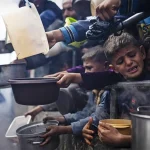
In Al-Agheila, there were only tents, dust, hunger, fear, and long waiting. Around Sultana were exhausted faces, broken women, children worn down by hunger, and elders consumed by age and ordeal. The barbed wire surrounded everything. Mothers tried to hide their fear from their children, and could not. Hunger came for the young first, as hunger always does.
Sultana lived there with Amhamed, Miftah, and Jafala through days that had no name. She had nothing but patience – and the heart of a mother trying to remain standing amid collapse.
My mother paused here. She pressed her hands flat against the table as though steadying herself. Outside, I could hear the sound of the street – an ordinary, oblivious afternoon. I thought about the distance between that sound and what she was describing, and I found I could not measure it.
“In that hell, Sultana had nothing but patience, and the heart of a mother trying to remain standing amid collapse.”
SULUQ – THE DAY THE WORLD DOUBLED ITS GRIEF
September 16, 1931
Then they were taken to Suluq.
The Italians understood theatre. They had captured Omar Al-Mukhtar – the Lion of the Desert, the Sheikh of the Mujahideen, the man who had defied them for two decades from the mountains of Cyrenaica. They wanted his death to mean something. They wanted it to be witnessed. They wanted the families of the resistance, the women and children in the camps, to watch him hang – so that they would carry that image back into their hearts and it would kill whatever the barbed wire had not already killed.
Sultana stood among the thousands taken to Suluq that day. She watched Omar Al-Mukhtar face his death with a stillness that colonialism could not break. She watched what they did to him. And then she heard the sound rise around her – not weeping, not surrender, but the ululations of Libyan women, rising into the sky like fire.
They were not ululations of joy. They were not celebration. They were the sound of a people refusing to have their grief turned into humiliation. They were the sound of dignity, offered in the only currency that no colonial authority could confiscate.
“The ululations rose — not of joy, but of pride and bitterness. The cries of women who had witnessed tragedy, yet refused to surrender their souls to humiliation.”
Sultana ululated with them. Her voice was one voice among many thousands. And in the moment that her voice rose – in the very same moment that she honoured the great dead – she turned to her infant daughter Jafala.
Jafala was gone. The sun and the hunger had taken her. On the same day that Omar Al-Mukhtar was buried in Suluq, Sultana buried her child.
“My mother told me this part very quietly,” my mother told me. “She never said it loudly. Some things are too heavy to say at full volume.”
Two burials in one day. A nation’s father and a mother’s child. From that day forward, Suluq was not merely a place in Sultana’s memory. It was where public grief and private grief met – the grief of a country and the grief of a mother – and became indistinguishable from each other.
THE DESERT, THE CAMEL, AND THE MAN FROM HER PEOPLE
The long walk home
The Italians eventually released the survivors. The camp gates opened, and the people left in exhausted, broken groups – carrying nothing from the world except what breath remained in their chests, and what hope remained in their hearts of ever reaching home.
Sultana walked with a group, her two surviving children beside her. They reached a desert area before Ajdabiya. They stopped to rest. They slept.
In the morning, the group was gone. They had moved on without her. She was alone in the desert with her two children and an elderly woman – young, worn down by the camps, carrying the weight of Jafala’s absence, standing in sand that went in every direction without telling her which way was home.
“A young woman, two children, an old woman, a silent desert, and a caravan that had moved on and left them behind.”
What does a woman do in that moment? What does anyone do, when the world has taken everything and then taken the group that was supposed to carry her through what came after?
She waits. She tends to her children. She does not let them see that she does not know the way.
And then – across that silent desert, as if the land itself had decided to relent – came a man on a camel, searching for his animals. A Khafifi from Daryana. One of her mother’s people. A kinsman, arriving by the grace of coincidence or providence or whatever name we give to the moments when the world decides not to finish us after all.
He recognised her. He took her and the children and the old woman, and he brought them to Ajdabiya.
“God carried salvation to her,” my mother said, “in the form of a man from her own people, arriving at the moment when being lost was closer than finding the road.”
THE RETURN
Hassan comes home. The long war, finally, ends.
In Ajdabiya, amid the confusion of displacement and the searching faces of the dispossessed, Sultana found relatives. A kinsman of her husband’s from the Mshaiti family. A maternal aunt from the Khafifi family. Paternal aunts. Faces she had not seen since the world had broken apart. They came together in the chaos the way survivors always come together – not because the world had been repaired, but because people need to find each other in the wreckage before they can begin.
She waited, as women of that generation waited – for news of the Mujahideen, for word from the mountains, for the men who had ridden out with Omar Al-Mukhtar and who now, with the Shaykh gone, had to find their own way back.
And then the men of Al-Muhafiziyya returned. They came down from the mountains and rode in from the desert, dismounting from their horses. Each man began searching – for a wife, for children, for the home that might no longer exist in the form he remembered it.
Hassan Jibril Al-Mshaiti found Sultana. He was alive. He had survived. After war, wandering, and every other devastation the Italian colonial campaign could inflict, he came back to her.
He took her with him. Together, they returned home.
“He returned to her after war, wandering, detention, and loss. He took her with him, and together they returned home after a long journey of suffering, grief, and brokenness.”
I asked my mother: What was it like, for them, after that? What does a life look like on the other side of all of that?
“I don’t know,” she said. “She didn’t talk about the after. She talked about the before and the during. I think the after was just… being alive. Just the fact of still being alive, with two children and a husband. For a woman who had survived what she survived, I think that was enough. I think that had to be enough.”
What A NAME CONTAINS
On queens, silence, and the memory we owe
Sultana. In Arabic, the name means a woman of authority – a queen, a noble female ruler. It is a name that carries weight. A name that announces itself.
She never sat on a throne. She never commanded armies or issued decrees. She was a girl who lost her mother at birth, her father to the road, her childhood to an early marriage, her infant daughter to colonial violence, and her sense of home to the barbed wire of Al-Agheila. She was a woman who stood in Suluq and watched the greatest leader her people had known hang from a gallows – and then turned to find that her child was gone.
And yet. She bore all of it, without surrendering her identity, her love, her claim on the future. She walked out of the desert. She found her people. She went home.
If that is not authority, I do not know what is. If that is not the conduct of a queen, then the word has been applied too casually to too many heads.
I switched off the recorder at some point during my mother’s telling. I am not entirely sure when. The story had long since outgrown the machinery of documentation. It had become something else – a transmission, a laying of hands, a handing over of the thing that families carry so that individuals do not have to carry it alone.
My mother was giving me Sultana’s grief to carry. Not as burden, but as inheritance. As the thing that makes me who I am, across the generations, across the camps and the desert and the long road back.
“In Sultana’s pain, a generation’s memory is gathered — a generation that knew colonialism was not a war against land alone, but a war against homes, mothers, children, and dignity.”
The Italians called what they did in Libya a civilising mission. They built roads and cities and called themselves administrators of an empire. The camps of Cyrenaica – where more than half the population of the region died of disease, hunger, and violence between 1929 and 1933 – do not appear prominently in Italian national memory. The marble columns of Mussolini’s colonial ambitions have been studied far more carefully than the barbed wire of Al-Agheila or the grave in Suluq where Sultana buried her daughter on the day the Sheikh of the Martyrs went into the earth.
This story is one small act of insistence that it be otherwise. That Sultana be remembered. That the women who did not carry rifles — but who carried hunger, fear, and waiting; who carried their children through the detention camps; who buried their dead in foreign soil and still walked out of the desert — be included in the account of what happened.
History has a long habit of remembering the armed. It is past time to remember the mothers.
❖
- This account is drawn from oral family testimony preserved across three generations of Libyan women, and forms part of an ongoing documentary series by The African Mirror on the survivors of Italian colonial concentration camps in Cyrenaica (1929–1933). The series is dedicated to the memory of every Libyan child buried in foreign soil, and to the mothers who walked away from those graves – and kept walking.