THE World Health Organization has moved decisively to contain not just a deadly outbreak of hantavirus aboard a Dutch cruise liner, but the gathering panic around it, issuing an unambiguous public health verdict: this virus does not spread like COVID-19, and the risk to the general population remains, in the agency’s own words, “absolutely low.”
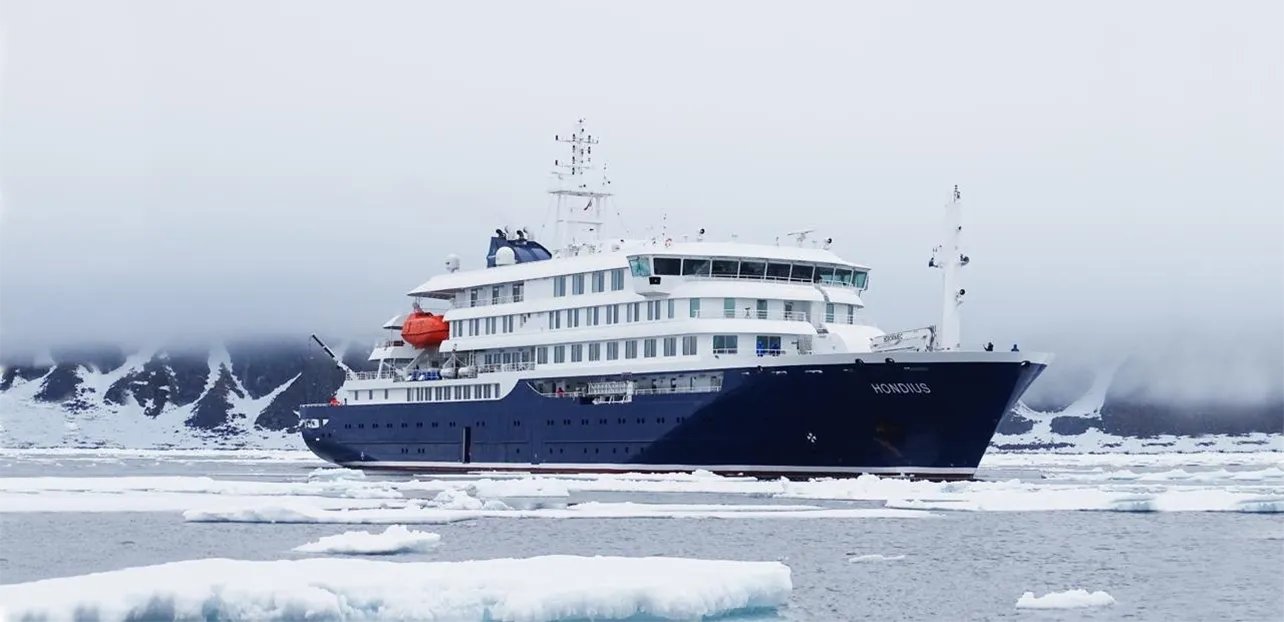
The reassurance came as the MV Hondius – a Dutch-flagged polar expedition vessel – remained moored off Cabo Verde with a complex, multi-country response operation underway. Three passengers have died, and eight cases of infection have been confirmed or suspected, with the ship currently carrying approximately 147 passengers and crew from 23 nationalities.
The outbreak has triggered one of the most elaborate international public health mobilisations since the early days of COVID-19, drawing in health authorities across Europe, Africa, and Latin America. Yet WHO’s message was deliberate and direct: the architecture of this virus – how it moves, who it infects, and how rarely it jumps between people – is categorically different from the pathogen that upended the world six years ago.
“This Is Not COVID”
WHO spokesperson Christian Lindmeier used a press briefing in Geneva to make the case methodically. The evidence, he argued, was already in the contact-tracing data. People who shared cabins with infected passengers had not themselves fallen ill. A Dutch flight attendant who had brief contact with a passenger who later died tested negative. A wife whose husband is currently in intensive care in Switzerland has shown no symptoms and is self-isolating as a precaution.
“From couples who were close… from a flight attendant who handled the sick woman who just shortly after died and was feeling extremely unwell, we get negative test results,” Lindmeier told reporters. “That should convince nearly everybody now that this is a dangerous virus, but only to the person who is really infected.”
WHO said it does not anticipate a large epidemic anywhere comparable to COVID, and underlined that there is no evidence of widespread transmission risk. The agency was equally precise about what this virus requires to spread: close, sustained, and intimate contact — the kind associated with shared households, sexual partners, or healthcare workers in prolonged proximity to patients.
The Andes Strain: Rare, Lethal, But Limited
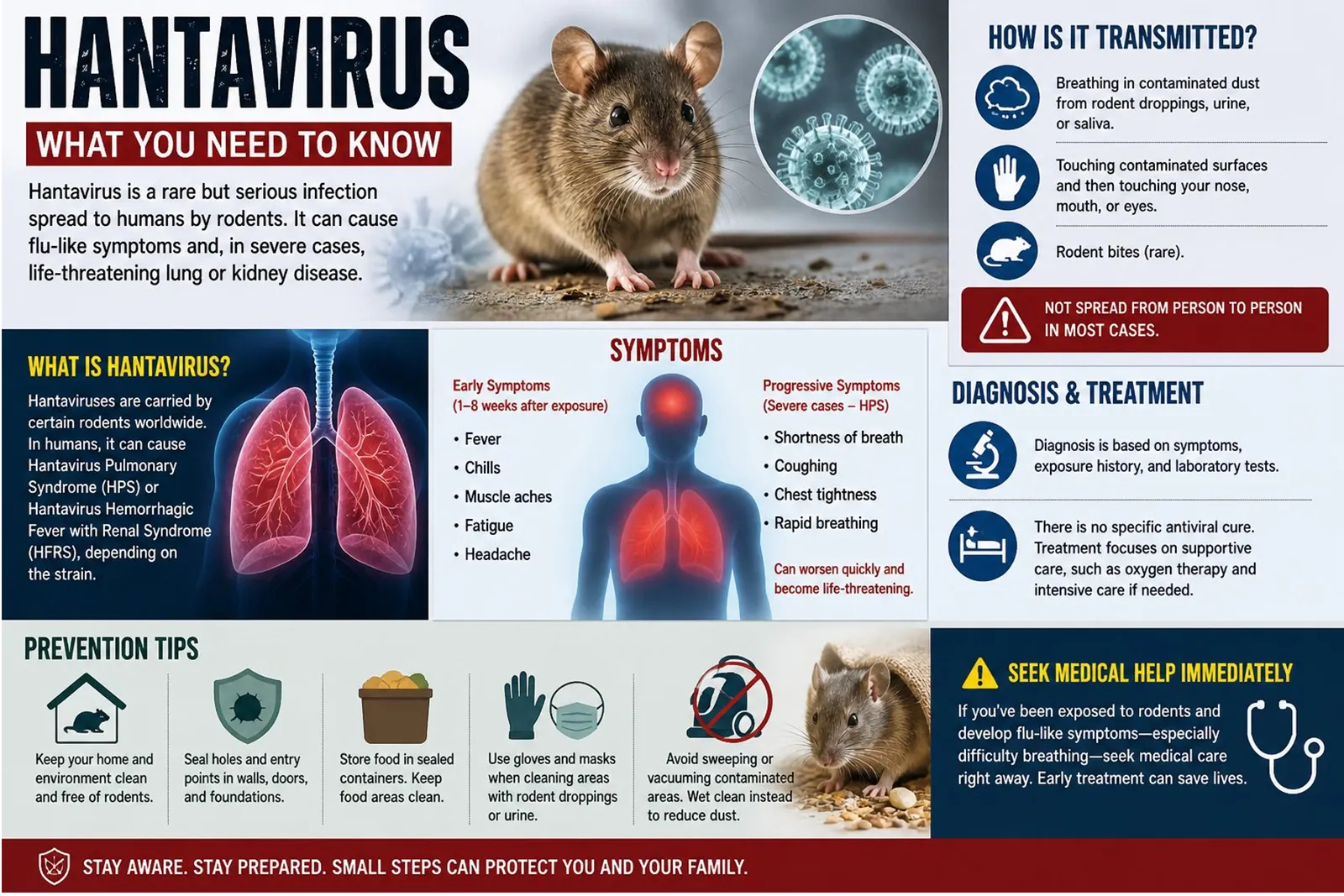
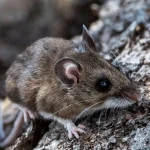
The strain at the centre of this outbreak is the Andes hantavirus, a variant found in parts of Latin America and notable for one distinction that sets it apart from other hantaviruses globally: it is the only known strain capable of limited human-to-human transmission. All other variants are transmitted exclusively through contact with infected rodents or their droppings, saliva, or urine.
The case fatality rate for hantavirus in the Americas stood at 25.7% as recently as 2025, based on 229 reported cases and 59 deaths across eight countries. That mortality profile makes this a serious clinical event — but one that is geographically bounded and epidemiologically containable.
WHO is working on the assumption that the Dutch couple who died were most likely infected before boarding — during a birdwatching trip through Argentina, Chile, and Uruguay that took them through areas where the rodent species known to carry the Andes strain is present. Argentine health authorities subsequently published a detailed report confirming that the index case — the first Dutch passenger to show symptoms — had undertaken a four-month road trip through Chile, Uruguay, and Argentina between November 2025 and April 2026.
A Multi-Continent Response — and a Port Crisis
The operational complexity of the outbreak has been significant. South Africa received and treated critically ill passengers evacuated from the vessel. Switzerland confirmed a hospitalised patient in Zurich. Passengers from at least 12 countries disembarked the vessel at St. Helena, a British territory in the South Atlantic, before the outbreak was publicly known. WHO confirmed it is coordinating with authorities in Cabo Verde, Spain, the Netherlands, South Africa, the United Kingdom, and Argentina, alongside the European Centre for Disease Prevention and Control.
The ship’s journey toward the Canary Islands became a flashpoint of its own. The president of the Canary Islands, Fernando Clavijo, declared that he “cannot allow the Hondius to enter the Canaries” and refused to receive the vessel in Tenerife — a refusal that WHO publicly challenged, arguing that Spain had both a moral and legal obligation under international health law to assist passengers, including several Spanish nationals.
The standoff underscored how deeply COVID-era anxieties have reshaped the politics of outbreak response, with local populations quick to associate any shipborne illness with the catastrophic contagion of 2020.
The Science Against the Fear
WHO’s task on Friday was, in part, to interrupt that cognitive reflex — to prevent public perception from outrunning the epidemiology. The International Health Regulations, the global framework that governs cross-border health threat responses, have been activated. But Lindmeier’s tone throughout the briefing was one of calibrated transparency rather than alarm.
The contact tracing, he said, is exhaustive: seating lists from aircraft, manifests from ships, step-by-step reconstruction of passenger movements. The negative results that have come back from that exercise are, in the WHO’s assessment, the most powerful evidence available that the Andes strain — dangerous as it is — has not mutated into something that spreads easily through casual contact.
For Africa, the outbreak carries particular significance. South Africa became a front-line responder, receiving evacuated patients and conducting the laboratory confirmations that identified the Andes strain. Cabo Verde, a small island nation with limited health infrastructure, found itself at the geographic centre of a major international incident. Both underscore a recurring reality of global health governance: outbreaks are cosmopolitan events, and African states are rarely bystanders.
WHO Director-General Dr. Tedros Adhanom Ghebreyesus said the overall public health risk from hantavirus remains low, and officials have dismissed concerns about it becoming a pandemic-scale threat. As of Friday, no passengers or crew remaining aboard the MV Hondius were showing symptoms.
The world, WHO was saying, should watch this carefully — but it should not mistake vigilance for catastrophe.