WHEN Israeli and American negotiators unveiled the Comprehensive Plan to End the Gaza Conflict last October, they presented the world with a framework dressed in the language of peace and humanitarian relief. Six months later, the architecture of that plan is crumbling — and the Palestinian civilians it was meant to protect remain hungry, medically abandoned, and in the crosshairs of continued Israeli military action.
On Wednesday, the Board of Peace — authorised under UN Security Council Resolution 2803 to monitor compliance with the ceasefire — will brief the Security Council on its six-month progress report. But the report’s headline figures, and the political theatre surrounding them, sit in stark, damning contrast to the humanitarian reality documented by United Nations agencies, the World Health Organisation, the World Food Programme, and international human rights organisations operating on the ground.
The Board’s May 15 report declares that aid distributed by UN agencies and partners increased by over 70 percent during the reporting period compared to pre-ceasefire levels, and that basic food needs have been “stabilised for the first time since 2023.” It is a formulation carefully constructed to sound like progress. It is not.
“Whatever the Board of Peace tells the Security Council, that is what life looks like six months in: still hungry, still unable to reach medical care, still being killed.”
Human Rights Watch
THE NUMBERS THE BOARD DID NOT LEAD WITH
The 70-percent-increase figure omits three critical facts. First, the baseline from which that increase is measured — pre-ceasefire aid volumes — was itself catastrophically inadequate. Second, aid flows have declined sharply since early 2026. Third, total deliveries have never once reached the minimum threshold the United Nations says is required to sustain Gaza’s population of approximately two million people.
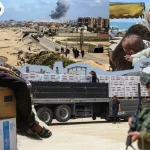
The collapse accelerated on 28 February 2026, the day Israeli and US military operations against Iran commenced. Israeli authorities immediately closed all crossings into Gaza. Weekly truck deliveries — a crude but essential measure of humanitarian lifelines — fell from an average of 4,200 trucks to just 590, a collapse of 86 percent, according to US military coordination figures reported by the Israeli newspaper Haaretz.
The Kerem Shalom crossing partially reopened on 3 March, reportedly following US pressure. But as of this writing, Kerem Shalom and the Zikim crossing remain the only operational entry points for humanitarian and commercial goods. In the first 11 days of May alone, only half of the aid trucks arriving from Egypt were permitted to unload at Israeli-controlled crossings. The logjam is not logistical. It is a policy.
WHAT ‘STABILISED’ FOOD NEEDS ACTUALLY LOOK LIKE
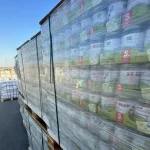
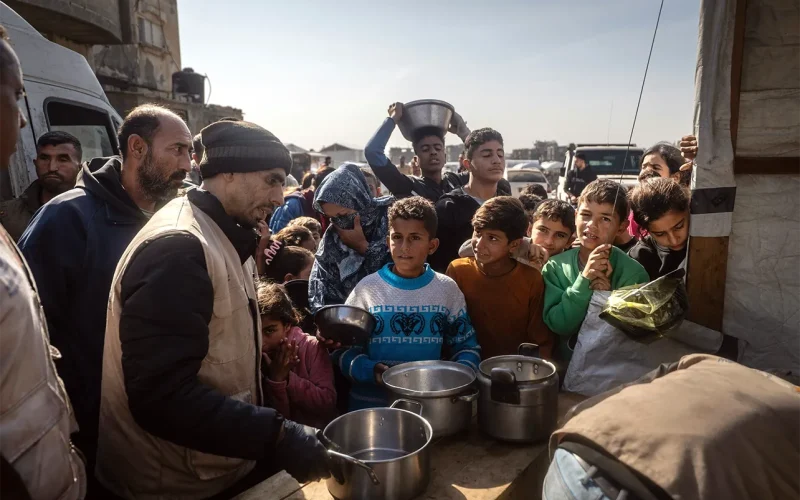
According to the UN Office for the Coordination of Humanitarian Affairs (OCHA), aid groups reached approximately 197,000 families with food parcels in April — covering 75 percent of minimum daily calorie needs. That is an improvement from March, when rations covered only half of those needs. The Board chose the April figure for its headline. It did not highlight that the total number of meals served daily has been dropping since late March, or that some aid groups have already scaled back direct food distribution.
The World Food Programme’s assessment is unambiguous: people in Gaza were eating less in the first half of April than they were in March. Most families were consuming vegetables, fruit, or protein only once a week or less. With cooking gas in acute shortage, 68 percent of people in Gaza are now burning waste to prepare food — a 13-percentage-point increase from March alone.
In December 2025, four UN agencies warned jointly that famine — pushed back only weeks earlier through the October ceasefire — could rapidly return without sustained access and supplies. The warning was not abstract. It was a clinical assessment based on trajectory. The trajectory has worsened.
A HEALTHCARE SYSTEM THAT EXISTS ONLY ON PAPER
As of 5 February 2026, none of Gaza’s 37 hospitals were fully operational. Only 19 were even partially functioning. The World Health Organisation estimates that more than 43,000 people have suffered life-changing injuries since October 2023 — one in four of them children — and that over 50,000 require long-term rehabilitation care. No rehabilitation facility is fully running in Gaza.
Israeli delays in approving specialised surgical equipment are limiting complex care. At least 46 percent of essential medicines are out of stock. Restrictions on the import of generators, engine oil, and spare parts are causing cascading failures across healthcare, sanitation, and debris-removal systems. These are not the unintended consequences of war. They are the predictable results of deliberate administrative obstruction.
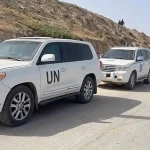
On 6 April, Israeli forces fired on a WHO vehicle in eastern Khan Younis, killing a contractor and wounding several others. WHO suspended medical evacuations via the Rafah crossing for six days in response. Since October 2023, OCHA has recorded the killing of at least 593 aid workers in Gaza — including 8 since the ceasefire was supposed to have taken effect. The ceasefire, in practice, has not stopped Israeli forces from killing the people trying to keep Gazans alive.
At least 1,400 patients have died waiting for medical evacuation since Israel seized the Rafah crossing in May 2024. Over 18,500 — including 4,000 children — still wait.
TERRITORIAL CREEP AND THE SHRINKING ‘PEACE’ ZONE
The Comprehensive Plan established a Yellow Line — an agreed limit on Israeli territorial control inside Gaza. Since the ceasefire, Israeli forces have moved that line westward, beyond its agreed boundaries. Satellite imagery analysis published by Haaretz shows that Israel has established at least 32 new outposts and is constructing what appears to be a permanent or long-term ground barrier.
Between 11 October 2025 and 21 January 2026, the UN Office of the High Commissioner for Human Rights documented at least 167 Palestinians killed near the line — including 26 children and 17 women. The head of Médecins Sans Frontières in Gaza told Haaretz that as the line moves west, it is consuming water points and health facilities that civilians depend upon for survival.
The UN Relief and Works Agency for Palestine Refugees (UNRWA) reports that 127 of its facilities now fall either behind the line or in areas requiring Israeli approval for access. Since March 2025, Israeli authorities have blocked UNRWA from taking humanitarian assistance directly into Gaza — a decision with no credible security justification and profound humanitarian consequences.
THE BOARD OF PEACE’S CREDIBILITY PROBLEM
The Board of Peace meets on Wednesday to brief the Security Council. Its report will contain data. Some of the data will be accurate. What the Board cannot credibly argue is that the Comprehensive Plan is working in any meaningful sense for the people of Gaza.
At the Board’s inaugural meeting in February, ten member states and observers pledged a combined US$17 billion for reconstruction — against UN estimates of $70 billion needed. As of April, the Board had received less than $1 billion of those pledged funds, with only three contributors having delivered anything at all. The gap between what was promised and what has materialised is not a minor administrative shortfall. It is a measure of international bad faith.
The Board itself carries a structural legitimacy deficit that no progress report can paper over: there is no Palestinian representation on it. A body tasked with assessing compliance with a plan whose primary stated beneficiaries are Palestinian civilians, operating without any Palestinian voice, is not a board of peace. It is a board of management.
INTERNATIONAL LAW AND THE QUESTION OF ACCOUNTABILITY
Under international humanitarian law, Israel — as the occupying power — is legally obligated to ensure that the civilian population has access to food, water, medical care, and essential supplies, and to facilitate the rapid and unimpeded passage of humanitarian relief. The use of starvation as a method of warfare is a war crime under the Rome Statute. Deliberately imposing conditions of life calculated to bring about the physical destruction of a population constitutes an act of genocide under the Genocide Convention.
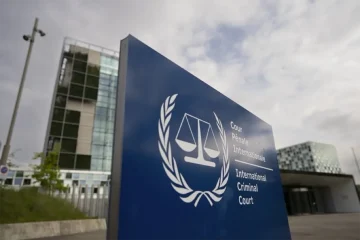
Human Rights Watch documented in December 2023 that Israel was using starvation as a weapon of war in Gaza. In December 2024, it published a further report finding that Israel’s deliberate deprivation of water amounted to the crime against humanity of extermination and acts constituting genocide. The International Criminal Court has issued arrest warrants. The International Court of Justice is actively seized of the matter. The legal case is being built. The question is whether it will translate into consequences.
Human Rights Watch is calling on governments to suspend arms transfers to Israel, impose targeted sanctions on Israeli officials credibly implicated in serious abuses, suspend preferential trade agreements, and enforce the ICC’s arrest warrants. These are not radical demands. They are the minimum that international law would require of states that claim to take that law seriously.
ANALYSIS: A CEASEFIRE THAT HAS NOT STOPPED THE DYING
The story of Gaza’s ceasefire is, at its core, a story about the distance between the language of international diplomacy and the reality of life for two million people trapped between a military occupation and a global community unwilling to enforce its own rules.
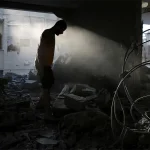
The Board of Peace will present its figures. Delegates will speak of progress. The word “ceasefire” will be used without apparent irony. And in Khan Younis, sewage will continue to flood residential streets because pumping stations have no fuel. In Gaza’s hospitals, patients will continue to die on waiting lists. Aid workers will continue to be killed. And the machinery of slow attrition — dressed now in the language of peace plans and progress reports — will continue to grind.
The African Mirror will continue to report what that machinery is producing on the ground, because the gap between what the Board of Peace says and what UN agencies confirm is not a matter of competing interpretations. It is a matter of record.