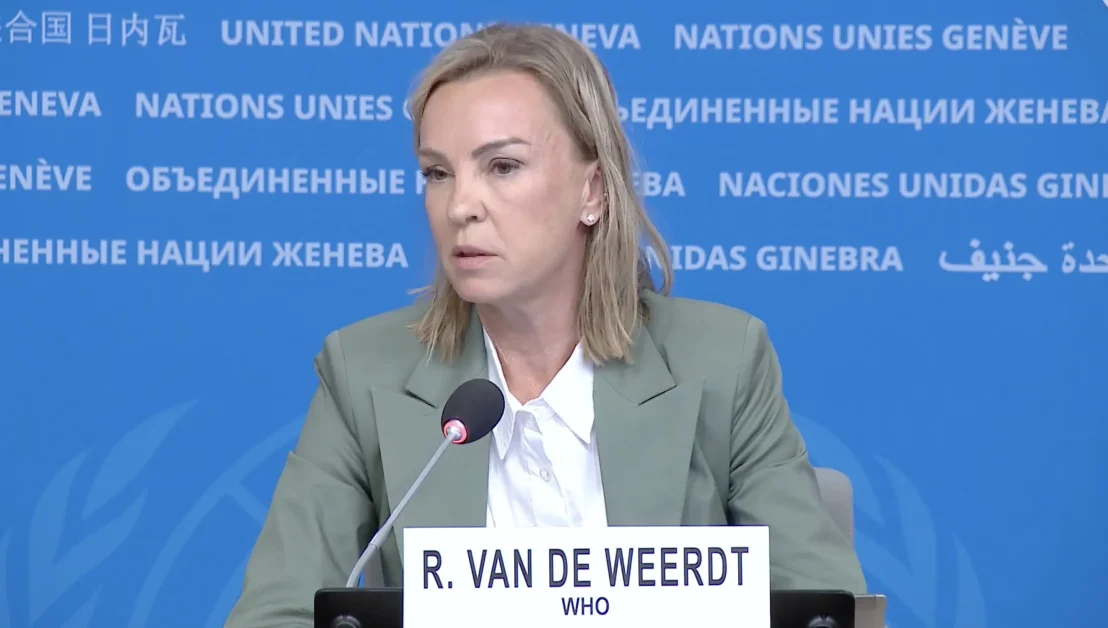
WHEN Dr Renee Van de Weerdt, the World Health Organization’s representative in the Occupied Palestinian Territory, returned from her second visit to Gaza, she found herself searching for adequate language. “Nothing prepares you for Gaza,” she told journalists in Geneva on Friday. “I thought going in the second time would make things easier. But it just doesn’t.”
Her words were not the polished diplomatic understatement of a UN official managing optics. They were the confession of a medical professional confronted with something that exceeds the boundaries of conventional humanitarian crisis — a health system methodically reduced to rubble, its patients held hostage at the border by a blockade that organisations from the WHO to UNRWA are now describing in barely veiled terms as a form of medical warfare.
Since the October 2025 ceasefire between Israel and Hamas, more than 880 people have been killed in the Strip and over 2,600 injured. “There is perhaps less fire, but the violence continues,” Dr Van de Weerdt said. “We hear bombs nearby. There is gunfire every day.”
“Nothing prepares you for Gaza. I thought going in the second time would make things easier. But it just doesn’t.”
Dr Renee Van de Weerdt, WHO
The Blockade Is the Diagnosis
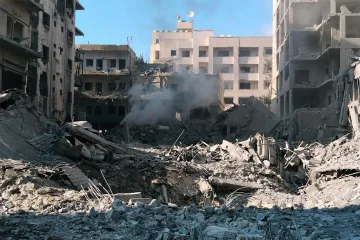
Of Gaza’s hospitals, barely half are even partially functional. Not a single facility can be described as fully operational. But the physical destruction of infrastructure — well-documented and extensively photographed — is only half the story. The less visible catastrophe is what is missing: the medicines, equipment, and reagents that never arrive.
“In Jordan, there is a prefabricated hospital waiting for months to enter Gaza,” Dr Van de Weerdt said. “Laboratory equipment, reagents, oxygen concentrators, orthopedic items — not luxury items. These are essential items needed to make health facilities and the health system work.”
The consequences are clinical and cascading. Without laboratory reagents, doctors cannot diagnose patients. Without diagnostics, disease outbreaks cannot be detected or reported. In a Strip characterised by catastrophic overcrowding, rodent infestation, contaminated water, and collapsed sanitation, that surveillance gap is not administrative — it is existential.
“We’re talking about hantavirus, we’re talking about Ebola virus,” the WHO representative said. “This is equipment that we need to save lives, to detect diseases, to alert the world about potential outbreaks, and make sure that people don’t die.”
That last sentence carries a particular weight: the world needs to be alerted. Gaza has already proven, at enormous human cost, that disease outbreaks do not respect borders. The blockade of diagnostic equipment is not merely a Gaza problem. It is a global public health risk being created and maintained by policy.
“We’re talking about hantavirus, we’re talking about Ebola. This is not luxury. This is equipment to save lives, to alert the world.”
Dr Van de Weerdt, WHO
The Cruel Arithmetic of ‘Dual Use’
Israel justifies the blocking of a significant range of medical supplies through its designation of such items as “dual use” — goods that could theoretically serve military as well as civilian purposes. The application of this doctrine to internationally recognised lists of essential medicines represents, in the view of the WHO and multiple humanitarian organisations, a manipulation of security language to achieve a humanitarian blockade.
Consider the grotesque specificity of one example: prosthetic limbs. Some 5,000 amputees in Gaza are waiting not only for prosthetics but also for the corrective surgery required to prepare stumps for fitting. Both the surgery and the prosthetics are effectively blocked. “These unfortunate people need to be on a waiting list to leave,” Dr Van de Weerdt said, leaving a territory they may never be allowed to re-enter, to receive basic medical care that international law obliges their occupier to provide.
Medical evacuations — where patients travel to Egypt, Jordan, or more than 30 other countries — have become the last resort. The Rafah crossing, reopened in February, provides one route. The Kerem Shalom crossing allows patient movement “up to once a week, through a very long and complicated pathway to Jordan.” Often, only one or two family members may accompany a patient. Return is not guaranteed. This is not a health system. It is a bureaucratised form of exile.
UNRWA: The Last Line, Legislated Out
If the blockade of supplies is the primary weapon against Gaza’s health system, the legislative assault on UNRWA is its flanking manoeuvre. The UN agency for Palestine refugees provided 4.5 million medical consultations in Gaza last year alone — approximately 40 per cent of all medical consultations in the Strip. Dr Akihiro Seita, UNRWA’s Director of Health, described its work as a “tremendous contribution to the stability of the region.”
That work is now being systematically dismantled by Israeli Knesset legislation banning UNRWA’s operations. The agency can no longer bring medicines into Gaza or the West Bank. Two of its East Jerusalem health centres — which collectively served 11,000 patients annually — were closed earlier this year. The WHO’s Dr Van de Weerdt was blunt: “Nobody can replace what UNRWA is doing.”
The toll on UNRWA’s own staff is almost incomprehensible. Nearly 400 agency employees have been killed in the Gaza war. Thousands more continue to work under conditions of extreme danger and deprivation, many still living in tents in the rubble of a city they helped serve.
“I feel like I’ve become an orphan of the world. No one’s taking care of us. They forgot us.”
UNRWA staff member, Gaza
The words of one UNRWA staff member, recounted by Dr Seita, distil the wider moral condition of Gaza into a single devastating sentence: “I feel like I’ve become an orphan of the world. No one’s taking care of us. They forgot us.”
Analysis: Policy as Pathogen
What emerges from Friday’s Geneva briefing is not a portrait of incidental humanitarian failure, of logistics overwhelmed by the chaos of war. It is a portrait of structural, deliberate, policy-sustained blockade — one that targets the mechanisms of health, diagnosis, and survival as systematically as any military campaign.
The blocking of a prefabricated hospital. The designation of prosthetic limbs as dual-use military items. The legislative dismantling of the agency providing 40 per cent of Gaza’s medical consultations. The closure of crossings that could admit oxygen concentrators and diagnostic reagents. None of these are accidents. They are choices.
For Africa and the Global South, the Gaza crisis is not merely a humanitarian spectacle to be observed from a safe distance. It is a stress test of the international rules-based order — of whether institutions like the WHO and UNRWA retain any operative authority when confronted by a state determined to override them; of whether international humanitarian law has any meaning when applied to an occupied population; of whether the world’s professed commitment to global health security extends to a people deemed inconvenient by the dominant power order.
Gaza’s answer, in 2026, is coming back as a resounding no. The question is whether the rest of the world is paying attention — or whether it, too, has chosen to look away.