FORMER ANC Treasurer-General Dr. Mathews Phosa has issued a robust defense of National Assembly Speaker Thoko Didiza’s controversial decision not to oppose President Cyril Ramaphosa’s urgent interdict seeking to halt the impeachment committee, declaring the move was “legally sound, constitutionally appropriate, and entirely consistent with the institutional responsibilities of her office.”
In a statement released Monday, Phosa dismantled the criticism mounting against Didiza, arguing that detractors fundamentally misunderstand both the legal effect of a “notice to abide” and the Speaker’s constitutional role in Section 89 proceedings.
Phosa’s central argument cuts to the heart of the public confusion: “A notice to abide is not an endorsement of the relief sought by an applicant. Nor is it an expression of support for the merits of a case. It simply means that the party concerned will abide by the decision of the Court and will not actively participate in the litigation,” he said.
He reframed the entire debate:
“The question before the public is therefore not whether the Speaker supports or opposes the President’s application. The real question is whether the Speaker is the appropriate constitutional office-bearer to oppose the application in the first place. In my considered view, she is not.”
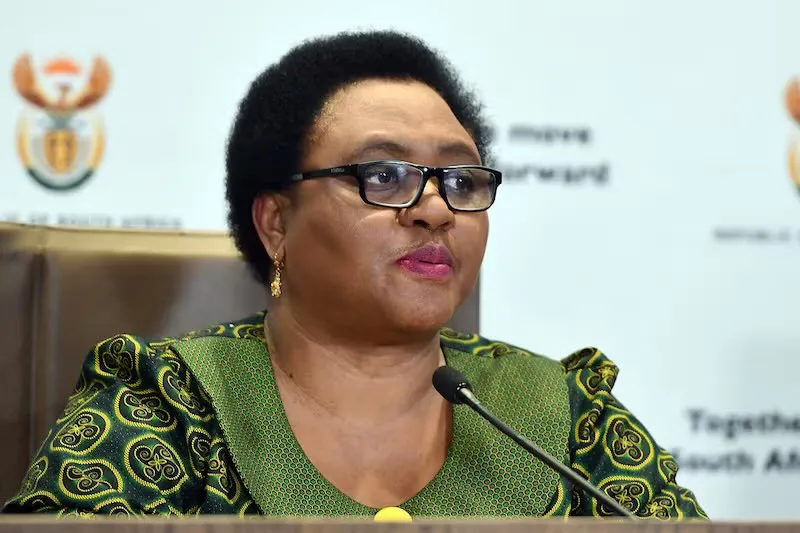
The Speaker’s Role Ended When Committee Was Constituted
Phosa offers a precise constitutional reading of Didiza’s responsibilities:
“The Speaker’s role in relation to the Section 89 process was to ensure that Parliament complied with its constitutional obligations by facilitating the establishment of the impeachment process and the constitution of the relevant committee. Once the Section 89 Committee was duly established and commenced its work, responsibility for the substantive conduct of that process rested with the Committee itself.”
He emphasizes the autonomy of parliamentary committees:
“Parliamentary committees derive their powers directly from the Constitution, the Rules of the National Assembly, and resolutions of the Assembly. They are not subject to the day-to-day direction or control of the Speaker in the exercise of their substantive functions. The Rules do not confer upon the Speaker a general authority to supervise or intervene in the work of committees once they have been constituted.”
This directly addresses the committee chairman Makashule Gana’s request that Didiza oppose the interdict – a request she ultimately declined.
Phosa notes that the institution directly affected is already mounting its defense:
“It is my understanding that the Section 89 Committee has resolved to oppose the President’s application and intends to advance all arguments necessary to protect its authority and ensure the continuation of its work. Parliament’s constitutional interests are therefore already being defended by the institution directly affected by the litigation.”
This aligns with the committee’s three-hour debate, where it voted to oppose the interdict, with legal adviser Advocate William Mokhare SC telling members they were obligated to follow the Constitutional Court’s order.
Phosa’s most powerful argument centers on the Speaker’s unique constitutional position:
“The Speaker occupies a unique constitutional position. She is required to act fairly, impartially, and in a manner that preserves confidence in the integrity of Parliament’s processes. That responsibility includes respecting the autonomy of parliamentary committees and avoiding conduct that may create the perception that the Office of the Speaker has aligned itself with one side of a dispute that is already properly before the courts.”
He warns against the legal purpose of requiring the Speaker’s separate participation:
“In these circumstances, requiring the Speaker to enter the proceedings as a separate opposing party would serve little legal purpose and may unnecessarily compromise the institutional neutrality that is expected of the Office of the Speaker.”
The Review Application Is Not an Appeal Against the Constitutional Court
Phosa clarifies a critical legal misconception:
“It is equally important to understand that the President’s review application is not an appeal against the Constitutional Court. The judgments of the Constitutional Court remain final and binding. The review concerns the legality of the Independent Panel Report, an issue that falls to be determined by the courts. The Speaker’s decision to abide neither supports nor opposes that challenge. It merely reflects a proper appreciation of the constitutional limits of her office.”
This distinction is crucial: Ramaphosa is challenging the Ngcobo Independent Panel’s report, not the Constitutional Court’s May 2026 ruling that revived the impeachment process.
Phosa delivered a broader constitutional principle: “The rule of law is not strengthened when every constitutional office-bearer is expected to oppose every application brought before a court. It is strengthened when each institution performs the role assigned to it by the Constitution and respects the roles assigned to others.
“For these reasons, I remain of the considered view that the Speaker’s decision to file a notice to abide was legally sound, constitutionally appropriate, and entirely consistent with the institutional responsibilities of her office. The decision preserves the neutrality of the Office of the Speaker, respects the autonomy of the Section 89 Committee, and avoids unnecessary duplication of litigation already being conducted by the committee itself.”
He acknowledges public disagreement while defending Didiza’s constitutional duty:
“The public may differ on the merits of the President’s application. However, the Speaker’s constitutional duty is not to take sides in every dispute. Her duty is to uphold the Constitution, protect the integrity of Parliament’s processes, and act within the limits of the powers entrusted to her office. In this instance, she has done precisely that.”
The Phala Phala Scandal That Sparked This Crisis
The impeachment inquiry stems from the Phala Phala scandal—a February 2020 robbery at Ramaphosa’s Limpopo game farm where approximately US$580,000 was stolen. An independent panel chaired by former Chief Justice Sandile Ngcobo found prima facie evidence the President violated the Constitution regarding the theft and failure to report it promptly.
The ANC blocked formal impeachment in December 2022 using its parliamentary majority, but the Constitutional Court ruled in May 2026 that the vote was “irrational, unconstitutional and invalid,” compelling Parliament to establish the 31-member committee.
The interdict hearing is set for July 15-16 in the Western Cape High Court, with Ramaphosa’s broader review of the Ngcobo panel report scheduled for September 2-4. The committee and ATM party remain as the only opponents to the President’s bid, while Didiza will submit her explanatory affidavit.
Phosa’s statement arrives as political pressure intensifies on Didiza, with the DA insisting “the constitutional court ruled that the impeachment committee must do its work” and warnings that her predecessor, Baleka Mbete, faced criticism for shielding Jacob Zuma in the Nkandla scandal.