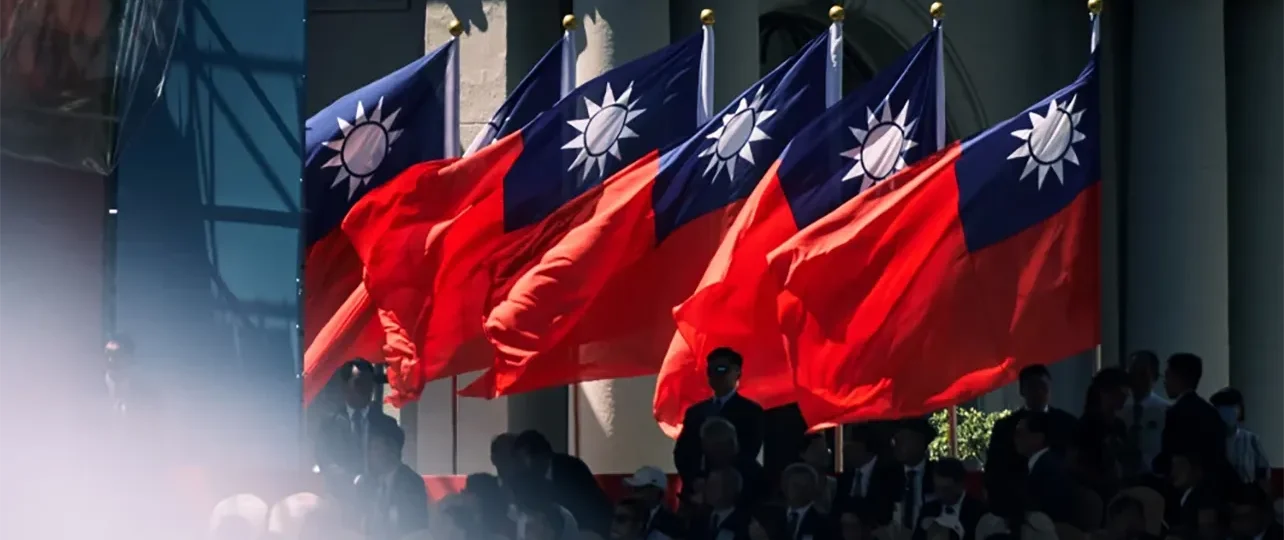

A 2021 Pew Research Centre study on where people in different countries find meaning in life revealed something interesting about Taiwan.
In most countries surveyed, family came first. In Taiwan, the most common answer was society, places and institutions.
The finding provides a helpful starting point for understanding Taiwan’s democracy. It connects public life and shared institutions to the everyday experiences that people in Taiwan find meaningful.
Embracing democracy
Taiwan is also one of the clearest democratic success stories outside of traditional Western democracies. It now stands among the freest democracies in Asia. These achievements were not handed down by an international organisation or bestowed by a great power — the Taiwanese did it themselves.
After the Second World War, Taiwan came under the control of the Republic of China following Japan’s surrender. Nearly 40 years of authoritarian rule and martial law followed. Many Taiwanese lost their lives, freedom and some overseas Taiwanese were blacklisted from returning home.
By the 1990s, after decades of authoritarian rule and martial law, Taiwan had begun its transition to democracy. It transitioned peacefully into a multi-party democracy, holding its first direct presidential elections in 1996.
Much of Taiwan’s social energy was directed toward building civil and political rights at home: freedom of speech, open elections, the right to organise, women’s rights and Indigenous movements for land, recognition and self-determination.
But Taiwan’s international position remained constrained, even as Taiwanese society was becoming more democratic.
Isolated
Taiwan’s democratic culture relies on civic participation, public debate, electoral engagement and institutional change through public pressure. Generation after generation, Taiwanese people have committed to civic movements. This history echoes a common value in Taiwan: what citizens receive from society should be returned to society.
From its own history, Taiwanese people learned that social and political institutions cannot be improved by waiting for a perfect outsider, a foreign country or a strong leader.
Taiwan, however, remains blocked from the United Nations, its specialised agencies and many other international organisations and political forums out of deference to China.
Yet Taiwan has incorporated major international human rights conventions into domestic law. It has also created its own review process and invited experts to examine how these conventions are being implemented.
In a world where many states sign human rights treaties with little genuine will to carry them out, Taiwan’s voluntary embrace of international norms is rare.
This exclusion also follows Taiwanese people abroad. Though Taiwan is frequently barred from international forums, its vibrant society, resilient people and democratic practices are authentic. In many places, Taiwan is still placed under “China” via forms, institutions, events, databases and public assumptions.
The Taiwanese have to stand their ground each day and tell others who they are, where they come from and why they should not be considered Chinese. In doing so, they push back against an authoritarian vision of international order that allows dictatorships to decide who’s allowed to be seen, named and heard.
The role of the diaspora
These daily experiences give the Taiwanese diaspora a political role. When Taiwan’s voice is constrained by formal diplomatic exclusion, the Taiwanese diaspora supports its democracy through institutions and public spaces.
Taiwanese Americans offer one example. Through organisations like the Formosan Association for Public Affairs, they have built long-term channels with the United States Congress, the media and the broader public.
Their advocacy has helped keep Taiwan visible in U.S. politics and contributed to measures that include the Taiwan Travel Act, the TAIPEI Act and other initiatives concerning Taiwan’s international participation.
The Taiwanese diaspora, therefore, helps fill the gap left by limited diplomacy when it advocates for Taiwan’s participation in international organisations, urges legislatures to pay attention to the Taiwan Strait, asks the media to describe Taiwan accurately or explains Taiwan’s history in schools, workplaces and at community events.
Democracy under pressure
Taiwan’s situation raises important questions about how democracies respond when an authoritarian state tries to erase, absorb or silence another democratic society.
China has long suppressed Taiwan’s international participation and continues to interfere with its democratic system. Living on this front line gives Taiwanese people deep familiarity with China’s political language, tactics and information control. Taiwan’s proximity to China and ongoing cross-strait exchanges also give Taiwanese people insight into realities that are otherwise suppressed, censored or kept under wraps inside China.
These experiences make Taiwanese people especially alert to threats against their democracy. When China deploys similar tactics against other democracies, Taiwan often warns those societies that seemingly isolated incidents are frequently part of a broader influence campaign. Over time, as the cumulative effects become visible and harder to reverse, these warnings are increasingly recognized as hard-earned insights born of long experience.
Taiwan’s experience shows that democracy does not maintain itself. It depends on institutions, civic participation, public vigilance and international support. For Taiwanese people living abroad, supporting their homeland acknowledges the country is still being pressured, excluded and misrepresented. This support from the diaspora helps Taiwan remain present in the world, even when formal international spaces try to keep it out.
- This article is republished from The Conversation under a Creative Commons license. Read the original article.