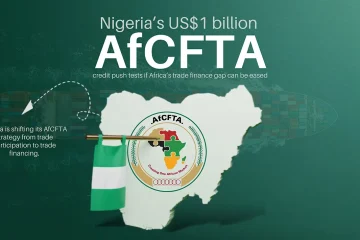
IN a pivotal meeting on the sidelines of the 57th Economic Commission for Africa (ECA) Session in Addis Ababa, African business leaders and policymakers confronted a stark reality: the continent’s landmark free trade agreement remains largely untapped, with its trillion-dollar potential still waiting to be unleashed.
“It’s time to turn AfCFTA from paper into action,” declared Teddy Soobramanien, CEO of the COMESA Business Council, cutting through the diplomatic niceties that have characterized years of policy discussions. His call to action resonated through a room filled with stakeholders who recognize that Africa stands at a critical crossroads.
The African Continental Free Trade Area represents the world’s largest free trade area by number of participating countries, encompassing a market of 1.3 billion people with a combined GDP of $3.4 trillion. Yet despite its promise, the benefits remain theoretical for many African businesses, particularly the micro, small and medium enterprises that form the backbone of the continent’s economy.
“The AfCFTA is not just about transactions—it’s about people,” emphasized Eunice G. Kamwendo, Director of ECA’s Subregional Office for Southern Africa. With MSMEs accounting for 90 percent of businesses and 80 percent of employment across Africa, their success under the trade agreement will determine whether AfCFTA delivers on its transformative potential.
Breaking Down Barriers
The ECA’s Step-by-Step Guide for Trade in Goods under AfCFTA represents a critical tool in this journey, offering practical guidance for businesses navigating complex trade procedures. Melaku Desta, Coordinator of the Africa Trade Policy Center, noted that while National AfCFTA Implementation Strategies exist, they’ve remained largely confined to public sector initiatives, leaving private enterprises—especially smaller ones—without direct support.
“The private sector cannot afford to wait,” warned Soobramanien. “African businesses must seize the opportunity to expand regionally now, or risk watching from the sidelines as others capitalize on the continent’s growth.”
Beyond Profits: Trade with Purpose
A crucial dimension emerged during the discussions: the human element of trade. Hod Anyigba, Executive Director of the Africa Labour Research and Education Institute, delivered a powerful reminder that “trade must serve people, not just profits.” Without proper labor protections and corporate accountability, the agreement risks exacerbating informal employment and deteriorating working conditions.
Marva Corley-Coulibaly from the ILO reinforced this perspective: “Just as we meticulously plan trade, industrial, and investment policies, we must also plan for decent work, not as an afterthought.” Her call for a Trade and Sustainable Development Protocol underscores the need for economic justice to accompany trade liberalization.
Women and Youth: The Untapped Catalysts
Perhaps the most significant untapped potential lies with Africa’s women and youth entrepreneurs. Cynthia E. Gnassingbe, Senior Advisor to the AfCFTA Secretariat, highlighted that the Women and Youth in Trade Protocol and the Digital Trade Protocol provide frameworks for inclusive participation, but stressed that stronger financing mechanisms are needed to ensure access to affordable capital.
The Path Forward
Experts outlined five critical actions to transform AfCFTA from promise to reality:
- Strengthen labor protections while ensuring enforcement and advancing social inclusion
- Align national policies to fully implement the agreement
- Provide targeted financial and training support for MSMEs, women, and youth entrepreneurs
- Establish clear regulations and practical tools for trade facilitation
- Engage the private sector as the primary driver of implementation
The convergence of the ILO’s Decent Work Toolkit and ECA’s Step-by-Step Guide offers a powerful foundation for businesses ready to embrace continental trade. As the continent moves forward, the message is clear: Africa’s trillion-dollar trade potential will only be realized when policies translate into action, when profits advance alongside people, and when no business is left behind.