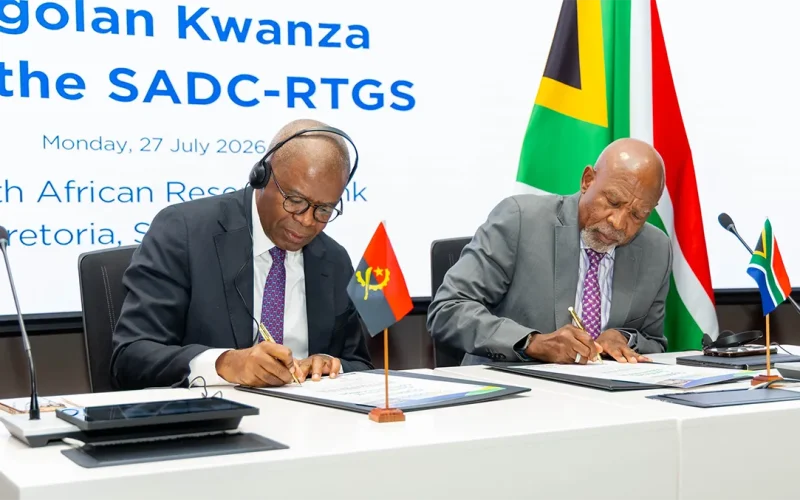
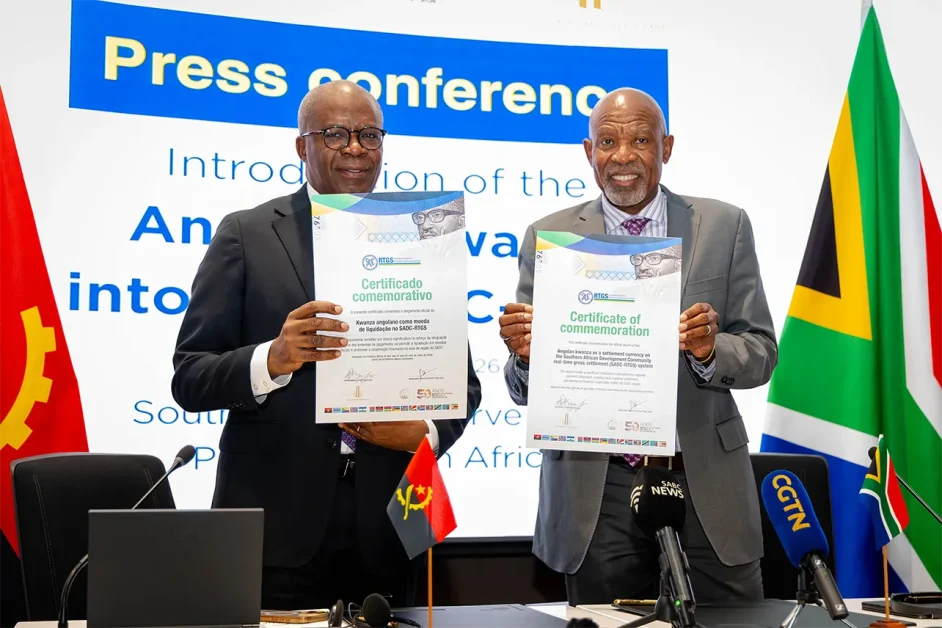
FOR thirteen years, every transaction settled through the Southern African Development Community’s real-time gross settlement system passed through a single currency: the South African rand. On Sunday, that arrangement ended. The Angolan kwanza has been admitted as the second settlement currency in the SADC-RTGS system, in a joint announcement by South African Reserve Bank Governor Lesetja Kganyago and Banco Nacional de Angola Governor Manuel Tiago Dias.
The technical description – a multi-currency capability upgrade to a regional payments platform — understates what is actually underway. This is a structural change to how money moves across one of Africa’s most economically consequential trade blocs, and it carries direct implications for any business that pays suppliers, settles invoices, or repatriates earnings across Southern African borders.
What Changed, Precisely
The SADC-RTGS system has operated since 2013 as the settlement backbone for cross-border payments among the bloc’s member states, with 15 countries currently participating. Until this week, every transaction — regardless of the trading parties’ home currencies — was ultimately settled in rand. A Zambian importer paying an Angolan exporter, for instance, would have had that transaction cleared through a rand-denominated settlement layer, even where neither party’s home currency was the rand.
That single-currency architecture is now giving way to a multi-currency model. Kwanza-denominated transactions can settle directly, without conversion through rand as an intermediary step. The central banks have signalled this is a first step, not a final one: the Botswana pula has been named as the next currency under consideration for onboarding.
“Removing an unnecessary rand conversion leg lowers cost directly — and does so permanently, not as a promotional rate.”
Why It Matters to the Balance Sheet, Not Just the Policy Paper
For businesses trading across SADC borders, the direct effect of a widened settlement currency base is a reduction in foreign exchange conversion steps. Every conversion layer in a cross-border payment carries cost — spread, timing risk, and often a correspondent banking fee — that is ultimately absorbed by the businesses transacting, not the banks facilitating. Removing an unnecessary rand conversion leg for Angola-linked transactions lowers that cost directly, and does so permanently rather than as a promotional rate.
There is a second, less visible benefit: settlement speed. A real-time gross settlement system that can clear kwanza natively removes a processing step that previously added latency to the payment chain. For treasurers managing working capital across multiple SADC jurisdictions, faster settlement is not a marginal convenience — it changes how much cash needs to sit idle in transit versus how much can be redeployed.
The Strategic Context: De-Dollarisation by Increments
It would be a mistake to read this purely as payments-infrastructure housekeeping. The announcement is explicit that the reform aligns with the G20’s cross-border payment agenda on cost, speed and efficiency — but it is equally explicit about a second objective: promoting greater use of local and regional currencies in intra-SADC trade, and reducing reliance on currencies from outside the bloc.
That second objective is the more consequential one for businesses positioning themselves over the medium term. It places SADC alongside a broader continental and Global South trend of reducing structural dependence on hard currencies — principally the US dollar — for regional trade settlement. The mechanics are incremental: one currency added to a regional system is not, on its own, a shift away from dollar-denominated trade finance. But the direction of travel is unambiguous, and Governor Kganyago’s dual role — as head of the South African Reserve Bank and Chairperson of the SADC Committee of Central Bank Governors — indicates this initiative has institutional weight behind it across the bloc’s central banking architecture, not just Pretoria’s endorsement.
What Businesses Should Watch Next
● Pula onboarding. The stated intention to bring the Botswana pula into the system next will be the first real test of momentum. A rapid follow-through would suggest the kwanza’s admission is the start of a systematic currency expansion rather than a one-off accommodation for Angola.
● Corridor-specific savings. Businesses trading along South Africa-Angola and wider kwanza-linked corridors should request from their banks a concrete accounting of the conversion costs this removes, rather than assuming the benefit automatically. Not all banking relationships will pass the full saving through to clients immediately.
● Whether SADC-RTGS becomes a template. Other regional payment systems on the continent — including those under the African Continental Free Trade Area’s broader payment integration efforts — will be watching whether SADC’s multi-currency model works operationally at scale. A successful expansion here strengthens the case for similar reform elsewhere on the continent, with consequences for any business operating across multiple African trade blocs.
The rand’s founding monopoly over SADC settlement is now formally over. What replaces it — a genuinely multi-currency regional payments system, or a slow, currency-by-currency expansion that takes years to matter commercially — will depend on how quickly the pula and other regional currencies follow the kwanza’s lead.