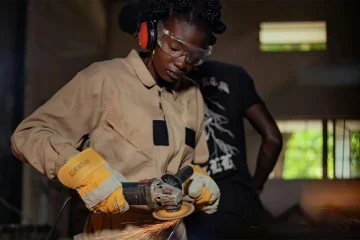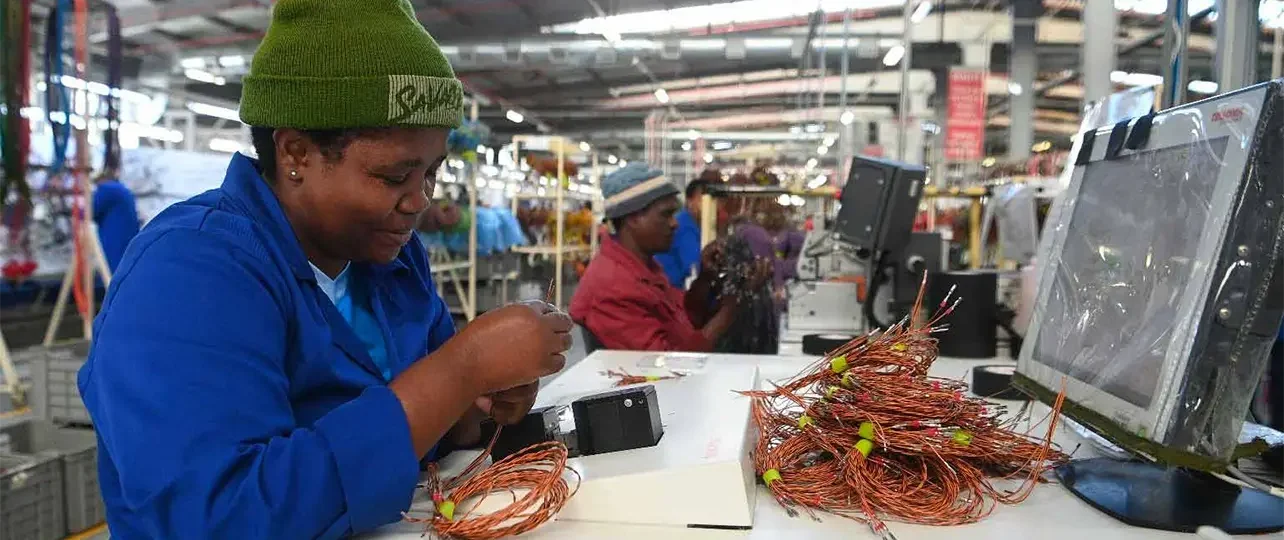

CLARA Kaekane adjusts her safety glasses and examines the intricate web of colored wires spread across her workstation. As a product and process engineer at Delta Automotive Technologies, she knows that each connection she perfects will eventually course through a Volkswagen or Nissan vehicle, carrying electrical signals across highways from Johannesburg to Lagos. But for Clara, every wire harness represents something far more profound.
“Every component we make is a challenge to outdated assumptions about gender and engineering work,” she says, her voice carrying both pride and determination. “I’m not just building car parts—I’m building a new perception of what is possible for women in manufacturing across Africa.”
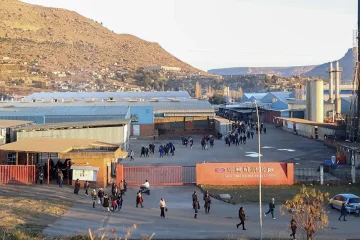
Clara is part of a remarkable transformation taking place in Lobatse, a town 70 kilometres south of Botswana’s capital, Gaborone. Here, in sprawling factory halls that hum with purposeful energy, 327 workers—75% of them women—are quietly rewriting both their own futures and their country’s economic story.
Breaking Barriers, Building Dreams
The statistics at Delta Automotive Technologies tell a story that would have seemed impossible just a few years ago. In an industry traditionally dominated by men, women’s expertise is driving this operation forward, shattering glass ceilings with every wire harness they assemble. For many of these women, the opportunity represents their first chance to work in management and technical roles within the automotive sector.
“This is a great opportunity for our country and company,” Clara reflects, gesturing toward her colleagues who move with practised precision between workstations. The significance of their presence here extends far beyond the factory floor—it’s a testament to changing perceptions about women’s capabilities in high-tech manufacturing.
Each day, these skilled hands produce 120 vehicle harness sets for Volkswagen South Africa, intricate components that serve as the central nervous systems of modern automobiles. The wire harnesses they create will power Volkswagen’s Polo Vivo and Polo 270 models, along with Nissan’s H60 brand, connecting electrical signals throughout vehicles that will travel across Africa and beyond.
From Diamonds to Dreams
For decades, Botswana’s economic identity was carved in diamond mines, but today a new chapter is being written in manufacturing halls. The transformation began when the African Development Bank provided an $80 million credit line to the Botswana Development Corporation, catalysing Delta’s evolution from a small operation into a manufacturing powerhouse.
“This funding hasn’t just built infrastructure—it’s built opportunity,” explains Darryn Hattingh, Delta’s Director of Manufacturing. Walking through the facility, he points to state-of-the-art equipment and organised production lines that now compete on a global scale. “We’ve built a world-class operation that competes globally while creating opportunity locally.”
The impact ripples through families and communities across Lobatse and beyond. With 95% of the workforce comprising Botswana nationals, the company has become a major driver of local economic empowerment. Behind every employment statistic is a family supported, skills developed, and a community transformed.
Scaling Success
The ambition here extends far beyond current achievements. By 2027, Delta plans to nearly triple its output, producing 340 vehicle sets for Volkswagen and 111 for Nissan daily. This expansion means the workforce will grow from today’s 327 employees to 1,000 within four years—each new position representing another opportunity for local residents to join global value chains.
“We’re seeing multiple development dividends from this single investment,” says Benedicta Abosi of the Botswana Development Corporation. “Delta’s growth is generating export earnings, creating quality jobs, developing technical skills and, perhaps most importantly, demonstrating what’s possible when development finance meets entrepreneurial vision.”
The transformation extends beyond individual success stories. As Moono Mupotola, the African Development Bank’s Deputy Director General for Southern Africa, observes: “Each wire harness connects not just vehicle components, but Botswana’s workforce to global value chains, rural communities to industrial opportunities, and traditional economies to a diversified future.”
A Template for Transformation
What makes Delta’s story particularly compelling is its potential for replication across Africa. The company demonstrates how strategic development financing can simultaneously address multiple challenges: unemployment, gender inequality, economic diversification, and regional integration.
“What is happening here is the physical manifestation of our High 5 development priorities, particularly ‘Industrialise Africa’ and ‘Integrate Africa,'” Mupotola explains. “It also provides skills to the people of Africa.”
As Clara and her colleagues continue their meticulous work, connecting wires that will power vehicles across the continent, they’re also creating something equally important: a blueprint for how African development finance can catalyse inclusive industrial transformation. Their success offers hope that similar stories can unfold in manufacturing centres from Accra to Addis Ababa.
Powering the Future
In the end, Delta Automotive Technologies represents more than manufacturing excellence. It embodies the possibility of economic transformation that puts people—particularly women—at its centre. As Mupotola concludes: “This has definitely been a good investment for the African Development Bank, and this is how we see development financing working in Africa.”
The hum of machinery in Lobatse continues, each wire harness assembled not just connecting automotive components but weaving together the dreams of workers, the aspirations of communities, and the promise of a more diversified, inclusive African economy. Here, in the hands of skilled women and men, Botswana’s future is being carefully, precisely, and powerfully connected.