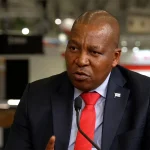
DR Kefentse Mzwinila, once a powerful Cabinet Minister in Botswana’s long-ruling BDP government, now finds himself at the centre of an aggressive asset freeze action that paints a portrait of systematic enrichment allegedly far beyond his legitimate means.
The Director of Public Prosecutions has laid bare a comprehensive inventory of suspicious wealth in court filings dated December 24, 2025, targeting the former minister, his wife Bridget, and their network of associated companies under the Proceeds and Instruments of Crime Act.
The Asset Portfolio Under Scrutiny
Cash Holdings: The State has identified over P1.1 million in various accounts, including P700,990.62 in an ABSA Bank account registered to Dr Mzwinila, P14,080.00 held by Maruapula School, and P475,000.00 remaining with Rootlet (Pty) Ltd.
The Ramotlabaki Estate: At the heart of the allegations lies a sprawling agricultural empire in Ramotlabaki—four adjacent farms totalling 67.6 hectares, all purchased entirely in cash. The estate comes fully equipped with cattle infrastructure, tractors, and ploughing machinery, representing what prosecutors describe as acquisitions “disproportionate to declared income.”
Industrial and Agricultural Holdings: The reach extends to industrial land at Gamodubu, complete with catering and workshop equipment, plus agricultural plots at Kgalapitse, suggesting a property empire spanning multiple districts.
Vehicles and Heavy Machinery: The asset list includes substantial farming and construction equipment: a JCB backhoe, Bhero tractors, harvesters, and WAW diesel tricycles—the tools of large-scale agricultural and industrial operations.
Stock Market Investments: Over 30,000 ordinary shares across blue-chip companies, including ABSA, BTCL, Sefalana, and Letshego, demonstrating diversified investment activity.
In total, prosecutors have identified 18 linked properties, along with farming equipment, machinery, and securities.
The Allegations: How Power Allegedly Became Profit
Investigators have classified Mzwinila and his wife as “politically exposed persons,” a designation reserved for those whose positions create heightened corruption risks. The DPP alleges they exploited governmental access in two key ways:
Contract Manipulation: Prosecutors claim the couple leveraged influence to secure lucrative government contracts.
Land Allocation Abuse: The filing suggests they manipulated land allocation systems—a particularly sensitive issue in Botswana, where land remains a scarce and valuable resource.
The pattern of cash-based purchases particularly troubles investigators, who argue this payment method was designed to obscure the paper trail connecting properties to their alleged illicit funding sources. The “rapid asset growth” documented in court papers suggests what prosecutors characterise as systematic laundering of corrupt proceeds through agricultural enterprises.
The Flight Risk: Why Urgency Matters
Prosecutor Dumisani Pedro Marapo’s certificate of urgency reveals a race against time. He warns the assets exist in a “highly liquid state” with dissipation “not merely possible but probable.”
The concern isn’t theoretical. Court documents reference depositions from directors of Ndoro Group (Pty) Ltd and Bringbawn (Pty) Ltd—two logistics firms that have already transported farm equipment and household furniture out of Botswana. This evidence of active asset movement prompted the ex parte filing, made without notifying the respondents to prevent further disappearance of property.
Marapo emphasised the modern reality of financial crime: “Much of the money which funded the assets is movable and capable of rapid disappearance at the click of a button by parties with criminal intent.”
A Government’s Reckoning
The DPP’s move represents more than a single prosecution – it signals Botswana’s willingness to confront what prosecutors describe as unexplained wealth accumulated by previously “untouchable” figures from the BDP, which governed for nearly six decades until recently.
DPP Kgosietsile Ngakaagae’s founding affidavit states plainly that the properties are “either proceeds of serious offences or were purchased directly with such proceeds.” The application authorises a Receiver of Property to assume complete possession and control of all listed assets pending a full civil forfeiture hearing.
For Dr Mzwinila, the contrast between past and present could hardly be starker. Once wielding Cabinet-level authority in a government that prided itself on clean governance, he now faces the prospect of losing an empire of land, equipment, and investments that prosecutors argue was built not through honest enterprise, but through the corruption of the very system he once helped lead.
The restraint order sought by the State would freeze this entire portfolio, preventing any further disposal or transfer while investigators build their case. Whether the allegations will ultimately be proven remains for the courts to decide, but the filing itself marks an unmistakable fall from grace for a man who once operated at the pinnacles of Botswana’s political power.