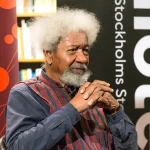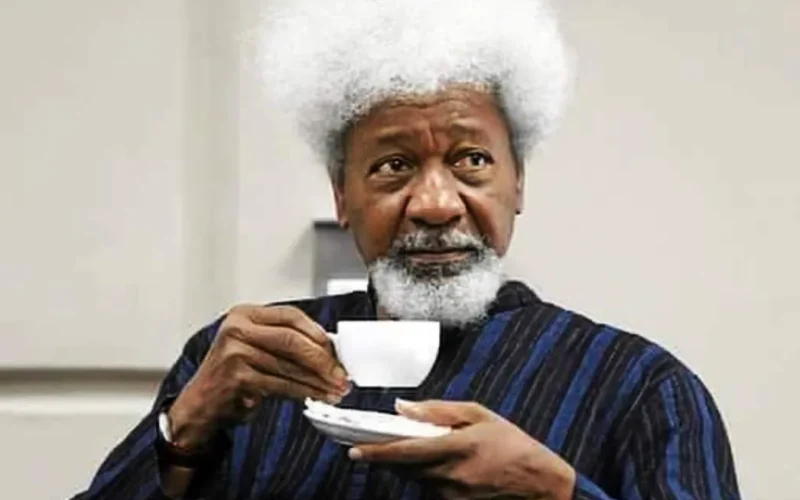
Let it be known that Africa’s most gloriously unmanageable literary giant has turned 92, and – in a plot twist nobody saw coming – the Nigerian presidency sent flowers. Well, not literal flowers. A birthday message. Same difference, really, when the recipient is a man who has spent seven decades treating power the way a mongoose treats a cobra: circling it, taunting it, and occasionally biting it in front of witnesses.
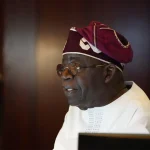
President Bola Tinubu’s tribute to Professor Wole Soyinka was, by the standards of Nigerian political correspondence, a model of restraint. It thanked the Nobel laureate for his contributions to “literature, democracy and national development” and wished him “good health and longevity.” Careful words. Diplomatic words. The kind of words a nervous intern might draft for a birthday card to a headmaster who once expelled the entire prefects’ body for insubordination.
“Soyinka is not merely a national treasure. He is a national warning label.”
Because make no mistake: Soyinka is not merely a national treasure. He is a national warning label. This is a man who fled into exile rather than genuflect to military tyranny, who has stormed out of more state functions than most politicians have attended, and who — at an age when lesser icons are content to be wheeled out for ceremonial applause — remains fully capable of making a room full of dignitaries sweat through their agbadas with a single, perfectly timed sentence.
So when the state offers birthday wishes to a man who has spent his life needling the state, there is a delicious contradiction humming beneath the pleasantries. It is a bit like a cat sending a card to the mouse that keeps outrunning it, praising its “contribution to the sport.”
THE MAKING OF A MOVEMENT, IN ONE MAN
Soyinka’s 92 years are not simply a tally of birthdays; they are practically a chronological table of contents for modern Nigeria. He has been present — often loudly, often inconveniently — for the giddy optimism of independence, the long grey winters of military rule, and the bruised, hopeful lurches toward democracy that followed. Where other elders mellow into memoir and nostalgia, Soyinka has continued to sharpen his pen the way other 92-year-olds sharpen their golf swing.
That persistence is the real story here, more than any presidential press release. Africa produces plenty of icons who are allowed to calcify into monuments — safely quotable, politely irrelevant, wheeled out for anniversaries and then wheeled straight back into silence. Soyinka has refused the wheelchair treatment. He remains a working irritant, and there is something almost heroic in a man’s insistence, at 92, on continuing to be difficult.
THE COMEDY OF DOMESTICATION
There is real comic value in watching the establishment try to fold Soyinka into its warm official embrace. Praising him for “defending democratic values” is a bit like a landlord praising a squatter for their “commitment to interior design” — technically accurate, spiritually beside the point. Soyinka has never been in the business of defending institutions so much as interrogating them, publicly, loudly, and with the kind of literary flourish that makes the interrogation sting twice as much.
“The pen was always meant to be a weapon, not a wall ornament.”
For a younger generation raised on his quotes circulating in screenshots long before they ever cracked open his plays, this birthday offers something more useful than nostalgia: a reminder that the pen was always meant to be a weapon, not a wall ornament. Soyinka’s career is proof that literature and civic courage are not separate hobbies but the same muscle, exercised differently.
THE CATCH IN THE CELEBRATION
None of this should be sentimentalised into a museum plaque, however. The very ills Soyinka has spent decades lampooning — corruption, authoritarian reflexes, intellectual complacency dressed up as patriotism — remain stubbornly, embarrassingly current. The presidential well-wishes are warm. The works that provoked the need for them are not retired.
Turning 92 does not soften Soyinka into irrelevance; if anything, it upgrades his complaints to the status of prophecy. Each birthday tribute risks becoming an exercise in reverence that quietly defangs the man being revered — venerate loudly enough, and critique starts to sound like folklore. Soyinka, characteristically, is unlikely to allow that.
So here is what 92 really means for Africa’s most magnificent troublemaker: not retirement, not domestication, but confirmation. Confirmation that the nation still needs biting, that the biting still works, and that the man doing it shows no sign of losing his teeth.
Happy birthday, Professor. The state bows. The page turns. And somewhere, quietly, the establishment is bracing itself for whatever he says next.