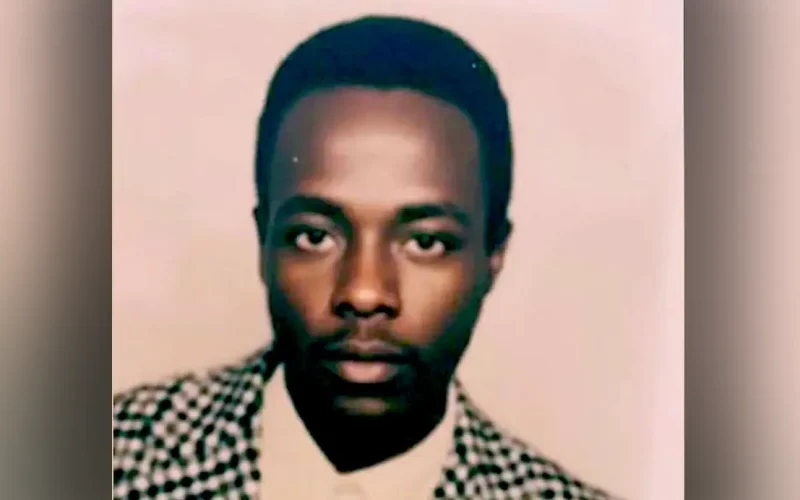
HE drew with one arm. He saw with both eyes. And for fifteen unbroken years, the government of Eritrea — among the most secretive and repressive on earth – could not endure what Biniam Solomon saw.
Solomon, now in his early sixties and known across the Horn of Africa and its diaspora by his pen name Cobra, has walked out of one of Asmara’s most feared detention facilities. He was arrested in 2011 in the Eritrean capital. He was never charged. He was never tried. He was never given a date. For a decade and a half, his family received no word. Occasional, grudging medical attention was the only concession the state made to his humanity.
| Fifteen years without charge. Not a verdict – a verdict on the regime that issued it. |
The world should sit with that number. Fifteen years. A child born the year Solomon was arrested would today be entering secondary school. South Africa would have cycled through three presidents. The United States would have been through four election cycles. Eritrea’s President Isaias Afwerki – in power since independence in 1993, answerable to no one – would not have been disturbed once by the question of what crime, precisely, a physics teacher and cartoonist had committed against the state.
The answer, of course, is that Solomon committed the one crime a dictatorship cannot survive: he made people think. And he made them laugh while doing it.
A NATION THAT SILENCED ITSELF – OR WAS SILENCED
To understand what Cobra meant, you must understand what Eritrea was before September 2001 – and what it became after. For a brief, improbable four years following independence, the Horn of Africa’s newest nation hosted a flowering of independent media. Seven private newspapers. Lively editorial debate. The kind of journalism that made politicians nervous.
Solomon’s cartoons appeared in those papers from 1997. Sharp, witty, politically acute – they became collectors’ items of democratic ambition in a young country still inventing itself. He also authored three books, their titles alone a manifesto: Subtle is the Ruler, Conversation with Cobra Number One, Conversation with Cobra Number Two. The Cobra had a name for those in power. He drew them faithfully.
Then came the crackdown. In September 2001, the government shuttered every independent outlet in the country, branding the free press a threat to national security. Dozens of journalists were arrested. The private media vanished overnight. Eritrea did not descend into press repression – it vaulted into it.
| He lost an arm in childhood. He never lost his nerve. The regime could imprison the man but not the metaphor he had become. |
Today, Reporters Without Borders ranks Eritrea dead last – 180th out of 180 countries – on its annual World Press Freedom Index. It is, in the language of that index, not merely a difficult environment for journalism: it is an information desert. No independent media operates inside the country’s borders. The only authorised outlets are arms of the Ministry of Information. Foreign journalists require state minders. Internet café users must provide identity documents before connecting.
This is not the background to Solomon’s case. This is the case itself – a country so determined to control what its people know and feel that it imprisoned a cartoonist for a decade and a half rather than risk the conversation his pen might restart.
AFRICA’S DEEPEST PRESS FREEDOM WOUND
The Committee to Protect Journalists documented 16 journalists still imprisoned in Eritrea as of late 2025 – all held for more than two decades, their legal status, physical condition, and whereabouts unknown even to their families. Some are believed to have died in custody. None has been tried.
Among them is Dawit Isaak – Swedish-Eritrean journalist, playwright, and man of letters — who has been held incommunicado since 2001 in what amounts to a 24-year enforced disappearance. In a 2009 interview, President Afwerki stated plainly that Isaak would not be released and would not face trial. There is no ambiguity in that statement. There is no law behind it either. There is only power, and the willingness to use it without limit.
The United Nations has previously called for the release of an estimated 10,000 people held without trial in Eritrea. In July 2023, the UN Working Group on Arbitrary Detention ruled Isaak’s detention arbitrary and demanded disclosure of his whereabouts. The Eritrean government did not respond.
| When a government fears a cartoonist, it has already lost the argument. It knows only that it cannot afford to let anyone else know that. |
Solomon’s release – welcome as it is – was delivered without explanation, as are all such releases in Eritrea. The authorities offered no account of why he was detained, no acknowledgement of the years taken from him, no admission that the silence imposed on him was anything other than routine administration. It is, as critics note, a process that operates entirely outside law, which means it can be reversed at any moment by the same authority that initiated it.
Solomon is free. He has walked back into a world that is 15 years older. His country’s independent press – the world in which his work was born — no longer exists. His books are banned. His pen name, Cobra, survives him in the way that all defiant art survives repression: in memory, in exile communities, in the stubborn persistence of people who refuse to forget what they were once allowed to read.
THE CONTINENT WATCHES
Africa’s press freedom landscape is not uniformly dark. South Africa, despite the pressures that accompany any robust democracy, maintains a diverse and adversarial media culture. Gabon, in the RSF ranking’s most recent assessment, offers rays of hope. Across the continent, journalists continue to report under conditions ranging from uncomfortable to life-threatening — and continue reporting nonetheless.
But Eritrea sits at one end of a spectrum that should disturb every African government and every African citizen. It is not a country at war. It is not a country in the grip of an insurgency that might, however wrongly, justify emergency measures. It is a country at peace with its neighbours, governed by a single man for more than three decades, in which the practice of journalism has been made functionally illegal.
The African Union’s founding documents speak of human rights, democratic governance, and the dignity of African peoples. The silence of continental institutions in the face of Eritrea’s documented, sustained, industrial-scale assault on the press is a failure that no communiqué can paper over. Afwerki has remained in power, attended summits, and been received as a legitimate head of state while holding journalists without charge for periods that have no parallel on earth.
| Eritrea does not merely imprison journalists. It practices the disappearance of journalism itself — and dares the continent to notice. |
Solomon’s release is an act of power, not grace. Eritrea’s government chose to free him without acknowledging what it did, without facing consequences, and without releasing the thousands who remain in the same conditions. It is a reminder — not a reckoning.
The Cobra is back in the wild. But the cage that held him is still standing, and it is full.
| CONTEXT & RECORD: Eritrea has ranked last (180/180) on the RSF World Press Freedom Index for multiple consecutive years. The CPJ recorded 16 journalists imprisoned in Eritrea as of December 2025 — all held for more than 20 years without trial. The UN estimates 10,000 people are held without trial in the country. Dawit Isaak, a Swedish-Eritrean journalist, has been detained without charge since 2001 – 24 years. Biniam Solomon (Cobra) was detained in 2011 and released in March 2026 without charge, trial, or official explanation. |