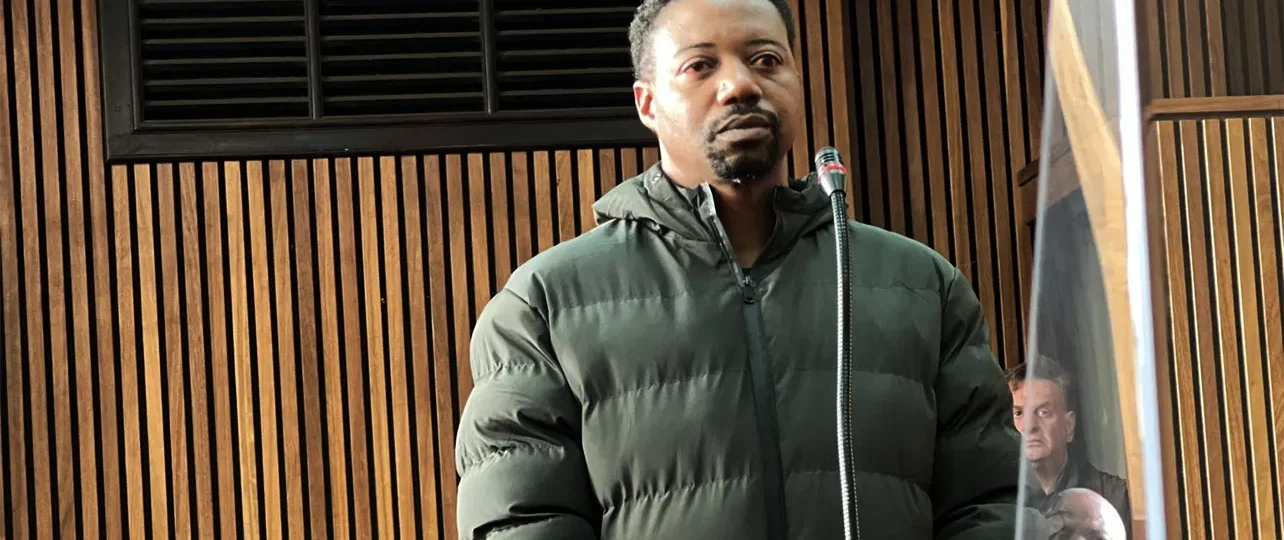

NDODANA Mkhanyisi Tshuma, the 45-year-old British citizen of Zimbabwean heritage wanted by United Kingdom authorities for the alleged murders of his wife and two young daughters, appeared in the Johannesburg Magistrate’s Court on Monday for the first time since his arrest, as South African police confirmed the opening of formal extradition proceedings against him.
Tshuma, dressed in a long ski jacket with his hands kept in the pockets and blue jeans, stood before the court on two separate matters: an extradition application lodged by UK authorities, and a domestic charge of possessing an illegal firearm. The matter was postponed to 22 July as the extradition process continues, giving investigators on both sides of the two jurisdictions further time to consolidate their case.
South African Police Service (SAPS) national spokesperson Brigadier Athlenda Mathe told reporters outside court that the state had so far received only a provisional extradition request, routed through Interpol Manchester and Interpol Pretoria, outlining the UK allegations against Tshuma in connection with the deaths of his wife and two daughters.
“We will be awaiting a full extradition request within 40 days that will include the UK case docket, as well as supporting evidence”
Mathe said the provisional submission includes the arrest warrant issued by UK authorities, but that the complete docket – expected within 40 days – will ultimately determine the pace and shape of the extradition. “It will then be up to the court to determine when he will be extradited back to the UK,” she said, underscoring that the timeline remains in the hands of the judiciary rather than the police.
She characterised the cooperation between South African and British authorities as routine among Interpol member states. “We are all Interpol member countries. We share intelligence, we share information, and we assist each other with cross-border and international investigations,” Mathe said.
HOURS AFTER LANDING: THE ILLEGAL FIREARM ALLEGATION
Running in parallel to the extradition process is a separate South African prosecution: Tshuma is also charged with possessing an unlicensed firearm. According to police, the weapon was not acquired over days or weeks in hiding, but within hours of his arrival in the country. Mathe told reporters that SAPS’s information is that Tshuma travelled directly into a South African township and bought the illegal firearm shortly after landing. “We are told that upon arrival in South Africa, he bought a firearm in one of the townships,” she said, an allegation that, if confirmed, points to a fugitive who moved with speed and apparent ease to arm himself almost as soon as he touched down.
SAPS has opened a further investigation to trace the source of the weapon. “We are tracing the suspects responsible for selling him this unlicensed firearm,” Mathe said, an inquiry that sits at the intersection of the high-profile extradition case and South Africa’s broader, longer-running struggle to curb the illicit firearms trade that continues to supply weapons into townships with little apparent difficulty.
Asked directly whether Tshuma had been harboured or otherwise assisted while evading UK authorities in South Africa, Mathe was unequivocal in her denial, telling reporters that investigators found no evidence of protection and that, on the contrary, relatives had cooperated with police. “Absolutely not. He was not harboured. We worked closely with different stakeholders, including his family, to apprehend him,” she said.
FROM BEDFORD TO KENSINGTON: THE MANHUNT
Tshuma was arrested on Friday in Kensington, Johannesburg, in a coordinated operation involving the SAPS Interpol National Central Bureau, Crime Intelligence and the Organised Crime Investigation Unit — a multi-unit deployment that signals the priority South African authorities attached to the case once the UK alert was received.
UK police are seeking Tshuma’s extradition over the deaths of his wife, 42-year-old Nothabo Zandile Tshuma, and their daughters, 15-year-old Natalie and five-year-old Nala. The three victims were discovered at the family home in Great Denham, near Bedford, after British police forced entry on the preceding Monday amid concern that the family had not been seen for several days.
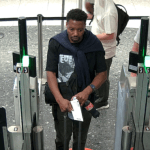
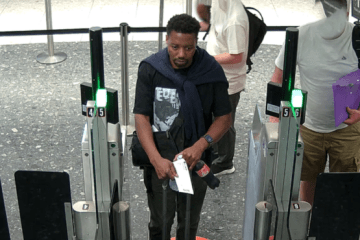
Reporting by Sky News indicates that Tshuma left the United Kingdom on the Saturday before the bodies were found — two days ahead of the discovery — flying out of London Heathrow Airport to Zimbabwe on a British passport. UK police subsequently released CCTV images of him at the airport as part of efforts to trace his movements, before he was located and arrested in Johannesburg.
ITV News has reported that Tshuma owned and operated a property business, Nexus Trove Holdings, run from the family’s home in Great Denham. The company’s latest filings recorded assets of just over £1 million — roughly R24 million — at the end of 2024, details that are likely to feature in the broader UK investigation into the case.
A MESSAGE ON SOUTH AFRICA AND FUGITIVE JUSTICE
Acting National Commissioner Lieutenant General Puleng Dimpane framed the arrest as evidence of the effectiveness of cooperation between specialised SAPS units and international law enforcement partners, and as a deterrent message to fugitives who might view South Africa as a place to disappear.
“This arrest demonstrates that South Africa is not a safe haven for fugitives. Anyone who believes they can evade justice by fleeing to our country should know that SAPS will work tirelessly with international law enforcement partners to trace, locate and arrest them”
The case now moves on two tracks simultaneously: an extradition process bound by a 40-day evidentiary deadline and ultimately subject to judicial discretion, and a domestic firearms charge that has opened its own investigative thread into how a recently arrived foreign national was able to obtain an unlicensed weapon within days of setting foot in the country. Both matters return to the Johannesburg Magistrate’s Court on 22 July.