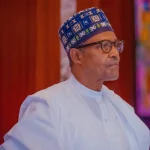
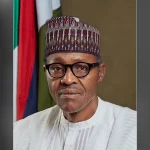
THE news arrived on a quiet Sunday afternoon in London, cutting through the usual bustle of the British capital like a sharp blade through silk. At 82, Muhammadu Buhari – soldier, leader, and one of Nigeria’s most polarising figures – had drawn his final breath in a London clinic, far from the dusty plains of Daura where he was born, far from the corridors of power he once commanded.
Within hours, the news had travelled across continents and oceans, racing through fibre optic cables and satellite signals to reach every corner of Nigeria, every capital in Africa, and every newsroom around the world. What followed was not the unified outpouring of grief that typically accompanies the death of a former head of state, but something far more complex – a mirror reflecting the fractured soul of a nation that Buhari had led, divided, and left forever changed.
A Nation’s Wounded Heart
In Abuja, President Bola Tinubu’s voice cracked slightly as he addressed the nation, his words carefully chosen yet heavy with the weight of history. “Nigeria has lost a disciplined patriot,” he declared, ordering flags to fly at half-mast for seven days. The presidential villa, once Buhari’s seat of power, now stood draped in the black cloth of mourning, its corridors echoing with whispered conversations about legacy and loss.
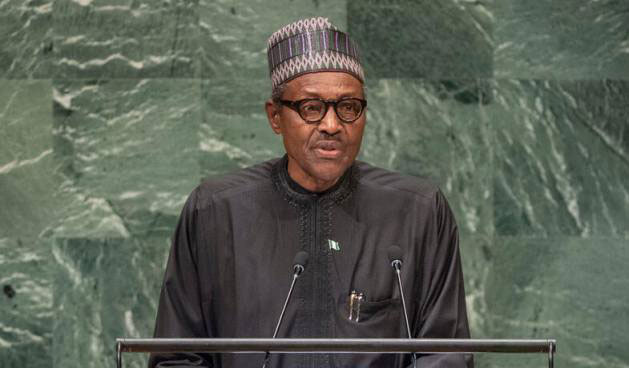
But beyond the official protocols and ceremonial declarations, Nigeria’s 220 million people were grappling with emotions that ran deeper than any government proclamation could capture. On the streets of Lagos, in the markets of Kano, in the villages of the Niger Delta, conversations stopped mid-sentence as news of Buhari’s death spread. Some wept openly; others nodded grimly, as if they had been expecting this moment.
Social media became a battlefield of memory and judgment. Twitter feeds exploded with hashtags that told the story of a divided nation: #BuhariLegacy trending alongside #NeverForget and #EndSARS. The digital realm, where Nigeria’s youth had once rallied against his administration, now became a space where the final verdict on his life was being written in real-time.
“Gone too late,” wrote one user, their words dripping with the accumulated frustration of years spent under economic hardship and insecurity. Another responded with equal passion: “Respect the dead. He served his country.” The comment threads became microcosms of Nigeria itself – passionate, divided, and unwilling to find common ground even in death.
Reality TV star Tacha, her voice carrying the weight of a generation that had come of age during Buhari’s presidency, acknowledged his place in history while carefully avoiding judgment. Actor Emeka Nwagbaraocha was less diplomatic, his words sharp as a Lagos hustle: “Leadership is about the people, not power.” Entertainer Charlyboy, ever the provocateur, let his criticism flow freely, while Pere Egbi struck a more measured tone, recognising both achievements and failures in the complex tapestry of Buhari’s legacy.
The Continent Remembers
From Cape Town to Cairo, from Dakar to Dar es Salaam, Africa’s leaders reached for their phones and drafted statements that would define how the continent remembered one of its most controversial sons. The African Union Commission’s chairperson, Mahmoud Youssouf, chose his words carefully, calling Buhari a “Pan-Africanist” and praising his commitment to regional integration and peace. It was the language of diplomacy, but beneath the official rhetoric lay the recognition that Africa had lost a figure who, for better or worse, had shaped the continent’s largest democracy.
Sierra Leone’s President Julius Maada Bio described the loss as “devastating” for Nigeria and the continent. From Ghana, from Kenya, from South Africa, condolences poured in—each statement a carefully calibrated reflection of regional politics and personal relationships forged over years of summits and state visits.
But the continent’s response, like Nigeria’s, was far from unanimous. In the tea houses of Accra, in the townships of Johannesburg, in the cafes of Nairobi, ordinary Africans remembered Buhari differently. Some recalled his role as a military strongman who had once promised to clean up Nigeria’s corruption. Others remembered the economic stagnation that had marked his later years, the crackdown on dissent, the missed opportunities for continental leadership.
The Economic Community of West African States (ECOWAS) issued a statement that captured this complexity perfectly—recognising Buhari’s role in regional affairs while acknowledging the “divided opinions about his impact.” It was diplomatic speak for a truth that everyone understood but few wanted to state directly: Buhari’s legacy was as complicated as the continent he had helped shape.
The World Takes Notice
In Beijing, Chinese officials prepared statements that emphasised cooperation and mutual respect, recalling Buhari’s role in fostering the relationship between Nigeria and China. The language was measured, professional, and devoid of the passion that marked responses from closer to home. For China, Buhari had been a reliable partner in Africa’s most populous nation—a relationship defined by infrastructure projects, trade agreements, and strategic cooperation.
From her office in Geneva, Ngozi Okonjo-Iweala, Director-General of the World Trade Organisation, crafted a more personal response. Her words carried the weight of someone who had served Nigeria at the highest levels, who understood the complexities of leading a nation caught between tradition and modernity, between regional influence and global integration. Her condolences to Buhari’s family and the Nigerian people were both official and deeply personal.
In newsrooms from London to New York, from Paris to Berlin, journalists who had covered Buhari’s rise and fall began crafting obituaries that would attempt to capture the essence of a man who had defied easy categorisation. They wrote of his “dual legacy as both a military ruler and a democratically elected president,” of the “uneven response” to his death that reflected his controversial time in office.
The international media’s coverage became a prism through which the world viewed not just Buhari, but Nigeria itself. Here was a nation of enormous potential, they wrote, led by a man who had promised much but delivered results that remained hotly debated. The “uneven response” to his death was, they suggested, perhaps the most fitting tribute to a leader who had never been able to unite his country behind a single vision.
The Reckoning
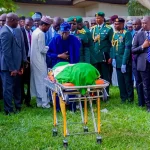
As Vice President Kashim Shettima prepared to travel from London, accompanying Buhari’s remains home, Nigeria began the difficult process of reckoning with its past. The debate over Buhari’s legacy was not merely academic – it was a conversation about the kind of nation Nigeria wanted to be.
Supporters rallied around the memory of an “incorruptible leader” who had fought against the endemic corruption that had plagued Nigeria for decades. They spoke of a man who had strengthened Nigeria’s international standing, who had brought discipline to governance, who had never enriched himself at the expense of the state. For them, Buhari’s death marked the end of an era of integrity in Nigerian politics.
Critics painted a different picture. They spoke of economic hardship that had pushed millions into poverty, of security challenges that had left entire regions unsafe, of a government that had seemed disconnected from the suffering of ordinary Nigerians. They remembered the EndSARS protests, the harsh response to dissent, the perceived lack of empathy during national crises. For them, Buhari’s death was a reminder of opportunities lost and promises unfulfilled.
The truth, as always, lay somewhere in the complex space between these competing narratives. Buhari had been neither the saint his supporters claimed nor the villain his critics portrayed. He had been a man—flawed, determined, complicated—who had led Nigeria through some of its most challenging years.
The Journey Home
As preparations began for Buhari’s final journey from London to Daura, the small town in Katsina State where he would be buried, Nigeria prepared for one last moment of national unity. The funeral would bring together former enemies and longtime allies, representatives from across Africa and beyond, ordinary Nigerians who had travelled hundreds of miles to pay their respects.
The burial in Daura would mark the end of an era, but the beginning of a new chapter in the ongoing story of Nigeria. The conversations that had begun with news of Buhari’s death would continue long after his body was laid to rest in the red earth of his homeland. They would shape how Nigeria remembered its past and imagined its future.
In death, as in life, Muhammadu Buhari had managed to force his nation to confront its deepest divisions and its highest aspirations. The reactions to his passing—from the streets of Lagos to the corridors of power in Beijing, from the villages of Katsina to the newsrooms of London—told the story of a man who had touched the lives of millions, a nation still struggling to define itself, and a world watching to see what would come next.
The final chapter of Buhari’s story was being written not by historians or biographers, but by the ordinary people whose lives he had shaped, whose dreams he had inspired or dashed, whose future he had helped to forge. In their tears and their anger, their respect and their resentment, their hope and their despair, the true measure of Muhammadu Buhari’s legacy would be found.
The man from Daura had returned home for the last time, but the conversations he had started, the divisions he had deepened, and the changes he had wrought would outlive him by generations. Nigeria’s journey continued, marked forever by the complex legacy of the soldier who had become a democrat, the reformer who had remained controversial, the leader who had died as he had lived—surrounded by passionate debate about what his life had meant and what his death would bring.