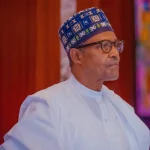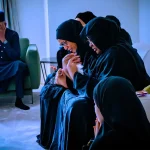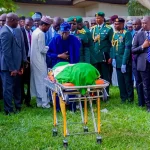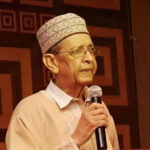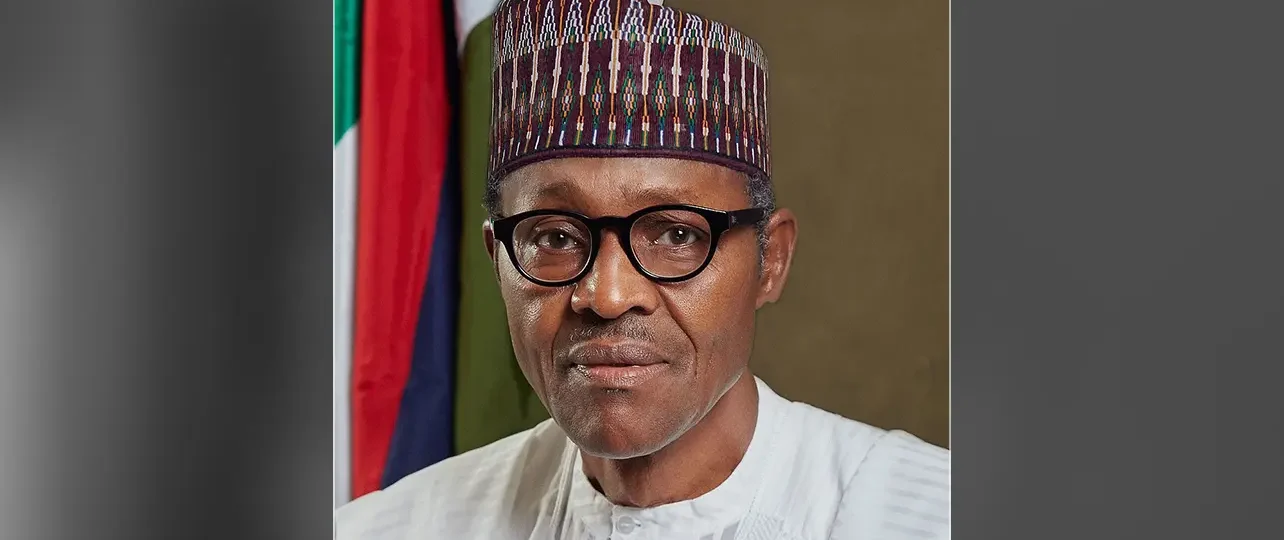

IN the quiet corridors of a London clinic on Sunday afternoon, the heartbeat of one of Africa’s most consequential leaders fell silent. Muhammadu Buhari, Nigeria’s former president, passed away at the age of 82, leaving behind a continent grappling with the loss of a towering figure whose influence stretched far beyond his nation’s borders.
The news came as it often does with great leaders—suddenly, yet somehow anticipated. The Buhari family announced that their patriarch died on Sunday afternoon in London after an illness. His former special adviser, Garba Shehu, delivered the solemn message that would reverberate across Nigeria and beyond: “The family of the former president has announced the passing on of the former president, Muhammadu Buhari, GCFR, this afternoon in a clinic in London. May Allah accept him in Aljannatul Firdaus, Amin.”
For a man who spent decades fighting for Nigeria – first as a military officer, then as a democratic leader – this final battle was one he could not win. Yet in his passing, the measure of his life’s work becomes clear: a legacy written in the concrete of bridges built, the silence of corruption chambers, and the complicated tapestry of a nation he helped reshape.
Born December 17, 1942, in Daura, Nigeria, Buhari’s journey from a small northern town to the pinnacle of African leadership reads like a testament to persistence and unwavering principle. His path was neither straight nor easy – it was the winding road of a man who understood that true leadership often requires the courage to be unpopular.
From his military training in Kaduna to his rise as Nigeria’s head of state in 1984-85, and later his historic democratic election in 2015, Buhari’s life was a masterclass in resilience. He ran for president three times before finally succeeding, each defeat only strengthening his resolve. His story became Nigeria’s story – a narrative of persistence against overwhelming odds.
The Corruption Slayer
Perhaps no aspect of Buhari’s legacy burns brighter than his relentless war against corruption. Like a surgeon with a steady hand, he cut deep into the infected tissue of Nigeria’s political system. His administration’s prosecution of high-ranking officials and recovery of stolen public funds sent shockwaves through the corridors of power that had grown comfortable with impunity.
The Economic and Financial Crimes Commission (EFCC) became his weapon of choice, transformed from a paper tiger into a formidable force. Critics argued the campaign was selective, but none could deny its impact. The African Union’s recognition of him as the 2018 Anti-Corruption Champion wasn’t just a continental honour – it was an acknowledgement that his fight transcended borders, inspiring a generation of African leaders to confront the cancer of corruption.
The Security General
In the treacherous landscape of Nigeria’s security challenges, Buhari stood as both shield and sword. His military background served him well as he confronted the Boko Haram insurgency that had terrorised the nation’s northeast. Operations like Lafiya Dole weren’t just military campaigns -they were rescue missions for a traumatised populace.
Under his leadership, territories were reclaimed, displaced communities returned home, and the world witnessed a sustained fight against terror. Yet security remained his greatest challenge, with new threats emerging even as old ones receded. The rise of banditry and kidnappings during his tenure served as a stark reminder that peace is not a destination but a continuous journey.
The Builder’s Vision
Walk across the Second Niger Bridge, travel the rehabilitated Lagos-Ibadan Expressway, or ride the standard gauge rail lines, and you experience Buhari’s vision made manifest. His administration’s massive infrastructure investments weren’t just about concrete and steel – they were about connectivity, about binding a diverse nation together through the sinews of modern transportation.
These projects, rising from the earth like monuments to possibility, represent perhaps his most enduring physical legacy. Long after political debates fade, these bridges and roads will carry Nigeria forward, a testament to a leader who understood that nations are built not just with words but with the solid foundation of infrastructure.
The Economic Paradox
The economic chapters of Buhari’s presidency read like a complex novel with both triumph and tragedy. His push for agricultural diversification through initiatives like the Anchor Borrowers’ Program showed flashes of genius – Nigeria producing more rice, reducing import dependence, and empowering farmers. Yet the broader economic narrative remained frustratingly elusive.
Recession, inflation, and unemployment became the unwelcome companions of his tenure. The naira weakened, debt soared, and many Nigerians felt the pinch of economic hardship. It was perhaps the greatest paradox of his leadership – a man committed to the people’s welfare presiding over their economic struggles.
The Democratic Custodian
In an era where African leaders often cling to power like drowning men to lifeboats, Buhari’s peaceful transition in 2023 shone like a beacon. His respect for constitutional limits, his graceful handover of power, and his reinforcement of democratic norms wrote a different story for Nigeria – one of institutional strength over personal ambition.
This act alone may prove to be his greatest contribution to Nigerian democracy. In a continent where peaceful transitions remain rare, Buhari’s example reverberates beyond Nigeria’s borders, a reminder that true leadership sometimes means knowing when to step aside.
The Continental Statesman
Beyond Nigeria’s borders, Buhari emerged as a voice for African unity and self-reliance. His championing of the African Continental Free Trade Area (AfCFTA) and his active role in regional diplomacy positioned him as a statesman of continental significance. From mediating crises in neighbouring countries to representing West African interests on the global stage, he wore the mantle of African leadership with dignity.
His advocacy for African integration and his stance on African self-reliance resonated across the continent, inspiring a generation of leaders to think beyond national boundaries toward continental solidarity.
The Controversial Legacy
No honest assessment of Buhari’s legacy can ignore the shadows that accompanied his light. His administration’s handling of protests, concerns over press freedom, and accusations of human rights abuses created a complex portrait of a leader caught between order and liberty.
The “War Against Indiscipline” that defined his military era carried forward into his democratic presidency, sometimes blurring the line between necessary firmness and excessive force. His critics saw authoritarianism; his supporters saw necessary discipline. The truth, as always, lay somewhere in between.
The Human Cost
Perhaps the most poignant aspect of Buhari’s legacy lies in the human stories—the families affected by his policies, the communities impacted by his decisions, and the millions of Nigerians who lived through his era of leadership. Some remember security restored to their villages; others recall economic hardship that tested their faith in democracy.
These personal narratives, woven together across Nigeria’s vast landscape, form the true measure of his presidency. They remind us that leadership is ultimately about people—their hopes, their struggles, and their dreams for a better tomorrow.
The Final Reckoning
As African leaders and citizens process this monumental loss, the question isn’t whether Buhari was perfect – no leader is. The question is whether he left Nigeria and Africa better than he found them. The answer, like the man himself, is complex and nuanced.
He strengthened institutions that will outlast him. He challenged corruption in ways that changed Nigeria’s political culture. He invested in infrastructure that will serve generations. He respected democratic norms when it would have been easy to abandon them. Yet he also presided over economic struggles and security challenges that tested his people’s patience.
The Echo of Giants
In the grand narrative of African leadership, Buhari’s chapter concludes not with simple praise or condemnation, but with the recognition of a life fully lived in service to ideals larger than himself. His passing marks not just the end of a presidency, but the close of an era—a time when leaders could still believe that individual will and unwavering principle could reshape nations.
As Nigeria mourns and Africa reflects, Buhari’s legacy becomes clearer: he was a man who dared to dream of a corruption-free, secure, and prosperous Nigeria. That he didn’t achieve all of these dreams doesn’t diminish the power of dreaming them, or the courage required to pursue them against overwhelming odds.
The clinic in London where he drew his final breath was thousands of miles from the dusty streets of Daura, where his journey began. Yet in death, as in life, Buhari had come full circle – from a son of Nigeria to a father of modern Africa, from a young soldier to an elder statesman, from a dreamer to a doer.
His voice may have fallen silent, but his echo will resonate through the corridors of power, the halls of democracy, and the hearts of those who believe that leadership is not about personal gain but about national service. In the end, perhaps that is the greatest legacy any leader can leave – not perfection, but the proof that principled leadership remains possible, even in the most challenging of times.