
IN the hushed chambers of the High Court, Justice Bafi Nlada signed orders that would send shockwaves through Botswana’s political establishment. With a stroke of the pen, the properties of two men who once walked the corridors of power with impunity were frozen – their assets now under the unforgiving gaze of the law.
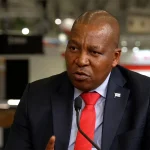
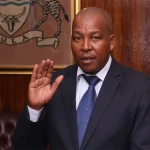
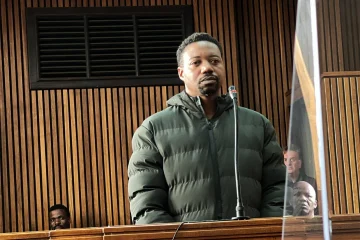
Dr Kefentse Mzwinila and Lefoko Moagi, former government ministers who once commanded respect and wielded considerable influence, now find themselves on the wrong side of justice. The Director of Public Prosecutions has secured restraining orders against their properties in what legal experts are calling a significant escalation in Botswana’s fight against corruption.
For Dr Mzwinila, the tentacles of justice have reached deep into what prosecutors allege to be an empire built on ill-got gains. Ploughing fields, residential plots, sprawling farms, and cash reserves exceeding P1 million have been placed under restraint. These are not modest holdings—they speak of wealth accumulated on a civil servant’s salary, raising uncomfortable questions about their origins.
The application, filed by DPP representative Kgosietsile Ngakaagae under Sections 35 and 37 of the Proceeds and Instruments of Crime Act (PICA), suggests investigators believe these assets may be proceeds of crime. It’s a powerful legal mechanism designed to prevent suspected criminals from dissipating assets before they can be forfeited to the state.
Lefoko Moagi’s situation carries its own symbolism. Multiple cattle breeds—traditionally a mark of wealth and status in Botswana—have been placed under restraint. In a country where cattle have always represented more than mere livestock, where they symbolise prosperity, social standing, and generational wealth, the seizure cuts particularly deep.
The speed at which these orders were granted speaks volumes. Filed at the High Court mere hours before Justice Nlada’s ruling, the applications suggest prosecutors presented compelling evidence of risk—perhaps fear of asset dissipation or transfer. In cases like these, courts act swiftly to preserve the status quo while investigations continue.
These are not rushed judgments born of political vendetta. They are the measured steps of a legal system finally catching up with individuals who may have believed themselves beyond accountability. The restraining orders are not convictions—both men retain the presumption of innocence—but they represent something perhaps more significant: the principle that no one, regardless of past position or influence, stands above the law.
For years, whispers have circulated in Gaborone’s political circles about ministers who accumulated suspicious wealth, about tender processes that favoured the connected, about the yawning gap between official salaries and ostentatious lifestyles. Today, those whispers found legal expression in court documents and judicial orders.
The symbolism is potent. Two men who once sat in cabinet meetings, who shaped policy and allocated public resources, now watch as those same state institutions they once directed turn their full attention upon them. The hunters have become the hunted.
Botswana has long prided itself on being one of Africa’s least corrupt nations, a diamond of good governance in a region often plagued by kleptocracy. But complacency is corruption’s greatest ally, and recent years have seen a renewed determination to root out malfeasance at all levels.
These cases send an unmistakable message: political office is not a license to loot, and retirement from public service does not grant immunity from scrutiny. The wheels of justice may grind slowly, but they grind exceedingly fine.
As Dr. Mzwinila and Lefoko Moagi contemplate their frozen assets and uncertain futures, one wonders what thoughts occupy their minds. Regret? Defiance? Or perhaps the cold realisation that the protection they once enjoyed has evaporated like morning mist under the harsh sun of accountability?
The restrained properties—fields, plots, farms, cattle, and cash—stand as silent monuments to a simple truth: in the end, the law catches up with everyone. The only question is whether these seizures are the beginning of justice served, or merely the opening chapter in a longer reckoning yet to come.
For Botswana, these cases represent more than the downfall of two individuals. They are a test of the nation’s commitment to its founding principles, a demonstration that the rule of law applies equally to the powerful and the powerless alike.
The mighty have fallen. The question now is whether others still clinging to ill-got gains will heed the warning, or whether they too will one day face Justice Nlada’s pen, signing away their empires built on corruption’s shifting sands.