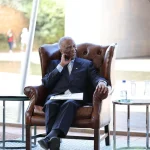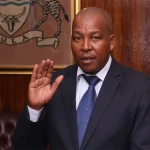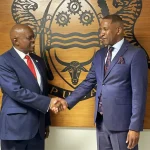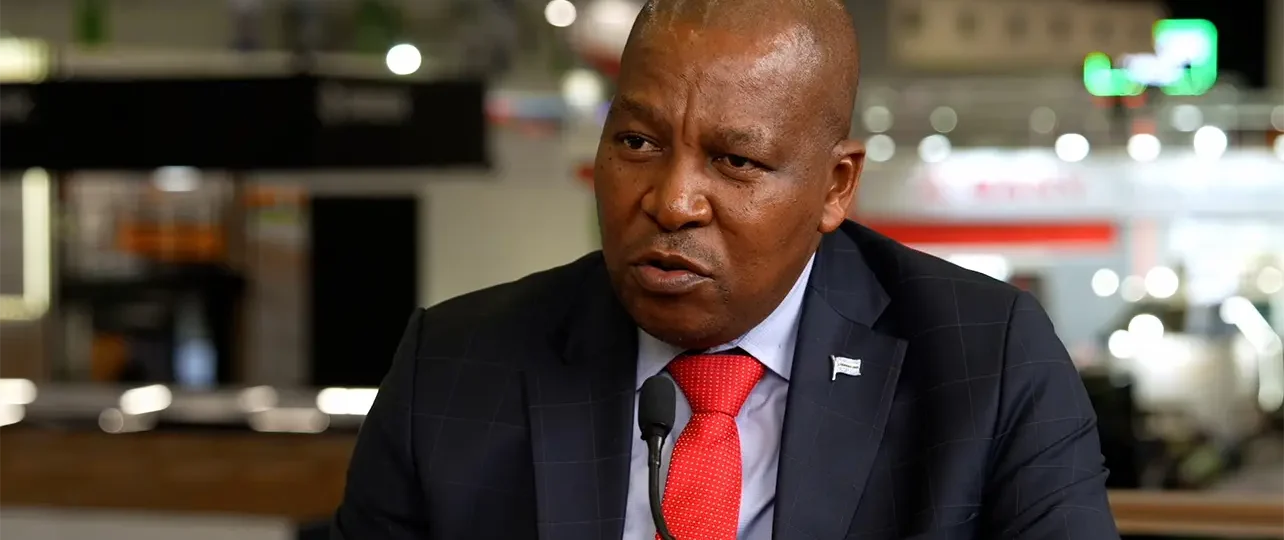

THE anatomy of alleged corruption rarely presents itself so starkly. Former Botswana Minister Lefoko Maxwell Moagi now stands accused of receiving a portfolio of kickbacks from Chinese entities that won lucrative government contracts and mineral rights under his watch – payoffs that prosecutors say were disguised through front companies, foreign intermediaries, and a peculiar payment method: cattle.
The Kickback Portfolio
According to court filings by the Directorate on Corruption and Economic Crime (DCEC), the catalogue of alleged benefits flowing to Moagi includes:
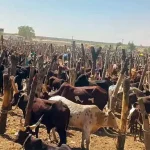
The Livestock: More than 100 heifers and one prize bull, purchased for P435,000 (approximately $32,000 USD) through a network of Chinese intermediaries connected to Sieyuan Electric Botswana, a contractor completing projects under Moagi’s ministry.
The Hidden Millions: P2.8 million (roughly $206,000 USD) still sitting in a Bank Gaborone account registered to Wisecreatives Investments, a company investigators allege served purely as a conduit to disguise payments intended for Moagi’s personal use.
The Larger Sum: P4.7 million (approximately $346,000 USD) that prosecutors say was channelled through the Wisecreatives account by New Energy Company and another corporate entity, Riders (Pty) Ltd – funds that were allegedly made accessible to Moagi through a debit card issued in his name.
The total value of alleged kickbacks exceeds P5 million, or roughly $368,000 USD – a staggering sum in a country where the average annual income hovers around $8,000.
The Web of Chinese Connections
The case exposes an intricate network of Chinese business interests operating within Botswana’s energy and mineral sectors, with Moagi allegedly at the centre of a web connecting multiple entities and individuals.
New Energy Company (Pty) Ltd forms the primary node in this network. Registered in Botswana and controlled by Chinese nationals Gang Li, Zheng Li, Xu Li, and Xiaoyong Li, the company operates its Access Bank account with signatories Xiaoyong Li and Gang Li. This entity became the direct beneficiary of Moagi’s ministerial authority when he approved and signed eight prospecting licenses for base metal exploration in the strategic districts of Ghanzi, Tsabong, and Tutume in July and August 2024.
Wisecreatives Investments (Pty) Ltd emerged as the crucial intermediary in the alleged money laundering operation. Registered under Botswana law in April 2024 and controlled solely by Zheng Li, who is also a director of New Energy Company, this entity opened a Bank Gaborone account with Zheng Li as the sole signatory. Investigators allege Wisecreatives was created specifically to serve as a financial conduit, providing plausible deniability by placing a corporate veil between the bribe payers and the recipient.
Sieyuan Electric Botswana represents another dimension of Moagi’s alleged Chinese connections. Regional Manager Jun Yan and Commercial Manager Weidong Lin, along with their associate Han Li, allegedly orchestrated the cattle purchases that form part of the kickback scheme. During the 2022-2023 financial year, Sieyuan was completing the Ramotswa power project under Moagi’s ministry, and in 2023, secured another tender to upgrade the Government Enclave Substation.
The common thread linking these entities: all were positioned to benefit from decisions made by Moagi in his capacity as Minister of Mineral Resources, Green Technology and Energy Security.
The Tender-for-Favour Exchange
The alleged quid pro quo follows a pattern prosecutors describe as brazen, involving both infrastructure contracts and mineral rights.
On the infrastructure side, Sieyuan Electric Botswana received favourable treatment for critical energy projects falling directly under Moagi’s portfolio. Within weeks of completing work on these projects, the company’s executives were allegedly arranging cattle purchases on Moagi’s behalf.
On the mineral exploitation side, the arrangement appears even more direct. In July and August 2024, Moagi personally approved and signed the eight prospecting licences that gave New Energy Company access to valuable base metal exploration rights across three districts. Almost immediately, a sophisticated financial operation began moving millions of Pula through corporate accounts toward Moagi’s benefit.
Financial forensic investigators have traced the money trail with precision: P4,706,000 was debited from New Energy Company’s Access Bank account and from Riders (Pty) Ltd, then credited into the Wisecreatives Investments account at Bank Gaborone. The layering of these transactions through multiple corporate entities suggests what legal experts describe as intentional obfuscation – creating distance between the source of funds and their ultimate beneficiary.
The Livestock Laundering Operation
The scheme’s rustic centrepiece – a herd of cattle – reveals both cultural adaptation and operational sophistication. In Botswana, cattle represent traditional wealth and status. They’re also easier to explain than sudden cash windfalls.
On August 30, 2024, Chinese national Lin Han transferred P117,500 to prominent Ghanzi farmer Hermunus Potgieter. Hours later, another Chinese associate, Jeremy Holiday, sent P300,000. Moagi allegedly forwarded the payment confirmations via WhatsApp, coordinating the transaction as if conducting ministry business.
But investigators traced the money back through the network of Chinese executives at Sieyuan. Han Li later admitted he transferred the funds on behalf of Jun Yan, Sieyuan’s Regional Manager, who stated plainly that the money belonged to Moagi. The P300,000 in cash was deposited by Weidong Lin, the company’s Commercial Manager.
When asked why company executives were buying cattle for a government minister, Lin told investigators that Moagi had requested the purchase directly, but company policy prohibited such payments. To avoid “disappointing” the minister who controlled their contracts, Lin and Yan allegedly routed the payment through their associate Han Li, later reimbursing him through a Chinese bank account.
The cattle – 100 heifers and one bull worth P17,500 purchased from Willem De Graaff – were delivered to a kraal at D’Kar Farm to await police clearance, a pastoral holding pen for the proceeds of alleged corruption.
The Panic and the Cover-Up
The scheme’s unravelling began with political change. When Moagi lost his ministerial position in early 2025, his Chinese benefactors reportedly panicked. On April 4, 2025, Han Li, Weidong Lin and Jun Yan convened an emergency meeting, concerned both about Moagi’s diminished power and reports of an impending investigation into his assets.
Their solution, prosecutors allege, was clumsy but revealing: they would retroactively disguise the cattle payment as a legitimate loan. The next day, the three men visited Moagi’s home in Ramotswa, where a loan agreement was hastily prepared, suggesting Moagi had borrowed the P417,500 from Han.
The fabricated paperwork would become evidence of consciousness of guilt.
The Corporate Shell Game
Even more sophisticated than the livestock scheme was the alleged channelling of millions through Wisecreatives Investments. The company’s structure appears designed specifically to facilitate illicit payments while maintaining plausible deniability.
Zheng Li, who serves as both a director of New Energy Company and the sole controller of Wisecreatives Investments, opened the Wisecreatives account at Bank Gaborone in April 2024 – just months before Moagi would approve the eight prospecting licenses. As the sole signatory on the account, Zheng Li controlled the flow of funds, but investigators allege the money was never intended for Wisecreatives’ corporate purposes.
Instead, prosecutors say, the P4.7 million transferred from New Energy Company and Riders (Pty) Ltd was earmarked for Moagi. To access these funds without creating a direct paper trail, a debit card linked to the Wisecreatives account was allegedly issued to Moagi himself, allowing him to make personal purchases while the account remained nominally under corporate control.
When DCEC officers raided Moagi’s home on July 11, 2025, they found the Wisecreatives bank card in his possession – a piece of plastic linking the former minister directly to the alleged slush fund.
This arrangement – using a legitimate corporate entity controlled by one party to hold funds accessible to another party through a debit card – represents what financial forensic experts describe as a common tactic to circumvent anti-corruption laws. The corporate veil provides distance between the bribe payer and recipient, while the debit card mechanism avoids the need for traceable direct transfers.
The Legal Framework
Principal Anti-Corruption Officer Tendani Setume frames the case in stark terms: “This is a classical case of money laundering where the consideration was disguised to hide its true source.”
The charges reportedly span multiple statutes. Under the Corruption and Economic Crime Act (CECA), sections 24A, 25, 33, and 34 address the misuse of public office and acceptance of benefits for official actions. Section 47 of the Proceeds and Instrumentalities of Crime Act (PICA) targets money laundering – the process of disguising the proceeds of criminal activity.
The money laundering count is particularly significant. It suggests prosecutors believe they can prove not just that Moagi accepted improper payments, but that he actively participated in structuring transactions to conceal their corrupt origin – using shell companies, foreign intermediaries, and unconventional payment methods to create layers of deniability.
The Director of Public Prosecutions has moved to immobilise Moagi’s assets pending the outcome of the investigation, a step that signals the seriousness with which authorities are treating the allegations.
The Geopolitical Context
The involvement of multiple Chinese-controlled entities adds an international dimension to what might otherwise be a domestic corruption case. China’s growing economic footprint in Africa’s resource sectors – particularly in renewable energy and mining – has become a defining feature of 21st-century African development.
These relationships are often characterised as strategic partnerships bringing needed investment and technical expertise. Yet this case illustrates the risks when such partnerships lack robust oversight mechanisms. The presence of Chinese nationals across multiple entities – Gang Li, Zheng Li, Xu Li, and Xiaoyong Li at New Energy Company; Jun Yan and Weidong Lin at Sieyuan Electric – suggests networks of business actors operating across Botswana’s energy sector with apparent ease.
Whether the alleged corruption represents systematic corporate practice by Chinese firms or opportunistic behaviour by individual actors remains an open question. What’s clear is that the case has exposed vulnerabilities in how Botswana manages foreign investment in strategic sectors.
The Timing and the Irony
The scandal’s timing carries particular irony. The Ministry of Mineral Resources, Green Technology and Energy Security had recently been reshaped by the Mines and Minerals Amendment Act of 2024, reforms explicitly designed to tighten governance, ensure local participation in mineral ventures, and promote transparency in licensing.
Local beneficiation and clean processes were meant to be the cornerstone of Botswana’s approach to resource exploitation. Yet even as these reforms were being implemented, the minister responsible for enforcing them allegedly stood at the centre of a scheme to personally profit from the very licensing decisions the reforms were meant to protect.
The case threatens to erode public trust in these initiatives and raises fundamental questions about enforcement. Strong legal frameworks mean little if the officials charged with implementing them are themselves compromised.
The National Significance
DCEC emphasises that this case carries special weight due to Moagi’s former position. As a Cabinet minister, he wielded significant power over which companies received lucrative government contracts and valuable mineral rights. The allegations suggest that power was systematically for sale.
This is not the first time Botswana has faced allegations of high-level corruption. In recent years, DCEC has investigated several prominent politicians and business figures related to unexplained wealth and misuse of public office. Botswana has long prided itself on having one of the cleaner governance records in Southern Africa, making cases like this particularly significant for the country’s reputation.
The involvement of foreign-linked companies adds complexity to the enforcement challenge. International financial flows, offshore reimbursements through Chinese bank accounts, and networks of actors spanning multiple jurisdictions make investigation and prosecution more difficult than purely domestic corruption cases.
The Evidence Trail
What prosecutors appear to possess is a comprehensive paper trail connecting ministerial decisions to personal enrichment:
- Bank records showing P4.7 million flowing from New Energy Company and Riders (Pty) Ltd to Wisecreatives Investments
- The physical debit card found at Moagi’s residence, linking him to the Wisecreatives account
- Documentation of the eight prospecting licenses Moagi approved for New Energy Company
- Livestock purchase agreements and payment confirmations for the cattle
- WhatsApp messages showing Moagi coordinating the cattle payments
- Witness statements from the Chinese intermediaries themselves, including admissions about the source and intended recipient of funds
- The hastily fabricated loan agreement was created during the panic meeting after Moagi left office
- Records of Moagi’s personal purchases using the Wisecreatives debit card
This combination of documentary evidence, digital communications, physical artefacts, and witness testimony presents what prosecutors believe is a compelling case for conviction on multiple counts.
The Broader Implications
The case underscores challenges facing Botswana’s anti-corruption institutions beyond this individual prosecution. It reveals the need for:
- Stronger audit systems for monitoring financial flows linked to government contracts and licenses
- Greater transparency in the licensing approval process, particularly for foreign entities
- More vigilant oversight of corporate structures that might serve as conduits for illicit payments
- Enhanced capacity to investigate complex, multi-jurisdictional financial crimes
- Clearer conflict-of-interest protocols for ministers dealing with foreign companies in strategic sectors
As Botswana positions itself to exploit its mineral wealth—including recent significant oil discoveries—the integrity of licensing and contracting processes becomes ever more critical. Cases like this threaten not only public trust but also the country’s ability to attract legitimate foreign investment.
International partners and potential investors watch closely how Botswana handles such allegations. A robust, transparent prosecution that follows evidence wherever it leads could reinforce confidence in Botswana’s institutions. Conversely, a process perceived as compromised or incomplete could damage the country’s carefully cultivated reputation for good governance.
Awaiting Justice
Moagi now awaits his legal reckoning, his alleged rewards frozen in bank accounts and corralled in kraals – a pastoral monument to the alleged price of ministerial favour. The former minister, who once wielded power over billions of Pula in contracts and mineral rights spanning entire districts, faces the possibility of prosecution under multiple statutes carrying significant penalties.
The case that prosecutors have assembled moves beyond simple bribery allegations to encompass a sophisticated money laundering operation involving multiple corporate entities, foreign intermediaries, disguised payments, and deliberate obfuscation of financial trails. If proven, it represents not opportunistic corruption but systematic exploitation of public office for private gain.
What began with cattle purchases and quiet bank transfers has evolved into a test case for Botswana’s commitment to combating corruption even when it reaches the highest levels of government. The presence of foreign business interests adds complexity, but cannot be allowed to create impunity.
The fundamental question facing Botswana’s legal system: can it prove that what benefactors characterise as friendship and what ministers describe as business dealings was, in fact, a calculated exchange of state power for private gain—paid in livestock and laundered through corporate shells, but corruption nonetheless?
The answer will help define whether Botswana’s anti-corruption framework can withstand the pressures that come with resource wealth and foreign investment, or whether the cattle trail leads only to more sophisticated schemes yet to be uncovered.