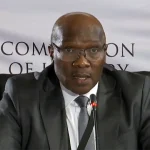
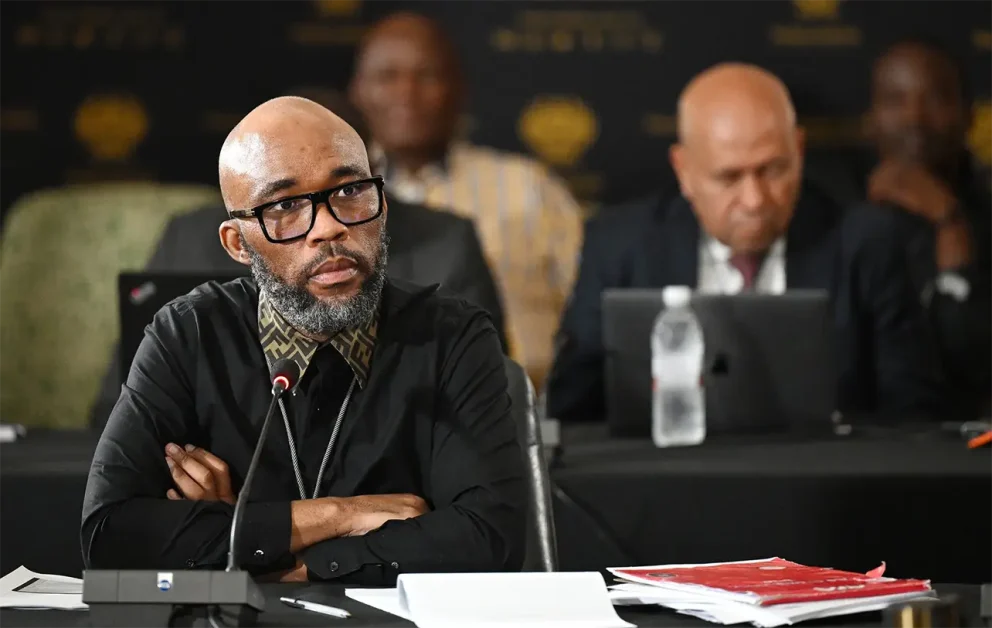
THE testimony was delivered from behind bars at Kgosi Mampuru Correctional Centre, but its explosive impact reverberated through the halls of Parliament and into the heart of South Africa’s law enforcement establishment.
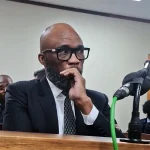
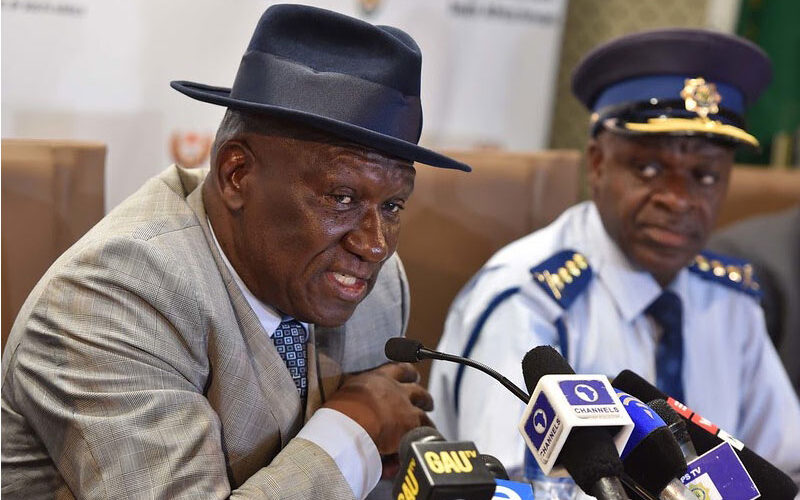
On Wednesday, alleged drug cartel kingpin Vusimuzi “Cat” Matlala sat before Parliament’s ad hoc committee and did what few accused criminals dare to do: He named the politicians he claims he paid for protection. At the top of his list was former Police Minister Bheki Cele, who Matlala alleges received R500,000 in cash payments – R300,000 at Cele’s Pretoria penthouse and R200,000 at the Beverly Hills Hotel in KwaZulu-Natal.
“If he was asking for information from me, why would he even ask me to tell my protectors to take him and his wife to a wedding?” Matlala challenged, directly contradicting Cele’s sworn testimony that their relationship was based solely on intelligence gathering. “There was no way he would get information from those guys. He doesn’t even know them.”
The allegations, sensational as they sound, are not isolated claims from a desperate criminal seeking leverage. They form part of a far more disturbing pattern that has emerged over the past four months – a pattern suggesting that South Africa’s war on crime may have been lost not in the streets, but in the offices of those sworn to fight it.
The Sunday That Changed Everything
The unravelling began on July 6, 2025, when KwaZulu-Natal Police Commissioner Lieutenant General Nhlanhla Mkhwanazi held what would become one of the most consequential press conferences in South African law enforcement history.
Standing before journalists in Durban, Mkhwanazi made a declaration that sent shockwaves through the political establishment: Senior police officials and politicians, he alleged, were not just failing to fight organised crime—they were actively protecting it.
“I chose to be a policeman, and in many years in my career as a police officer, I have been involved in combat,” Mkhwanazi said, his voice steady. “While we fight with criminals in the streets, we also need to be vigilant that some of our own are working with criminals. Even if it means to pay with my life, let it be.”
The allegations were staggering in their scope. Mkhwanazi claimed that Police Minister Senzo Mchunu had issued a directive to disband the Political Killings Task Team at the end of 2024—a specialised unit that had been closing in on a criminal syndicate with tentacles reaching into Parliament, the judiciary, and the upper echelons of the South African Police Service itself.
Even more damning, Mkhwanazi alleged that Deputy National Police Commissioner Shadrack Sibiya had orchestrated the removal of 121 case dockets from the task team in March 2025, acting on instructions from Mchunu. These weren’t ordinary cases—they involved politically motivated assassinations, drug trafficking operations, and the murders of high-profile figures, including rapper Kiernan “AKA” Forbes.
The task team, Mkhwanazi revealed, had been making progress that was apparently too dangerous for someone’s liking. It had uncovered drug cartels centred in Gauteng with alleged links to members of the judiciary, prosecutors, and Parliament. It was on the verge of solving multiple high-profile murders. And then, suddenly, its investigations were frozen.
A Criminal Syndicate With a Badge
The scope of the alleged corruption defies comprehension. According to Mkhwanazi’s allegations and subsequent testimony before various inquiry bodies, South Africa faces nothing less than state capture by organised crime—not through a single corrupt transaction, but through a systematic infiltration of law enforcement institutions at the highest levels.
The Political Killings Task Team, established in 2018 to investigate the wave of political assassinations in KwaZulu-Natal, had become far more than its original mandate suggested. By 2024, investigators had identified what they described as an intricate network connecting drug traffickers, political assassins, corrupt police officials, complicit prosecutors, and compromised members of Parliament.
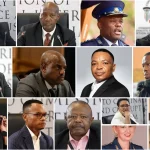
The alleged kingpin at the centre of much of this web was the very man now testifying before Parliament: Vusimuzi Matlala, accused leader of a criminal cartel known as “The Big Five.” Currently detained on charges including conspiracy to commit murder and involvement in a R2-billion fraud linked to Tembisa Hospital, Matlala presents a fascinating paradox—a man facing serious criminal charges who nonetheless held lucrative government contracts worth hundreds of millions and allegedly counted cabinet ministers among his contacts.
The Money Trail Matlala Claims to Know
Matlala’s testimony painted a picture of casual corruption at the highest levels. According to his account, former Police Minister Bheki Cele didn’t just meet with him—Cele allegedly solicited money, claiming his wife’s car needed repairs.
The relationship, as Matlala describes it, was transactional from the start. After Cele allegedly intervened to stop Political Killings Task Team raids targeting Matlala’s operations, Matlala claims Cele told him he needed to show his appreciation. The first payment of R300,000 was allegedly hand-delivered at Cele’s penthouse. The second instalment of R200,000 was handed over at a hotel in KwaZulu-Natal.
“I stopped taking calls from Cele because I realised he wouldn’t stop asking for money,” Matlala testified, adding that his subsequent arrest for attempted murder in April 2025 was directly connected to his refusal to continue paying.
But Cele wasn’t the only politician Matlala claims to have funded. He also alleged that he paid R200,000 to businessman Brown Mogotsi for accommodation and funding related to the ANC’s January 8 celebration—payments allegedly made on behalf of suspended Police Minister Senzo Mchunu.
Cele, for his part, has denied all allegations, insisting his interactions with Matlala were solely for intelligence-gathering purposes. When he appeared before the ad hoc committee, he stated unequivocally that he had no improper relationship with the alleged crime boss.
Matlala’s response was blunt: “Yes, he lied under oath.”
The Institutional Response—Too Little, Too Late?
The revelations triggered a political earthquake. On Sunday, July 13, 2025, just days after Mkhwanazi’s bombshell press conference, President Cyril Ramaphosa announced two decisive actions: Mchunu would be placed on immediate leave, and a commission of inquiry would be established to investigate the allegations.
Within days, Shadrack Sibiya was also placed on “special leave”—a euphemism that drew immediate criticism from legal experts who argued the police were sidestepping proper disciplinary procedures. By September, Sibiya was formally suspended, and in October, heavily armed police units raided his Centurion home, seizing electronic devices as part of an investigation into allegations he defeated the ends of justice.
Yet the response has been met with deep scepticism. South Africa has a troubled history with commissions of inquiry that produce damning reports but few consequences. The Zondo Commission into state capture exposed industrial-scale corruption, yet many implicated individuals remain free and politically active.
Julius Malema, leader of the Economic Freedom Fighters, captured the prevailing cynicism when he questioned whether the commission would have any meaningful powers. He called instead for Mkhwanazi to testify before Parliament, arguing the legislative body carried more weight than another presidential inquiry.
The African Christian Democratic Party praised Mkhwanazi’s courage, noting that “by openly revealing that drug cartels are the cancer within SAPS, and implicating powerful political figures and parliamentarians, General Mkhwanazi demonstrates that some officers are willing to stand against corruption.”
But political analyst Joe Mhlanga expressed doubt about whether genuine accountability would follow, pointing to the pattern of impunity for those aligned with powerful interests. He cited the Phala Phala scandal, where, despite evidence of potential wrongdoing, President Ramaphosa emerged largely unscathed.
The Credibility Question
Any analysis of these allegations must grapple with a fundamental question: How credible is Vusimuzi Matlala?
The man now positioning himself as a truth-teller is, by all accounts and charges, an alleged criminal mastermind. He faces charges for conspiracy to murder his former girlfriend, reality TV star Tebogo Thobejane. He’s implicated in an R2-billion fraud scheme. He has a 2001 conviction for buying and selling stolen goods. His testimony comes from a position of obvious self-interest—cooperation often leads to more favourable treatment.
During his appearance before the parliamentary committee, Matlala at one point mentioned being in solitary confinement and forgetting things, raising questions about his mental state and the reliability of his recall.
Yet several factors lend his testimony weight beyond mere accusation:
Specificity: Matlala provided precise details—exact amounts (R300,000, R200,000), specific locations (his Pretoria penthouse, Beverly Hills Hotel), and verifiable events (transport to a wedding in Lanseria). These are not vague allegations but claims that can be investigated through financial records, hotel registries, and witness statements.
Consistency with Independent Allegations: Matlala’s claims align closely with Mkhwanazi’s earlier accusations, made independently and from a position of institutional authority rather than desperation.
Pattern Recognition: The alleged behaviour—high-level officials protecting criminal enterprises in exchange for payments—fits established patterns of corruption documented in other South African investigations, including the Zondo Commission findings.
Corroboration Potential: Unlike many corruption allegations that rely solely on verbal claims, Matlala’s accusations involve financial transactions that should have left paper trails. Banking records, property transactions, and telecommunications data could verify or refute his testimony.
The Risk: False testimony before Parliament carries serious legal consequences. While Matlala may calculate he has little to lose, falsely implicating a former cabinet minister in corruption under oath would add perjury to his already serious legal troubles.
A System Under Siege
What emerges from months of testimony, press conferences, and leaked documents is not a story of isolated corruption but of systematic compromise.
Consider the timeline:
- 2018: The Political Killings Task Team is established to investigate the epidemic of assassinations in KwaZulu-Natal
- 2024: The task team makes significant breakthroughs, identifying links between political killings, drug cartels, and protected individuals
- December 2024: Police Minister Mchunu allegedly issues a directive to freeze Crime Intelligence hiring and prepare for the task team’s disbandment
- March 2025: Deputy Commissioner Sibiya allegedly orders 121 case dockets removed from the task team and sent to Pretoria
- April 2025: Matlala is arrested for attempted murder—he claims this occurred after he stopped paying protection money
- July 2025: Mkhwanazi goes public with allegations of high-level interference and protection of criminal syndicates
- July-September 2025: Both Mchunu and Sibiya are suspended; commission of inquiry established
The alleged infrastructure of protection goes beyond individual corrupt officials. Mkhwanazi described a network that extended into Crime Intelligence’s vetting section—the very unit responsible for security clearances. With that compromised, he suggested, the entire security apparatus could be infiltrated.
He pointed to the arrest of Crime Intelligence chief Lieutenant General Dumisani Khumalo and six colleagues on allegations of misusing funds to buy properties—an arrest that Sibiya allegedly used as retaliation against Mkhwanazi.
The implications are chilling: If senior police officials can redirect investigations, disband task teams, and remove case dockets at will—and if these actions are taken to protect criminal enterprises—then the distinction between law enforcement and organised crime becomes dangerously blurred.
What the Public Deserves to Know
Several critical questions demand answers:
On the Payments: Did Bheki Cele receive R500,000 from Matlala? Banking records, property transactions, and unexplained wealth analyses should be able to confirm or refute this. Did Cele declare any gifts or payments during his tenure as Police Minister, as required by ethics regulations?
On the Task Team: Who specifically authorised the removal of 121 case dockets? Was there legitimate operational justification, or was this obstruction of justice? What has happened to those investigations since?
On the Contracts: How did an alleged criminal cartel leader secure a R360-million SAPS contract? What procurement processes were followed? Who authorised the payments?
On the Political Killings: With the task team disbanded and investigations frozen, what has happened to justice for the victims of political assassinations in KwaZulu-Natal? Are these cases now cold?
On Systemic Reforms: If these allegations prove true, what institutional changes will prevent similar capture in the future?
The Stakes Could Not Be Higher
South Africa’s crime statistics paint a grim picture: The country has one of the highest murder rates in the world, with over 27,000 people killed in the year ending March 2024. Organised crime syndicates have grown increasingly brazen, with drug trafficking operations functioning almost openly in some areas. Political assassinations have become normalised in certain provinces, with hit men operating with seeming impunity.
Public trust in police has reached historic lows. A recent Human Sciences Research Council study revealed deep scepticism about law enforcement integrity and effectiveness.
If Mkhwanazi’s allegations and Matlala’s testimony prove accurate—if indeed South Africa’s police ministers and senior officials have been protecting rather than prosecuting major criminal enterprises—then the implications extend far beyond individual acts of corruption.
It would mean that while ordinary South Africans live in fear of crime, the very officials tasked with protecting them have instead been selling their safety to the highest bidder. It would mean that drug cartels haven’t just evaded law enforcement—they’ve purchased it.
And it would mean that the rule of law in South Africa faces an existential threat not from external forces but from betrayal within the institutions meant to defend it.
A Lone Voice or the Beginning?
Mkhwanazi has positioned himself as a truth-teller willing to sacrifice his career and potentially his life to expose this corruption. “I will die for this badge,” he declared, describing himself as a “hard-core policeman” who refuses to remain silent.
His supporters, including community organisations and opposition parties, have praised his courage and called for his contract as KwaZulu-Natal Police Commissioner to be renewed when it expires. They see him as a rare example of an official choosing principle over self-preservation.
His detractors—including Sibiya and those implicated in his allegations—have portrayed him differently. Sibiya dismissed Mkhwanazi’s accusations as the ravings of someone angry about Khumalo’s arrest, calling him a “warlord” who should “stop behaving like a criminal.”
The truth likely lies in a more complex reality. Mkhwanazi may be both a dedicated officer fighting genuine corruption and a player in internal SAPS power struggles, possibly positioning himself for higher office. These motivations need not be mutually exclusive, and even flawed messengers can deliver important truths.
What remains undeniable is that someone needed to speak. For too long, South Africa’s policing crisis has been discussed in euphemisms—”resource constraints,” “capacity challenges,” “isolated incidents.” Mkhwanazi’s allegations, reinforced by Matlala’s specific testimony, have torn away those comfortable fictions and exposed what many have long suspected: The problem isn’t just criminals operating in society; it’s criminals operating within the institutions meant to stop them.
The Path Forward
The ad hoc parliamentary committee continues its work, with further testimony expected from suspended Police Minister Mchunu and potentially from Bheki Cele again, this time to specifically address Matlala’s allegations about cash payments.
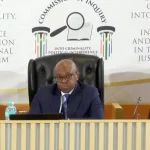
The commission of inquiry, chaired by retired Constitutional Court Justice Mbuyiseli Madlanga, is conducting parallel investigations with a broader scope to examine systemic failures.
Criminal investigations continue into Sibiya, Khumalo, and others, though sceptics note that investigations into powerful individuals often produce minimal results.
For ordinary South Africans watching this drama unfold, the question is whether this moment will produce genuine accountability or simply another chapter in a familiar story of corruption exposed but rarely punished.
The testimony of a criminal from behind bars has placed two former police ministers under a cloud of suspicion. The allegations of a provincial police commissioner has suspended a minister and a deputy commissioner. The institutions tasked with investigating these claims are now themselves under scrutiny for their independence and effectiveness.
South Africa stands at a crossroads. Down one path lies a genuine reckoning—prosecutions of the powerful, institutional reforms, restored public trust, and a police service that serves citizens rather than criminal enterprises.
Down the other path lies the all-too-familiar terrain of commissions that investigate but don’t indict, reports that recommend but don’t enforce, and business as usual behind a thin veneer of accountability theatre.
Which path the country takes will determine not just the fate of a few individuals but whether the rule of law itself can survive in a society where those sworn to enforce it have allegedly been for sale.
As Matlala’s testimony concluded and he was led back to his cell, one thing was clear: The allegations have been made, the names have been named, and the evidence – whatever it reveals – is now subject to formal investigation.
The question is whether South Africa has the political will to follow that evidence wherever it leads, even into the offices of those who once wielded ultimate power over the very police force now investigating them.
Justice delayed has too often become justice denied in South Africa. The families of murdered political activists, the communities ravaged by drugs that flow freely despite massive police resources, and the honest officers who’ve watched corruption flourish around them—all are watching to see if this time will be different.
For Nhlanhla Mkhwanazi, the choice was clear enough to risk everything. “I chose to be a policeman,” he said. “Even if it means to pay with my life, let it be.”
The question now is whether his country will prove worthy of that sacrifice.