Our website use cookies to improve and personalize your experience and to display advertisements (if any). Our website may also include cookies from third parties like Google Adsense, Google Analytics, and Youtube. By using the website, you consent to the use of cookies.

What Ghana’s small businesses can teach the world about becoming more sustainable

What Ghana’s small businesses can teach the world about becoming more sustainable

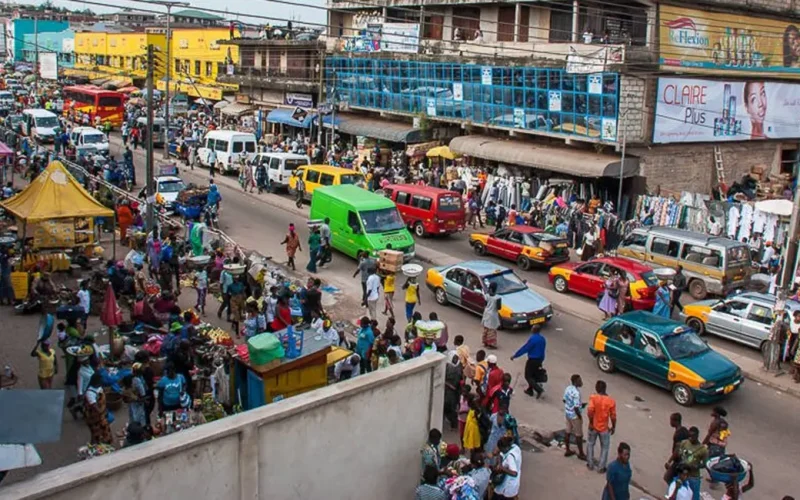
SMALL and medium-sized enterprises (SMEs) form the backbone of emerging economies. This is especially true in Ghana, where they represent around 90% of registered businesses and contribute significantly to employment and the economy of the west African nation. But these businesses face distinct challenges. They must stay competitive in fast-evolving markets while addressing the environmental impacts of their actions. Our recent research investigated how Ghanaian SMEs are achieving this balance. Ghana is a useful example for SME growth because it has focused on industrialisation coupled with sustainability, at the same time as the government offers initiatives to move the economy…
Read More
Nigeria’s economy in 2025 doesn’t look bright – analyst explains why

Nigeria’s economy in 2025 doesn’t look bright – analyst explains why

NIGERIANS may be wondering whether the year 2025 will bring the “renewed hope” promised by the President Bola Tinubu administration – or whether they are in for another year of economic despair. Nigerians are facing unprecedented economic challenges, arising from the removal of fuel subsidies. This has raised the price of petrol by nearly 500% within one year. What’s more, the liberalisation of the foreign exchange market resulted in an over 100% depreciation in the value of the domestic currency between October 2023 and October 2024. And to rein in headline inflation, which stood at 34.6% in November 2024, the…
Read More
Tyme caps off a tough year for African startups with a unicorn crown

Tyme caps off a tough year for African startups with a unicorn crown

TYME’S US$1.5 billion valuation after a US$150 million investment in the digital bank by Nubank has pushed it into the elite unicorn club and helped lift the gloom that had descended on Africa’s startup scene following a 2024 funding slump. The deal, part of Tyme’s US$250mn Series D round, marks the largest funding injection into an African startup in two years. It offers a rare reprieve in a year marked by a sharp contraction in venture capital flows, which plunged by nearly half. Tyme is now the ninth unicorn in Africa. Global investors pulled back sharply in 2024 on the…
Read More
South Africa’s G20 Presidency: Advancing Solidarity, Equality, and Sustainability for a Global Future

South Africa’s G20 Presidency: Advancing Solidarity, Equality, and Sustainability for a Global Future

THERE is an African proverb that reads: “If you want to go fast, go alone. If you want to go far, go together”. The lesson from this proverb is captured in the theme of South Africa’s G20 Presidency: “Solidarity, Equality and Sustainability”. Through our Presidency, we will seek to strengthen and advance our common pursuit of the Sustainable Development Goals (SDGs) and the Pact for the Future. We intend to use our Presidency to advance an African agenda and to further this agenda and ensure that we strengthen how the G20 respond to the social and economic needs of our…
Read More
Chinese cement makers, facing weakness at home, look to a new opportunity: Africa

Chinese cement makers, facing weakness at home, look to a new opportunity: Africa

HUAXIN Cement, one of China's largest cement makers, is in the process of expanding its presence in the African market through a significant investment in Nigeria, Africa’s most populous country. Huaxin is taking advantage of an opportunity created by Swiss cement maker, Holcim which has announced plans to divest its Nigerian operations by selling its nearly 84% stake in Lafarge Africa. Holcim recently signed an agreement with Huaxin Cement Ltd to sell its 83.81% shareholding in Lafarge Africa PLC, at an equity value of US$1 billion on a 100% basis. The transaction is expected to close in 2025, subject to regulatory approvals. "Leveraging…
Read More
“Much more than a transport corridor” – why investors are betting on the Lobito corridor

“Much more than a transport corridor” – why investors are betting on the Lobito corridor

MUCH fanfare surrounded US President Biden's inaugural Africa trip, with debate over the US's commitment to Africa and competition in Africa between the US and China taking centre stage. Yet the focus of the trip - a rail corridor joining mineral-rich African countries with Lobito Port in Angola - is also being seen as an opportunity that is drawing in more and more international investors. According to Daniel Mamadou, director at Welsbach Holdings, a Singapore-based Metals and Mining Corporate Advisory firm, European countries are keen to invest in the corridor because it “is much more than just a transport infrastructure…
Read More
Hope for African women entrepreneurs battling to unlock funding

Hope for African women entrepreneurs battling to unlock funding

AFRICA has the highest proportion of women entrepreneurs globally, but they face significant challenges in securing funding for their ventures. The Global Entrepreneurship Monitor (GEM) 2016/17 Women’s Report shows that more than a quarter of all businesses on the continent are either started or run by women. However, their access to finance has been disproportionately low, with the Africa Development Bank (AfDB) estimating a financing gap of US$42 billion for African women across various business value chains, including US$15.6 billion in agriculture alone. The lack of traditional collateral, such as land, property, and guarantees, has often caused banks to perceive…
Read More
Climate shocks and the economy: we asked South Africa’s central bank what role it plays in bringing stability

Climate shocks and the economy: we asked South Africa’s central bank what role it plays in bringing stability

CLIMATE change poses economic and social risks which can affect the workings of the financial system – the complex interaction of financial institutions and markets. Central banks, as the custodians of stable financial systems and stable prices (low, stable and predictable inflation), have a responsibility to ensure that financial systems can survive and manage climate-related shocks. The South African Reserve Bank approaches this in three ways. It aims to ensure that financial institutions and markets consider climate-related risks in their operations. It seeks to understand the effects of climate change on inflation and financial stability, and take action against these…
Read More
Ghana’s economic diplomacy: how three presidents with different ideologies dealt with the IMF and World Bank

Ghana’s economic diplomacy: how three presidents with different ideologies dealt with the IMF and World Bank

SINCE independence in 1957, Ghana’s leaders have followed a variety of global ideologies, from centre-right to socialist. But the country has also blended these with local priorities, like anti-colonialism and economic independence while balancing the pressures from the IMF and World Bank. As a foreign policy researcher, I recently wrote a paper examining Ghana’s approach to the International Monetary Fund and the World Bank under three presidents: Kwame Nkrumah, Jerry Rawlings and John Kufuor. I examined these relationships through the lens of Ghana’s economic diplomacy. My analysis starts with the idea that ideologies guide leaders in addressing issues like security,…
Read More
BRICS+ countries are determined to trade in their own currencies – but can it work?

BRICS+ countries are determined to trade in their own currencies – but can it work?

BRICS+ countries are exploring how they can foster greater use of local currencies in their trade, instead of relying on a handful of major currencies, primarily the US dollar and the euro. The forum for cooperation among nine leading emerging economies – Brazil, China, Egypt, Ethiopia, India, Iran, Russian Federation, South Africa, United Arab Emirates – emphasised this determination at their 16th summit in October 2024. Economist Lauren Johnston recently wrote a paper on this development. The Conversation Africa asked her for her insights. Why do Brics+ countries want to trade in local currencies? There are economic and political reasons…
Read More