Our website use cookies to improve and personalize your experience and to display advertisements (if any). Our website may also include cookies from third parties like Google Adsense, Google Analytics, and Youtube. By using the website, you consent to the use of cookies.

Rick Turner and Steve Biko were leading liberation thinkers in 1970s South Africa – why their ideas still matter

Rick Turner and Steve Biko were leading liberation thinkers in 1970s South Africa – why their ideas still matter

STEVE Biko was undoubtedly the most influential South African liberation struggle theorist and activist of the 1970s. Rick Turner was arguably among the most effectual white anti-apartheid activists of the era. Biko espoused black consciousness while Turner was a Marxist philosopher. Biko (30) was murdered by apartheid police in 1977. Turner (36) was shot dead by an apartheid assassin in 1978. Their ideas continue to resonate. Political scientist and philosopher Michael Onyebuchi Eze sets out, in a chapter of a new book, Rick Turner’s Politics as the Art of the Impossible, how the two men’s philosophies mirrored and critiqued each…
Read More
The Disturbing story of first Africans at the Olympics

The Disturbing story of first Africans at the Olympics

WHO were the first Africans to compete in the modern Olympic Games? The answer to that question reveals the surprising story of a 1904 marathon – and exposes the history of racism and white supremacy that characterised the Olympics in its early days. The first modern Olympic Games was held in 1896 in Greece. This was at the height of European colonialism and there is no record of Africans participating. It was only after the Second World War, in the late 1940s, that African countries began to join the Olympic movement in significant numbers, as African independence took hold. There…
Read More
‘People started to point the finger’: How the M23 conflict endangers DR Congo’s Tutsi communities

‘People started to point the finger’: How the M23 conflict endangers DR Congo’s Tutsi communities

This story was originally published by The New Humanitarian. By Andrei Popoviciu and Emmet Livingstone THE war between the Democratic Republic of the Congo’s military and the Tutsi-led M23 armed group is having a harmful impact on the country’s Rwandophone Tutsi communities, some of whom have been unfairly typecast as rebel collaborators. Interviews with nearly a dozen Tutsi civilians underscore the diverse ways their communities have been affected by the war, which began in late 2021 and has seen the M23 seize large chunks of eastern DRC with the military backing of neighbouring Rwanda. “People started to point the finger…
Read More
The Cabinet of National Unity must work to build a South Africa for all

The Cabinet of National Unity must work to build a South Africa for all

IN the coming days, the ministers and deputy ministers of the new Government of National Unity will be sworn in. This is a significant moment in our country’s democracy. We have made good on our promise to the South African people to work together as political parties for the good of the country, and to deliver a government that will be united in action and purpose. This provides a firm basis for greater stability, coherence and a focus on implementation. Even in some of the world’s most established democracies, the formation of multi-party governments is often protracted and fraught with…
Read More
Kenya protests: Ruto pulling the finance bill is unlikely to satisfy angry young protesters – here’s why

Kenya protests: Ruto pulling the finance bill is unlikely to satisfy angry young protesters – here’s why

IN a move that shocked observers, Kenya’s President William Ruto announced on 26 June he was withdrawing his government’s highly controversial finance bill. This followed two days in which tens of thousands of mostly young protesters took to the streets in nationwide rallies against the proposals contained in the country’s 2024 budget. Kathleen Klaus, who has studied political violence in Kenya, unpacks what drove the protesters. Did rising prices trigger the protests in Kenya? Sharp rises in livelihood goods, especially food and fuel, often serve as a trigger for protest and social unrest. This has been documented by several academic…
Read More
“Today, I make a solemn commitment to be a president for all South Africans, to defend our Constitution and protect our democracy”

“Today, I make a solemn commitment to be a president for all South Africans, to defend our Constitution and protect our democracy”

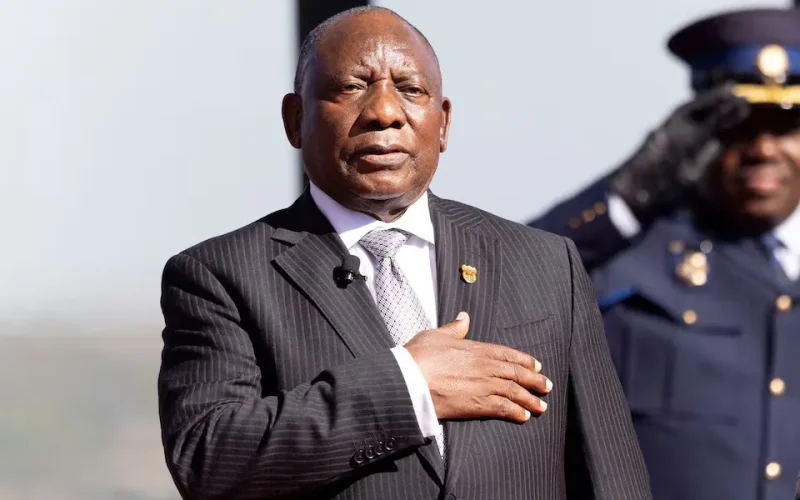
TODAY, we gather under this vast Highveld sky at the seat of our government, the Union Buildings, to witness before all South Africans and our honoured guests from various countries on our beloved continent and from far afield a fundamental rite of our democracy. In our brilliant diversity, we gather to affirm our solemn conviction that this country belongs to all who live in it, as articulated in the Freedom Charter almost seventy years ago. We gather here, as people born of the same soil across our nine provinces that make up a unitary South Africa, determined that by our…
Read More
Students on the frontline: South Africa and the US share a history of protest against white supremacy

Students on the frontline: South Africa and the US share a history of protest against white supremacy

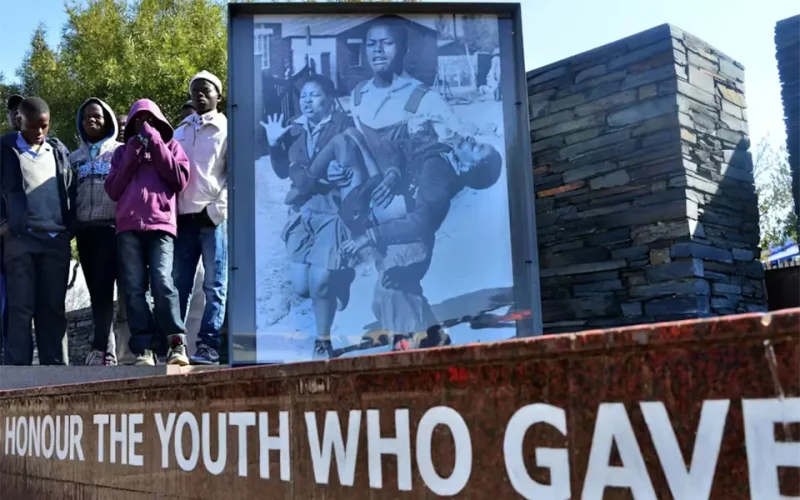
EVERY year on 16 June, South Africa commemorates the revolt of black school children against the inferior “bantu education” system on that day in 1976. The horror of police shooting and killing unarmed children caused a global uproar. Historian Rico Devara Chapman’s research interests include a focus on the African diaspora’s historical and contemporary struggles for justice, particularly student activism in the United States and South Africa. We asked him about similarities between student revolts under the systems of apartheid in South Africa and Jim Crow in the United States. You draw parallels between Jim Crow and apartheid. Please explain.…
Read More
Time for G7 to make good on climate cash for Africa: Joyce Banda

Time for G7 to make good on climate cash for Africa: Joyce Banda

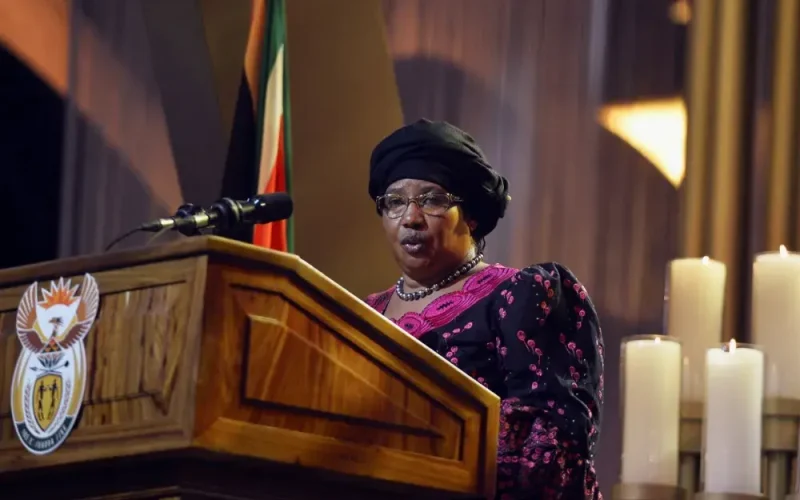
AS G7 leader, Italy must press member states to deliver on their climate finance promises to African nations bearing the brunt of global warming. Dr Joyce Banda is a former President of Malawi I recently joined world leaders in Azerbaijan at the Baku Global Forum. Yet again, western governments were reluctant to make financial commitments to help countries suffering the most from climate change to rebuild and recover. A decade ago, climate leadership meant building the foundations of global agreements. Today, it means delivering on them. This month’s G7 Summit offers that opportunity for host country Italy but as the…
Read More
South African communities vs Shell: high court victories show that cultural beliefs and practices count in climate cases

South African communities vs Shell: high court victories show that cultural beliefs and practices count in climate cases

WHEN the Shell Petroleum Company announced in 2021 that it wanted to explore fossil fuels off South Africa’s pristine Wild Coast, Indigenous communities in the area immediately fought back through the country’s courts. In two separate cases, the communities successfully challenged Shell. They won both cases, winning an interim interdict to put Shell’s exploration on hold and having the company’s exploration right set aside. Shell is appealing the second ruling on several, largely procedural, grounds; that process got underway in the Supreme Court of Appeal on 17 May this year. If the Supreme Court of Appeal upholds the High Court’s…
Read More
In post-coup Niger, migration becomes legal again

In post-coup Niger, migration becomes legal again

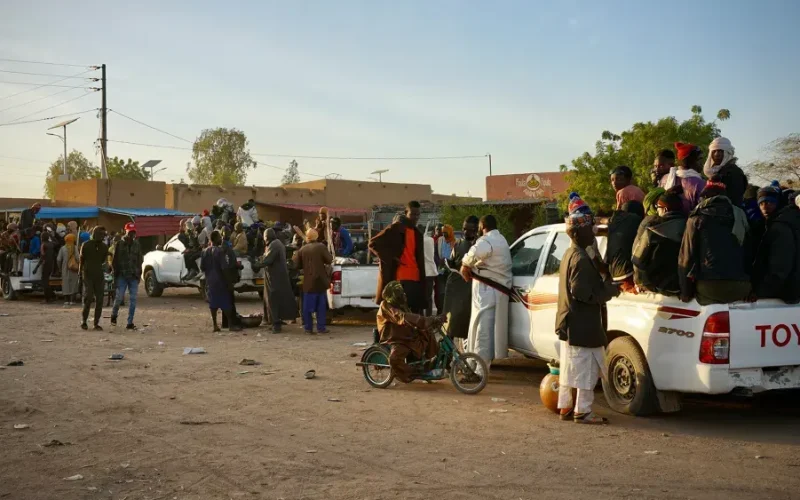
SINCE deposing the elected government last July, Niger’s ruling military government has shaken up the country’s relationship with its one-time Western partners. In rapid succession, the new government expelled French soldiers from the country repealed a 2015 law that had been a cornerstone of EU efforts to curb migration and then cancelled two EU missions working with Nigerien security forces on a number of issues, including fighting jihadist militants and stopping the movement of people from West Africa toward Europe. Now, Niger’s ruling junta has revoked a military cooperation agreement with the United States, potentially forcing around 1,000 US troops to leave the country. The move further entrenches…
Read More