Our website use cookies to improve and personalize your experience and to display advertisements (if any). Our website may also include cookies from third parties like Google Adsense, Google Analytics, and Youtube. By using the website, you consent to the use of cookies.

Africa’s PhDs: study shows how to develop strong graduates who want to make a difference

Africa’s PhDs: study shows how to develop strong graduates who want to make a difference

THE challenge for universities is to produce graduates who can work with others to produce knowledge and research that can change institutions and societies for the better. That is the basis on which the Consortium for Advanced Research Training in Africa (Carta) began developing an approach to teaching PhDs 12 years ago. The consortium supports faculty members of public universities and research institutes on the continent who want to pursue a PhD. The training covers a range of research methods to ensure graduates value multidisciplinarity. It also includes a focus on stakeholder and community engagement and prepares students for life…
Read More
Rural schools in South Africa can produce good exam results too: study shows what’s behind one success story

Rural schools in South Africa can produce good exam results too: study shows what’s behind one success story

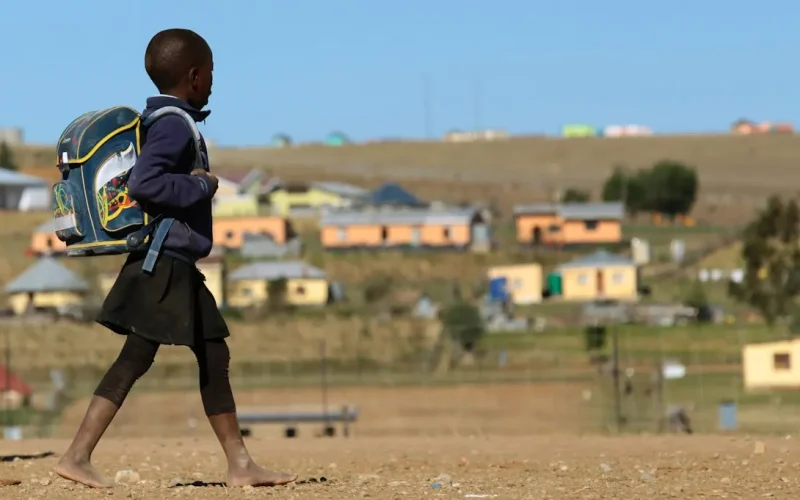
EACH weekday, hundreds of thousands of children and teenagers in South Africa’s rural areas (which make up just over 31% of the country’s total area) make the journey to school. It’s often difficult. Poor road networks and a lack of easy access to transport make just getting to and from school a challenge. Many rural schools are dilapidated and poorly equipped. It’s very unusual for these schools to have libraries, computer rooms or science laboratories. There has been some improvement in matric (school-leaving) exam results in the largely rural provinces. In 2016 the Eastern Cape, KwaZulu-Natal and Limpopo provinces, which…
Read More
Ghana’s free high school policy is getting more girls to complete secondary education – study

Ghana’s free high school policy is getting more girls to complete secondary education – study

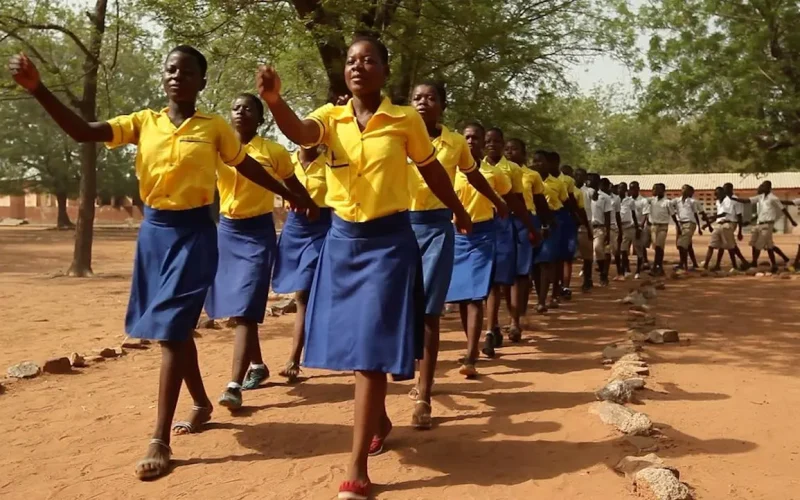
EDUCATION drives economic growth and individual well-being. Secondary education, in particular, plays a crucial role. In recent decades, this recognition has encouraged several African countries to make secondary education free. One example is Ghana’s Free Public Senior High School (FreeSHS) policy, initiated in 2017. The policy aimed to remove cost barriers to secondary education, including fees, textbooks, boarding and meals. As scholars of public policy, we conducted research into the impact of the policy, particularly its effect on the number of girls completing secondary school. We emphasised the educational outcomes of girls because they are at a disadvantage when accessing…
Read More
South Africa: women play a key role in early childhood learning and care – but they need help accessing university

South Africa: women play a key role in early childhood learning and care – but they need help accessing university

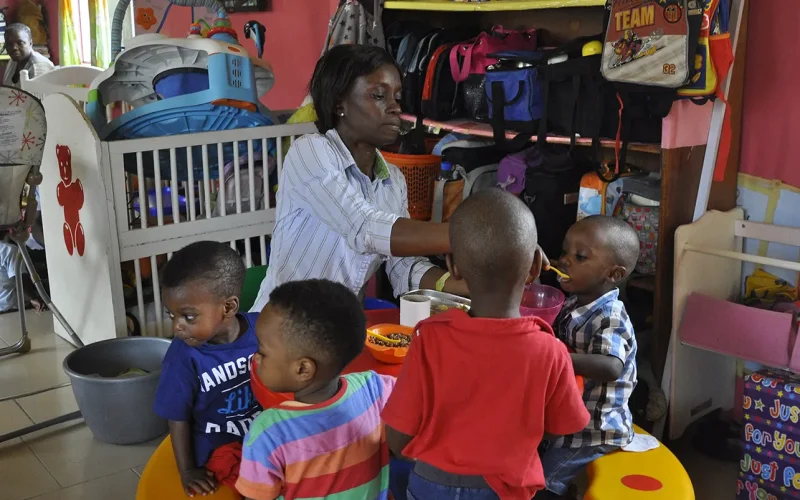
IN South Africa, the early childhood development sector is dominated by women who build creches from the ground up. These women offer services to communities that go far beyond childcare. They teach, feed and nurture children and keep them safe. They also build sustainable businesses and provide employment opportunities to members of their communities. Previously managed under the Department of Social Development and currently under the Department of Basic Education, the early childhood development sector runs on an entrepreneurship model. Some individuals in the sector opt to set up and run childcare businesses; there are also many not-for-profit early childhood…
Read More
We looked at all the recent evidence on mobile phone bans in schools – this is what we found

We looked at all the recent evidence on mobile phone bans in schools – this is what we found

MOBILE phones are currently banned in all Australian state schools and many Catholic and independent schools around the country. This is part of a global trend over more than a decade to restrict phone use in schools. Australian governments say banning mobile phones will reduce distractions in class, allow students to focus on learning, improve student wellbeing and reduce cyberbullying. However, previous research has shown there is little evidence on whether the bans actually achieve these aims. Many places that restricted phones in schools before Australia have now reversed their decisions. For example, several school districts in Canada implemented outright…
Read More
Understanding how the brain works can transform how school students learn maths

Understanding how the brain works can transform how school students learn maths

SCHOOL mathematics teaching is stuck in the past. An adult revisiting the school that they attended as a child would see only superficial changes from what they experienced themselves. Yes, in some schools they might see a room full of electronic tablets, or the teacher using a touch-sensitive, interactive whiteboard. But if we zoom in on the details – the tasks that students are actually being given to help them make sense of the subject – things have hardly changed at all. COLIN FOSTER, Reader in Mathematics Education, Loughborough University We’ve learnt a huge amount in recent years about cognitive…
Read More
South Africa’s apartheid legacy is still hobbling research – a study of geography shows how

South Africa’s apartheid legacy is still hobbling research – a study of geography shows how

KNOWLEDGE matters. It informs how we think about the world around us. It informs our decisions and government policies, supporting economic growth and development. Knowledge is also power. Certain types of knowledge are given more value than others. This is driven by histories of privilege. In South Africa, apartheid looms large in debates about how knowledge is produced. Though it formally ended 30 years ago, it still influences whose knowledge is considered “right” and whose is sidelined. And this matters in everyday life. For instance, health and medical research and instruction used to focus on white and male bodies. This…
Read More
University rankings are unscientific and bad for education: experts point out the flaws

University rankings are unscientific and bad for education: experts point out the flaws

WE rank almost everything. The top 10 restaurants in our vicinity, the best cities to visit, the best movies to watch. To understand whether the rankings were any good you’d want to know who was doing the ranking. And what it was they were looking for. These are exactly the same questions that are worth asking when looking at the international ranking of universities. SHARON FONN, Professor, School of Public Health, University of Gothenburg Sweden, University of the Witwatersrand Ranking universities started a couple of decades ago. Since then they have become omnipresent, presuming importance and validity. Institutions, especially those…
Read More
How teenagers navigate the nuances of social media – and what adults can learn from them

How teenagers navigate the nuances of social media – and what adults can learn from them

FOR older generations, social media might feel like a specific and often new way of interacting – markedly different from meeting in person or talking on the phone. For most teenagers, though, it is part of an interconnected social landscape. They may not necessarily need to distinguish social connections as either online or offline. These can be fluid across digital and physical spaces. LINDA KAYE, Associate Head of Psychology (Knowledge Exchange and Marketing), Edge Hill University But there are nuances to interacting on social media – and teens are often acutely aware of them. Social media accounts are often characterised…
Read More
Matric results: South Africa’s record school pass rates aren’t what they seem – what’s really happening in the education system

Matric results: South Africa’s record school pass rates aren’t what they seem – what’s really happening in the education system

SOUTH Africa’s matric (grade 12) class of 2023, which wrote final school-leaving exams late last year, has been hailed by the country’s minister of basic education for achieving “extraordinary” results. Of the 691,160 candidates who wrote the National Senior Certificate exams, 82.9% – that’s 572,983 – passed, up from 80.1% of the class of 2022. And more candidates than ever before obtained marks that allow them to study for a bachelor’s degree. MICHAEL LE CORDEUR, Professor and Vice-dean Teaching and Learning, Education Faculty, Stellenbosch University All of the country’s nine provinces managed to improve on their 2022 pass rates. This…
Read More