Our website use cookies to improve and personalize your experience and to display advertisements (if any). Our website may also include cookies from third parties like Google Adsense, Google Analytics, and Youtube. By using the website, you consent to the use of cookies.

Counting the cost of lost schooling in South Africa

Counting the cost of lost schooling in South Africa

A year ago, at the start of the COVID-19 pandemic, we predicted that school closures in South Africa would result in learning losses. A loss of contact learning time would lead to lower educational outcomes, and the losses would be higher in no-fee schools (serving children from low-income families) than in fee-paying schools. VIJAY REDDY, Distinguished Research Specialist, Human Sciences Research Council Now we can update how much contact teaching time was lost in 2020 and make an “informed speculation” on the amount of learning loss based on changes in test scores between 2019 and 2020. Globally, the literature on…
Read More
Kids with a desk and a quiet place to study do better in school, data shows

Kids with a desk and a quiet place to study do better in school, data shows

ASK what students need to learn at home, and the answer often involves access to Wi-Fi or a digital device. For example, the American Rescue Plan Act of 2021 sets aside US$7.1 billion to support access to high-speed internet for schools and libraries. DAVID RUTKOWSKI, Associate Professor of Education Policy, Indiana University DIRK HASTEDT, Executive Director IEA, Indiana University What often gets overlooked is whether kids have a desk at home or a quiet place to study. As researchers who focus on education policy and how students perform on standardized tests, we decided to take a closer look – on…
Read More
How the pandemic is hurting university students’ mental health

How the pandemic is hurting university students’ mental health

EMMANUEL OJO, Senior Lecturer, University of the Witwatersrand ANNIE BURGER, PhD student, Stellenbosch University ANTHONY J ONWUEGBUZIE, Senior Research Associate, University of Cambridge BRYAN JASON BERGSTEEDT, Lecturer (Clinical Anatomy), Stellenbosch University SAMANTHA ADAMS, Senior Lecturer in Industrial Psychology, Stellenbosch University TALITHA CROWLEY, Senior lecturer at the Department of Nursing and Midwifery, Stellenbosch University INSTITUTIONS of higher education worldwide are undergoing unprecedented change because of the COVID-19 pandemic. Universities and colleges have been forced to switch to online teaching and learning. Many were unprepared for this move to what is termed emergency remote teaching and learning. It is now just more…
Read More
Teachify: A gap in SA education system identified

Teachify: A gap in SA education system identified

THROUGHOUT the years, young people have been taught that the most effective way to become successful in life is to get formal education which will hopefully give them a chance at being employed. However, as times are changing, excessive high unemployment rates are making it difficult for new entrants to be absorbed by the job market.  Furthermore, traditional approaches to education mean that when students leave the schooling system, they are not well suited to what the job market requires. To make things worse, the education system has never put an emphasis on preparing students to be confident enough to…
Read More
Education and inequality in 2021: how to change the system

Education and inequality in 2021: how to change the system

SINCE its earliest traces, at least 5,000 years ago, formal education – meaning an education centred on literacy and numeracy – has always been highly selective. Ancient Egyptian priest schools and schools for scribes in Sumeria were only open to the children of the clergy or future monarchs. CONRAD HUGHES, Research Associate at the University of Geneva's department of Education and Psychology; Campus and Secondary Principal at the International School of Geneva's La Grande Boissière, Université de Genève Later on, the wealthy would use private tutors, such as the Sophists of Athens (500 - 400 BCE). Ancient Greek schools, such…
Read More
From the ashes, library vows to rebuild unrivaled Africa collection

From the ashes, library vows to rebuild unrivaled Africa collection

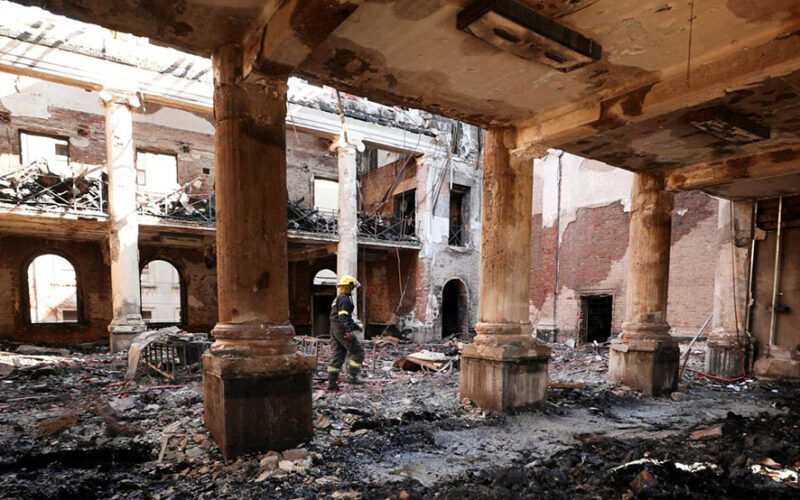
KIM HARRISBERG CAPE TOWN is reeling after one of its worst fires in recent history tore through the University of Cape Town campus, forcing 4,000 students to evacuate as it consumed precious items from the library's rare African Studies collection. Tens of thousands of books, manuscripts, films and government publications from across Africa were on Sunday turned to ash in the Jagger Library; many more emerged water damaged. The library housed one of the world's biggest collections of African history books and unique African films, including early editions of the first Black-owned newspaper in South Africa. Ujala Satgoor, executive director…
Read More
Education cannot wait investments transform children’s lives in Somalia

Education cannot wait investments transform children’s lives in Somalia

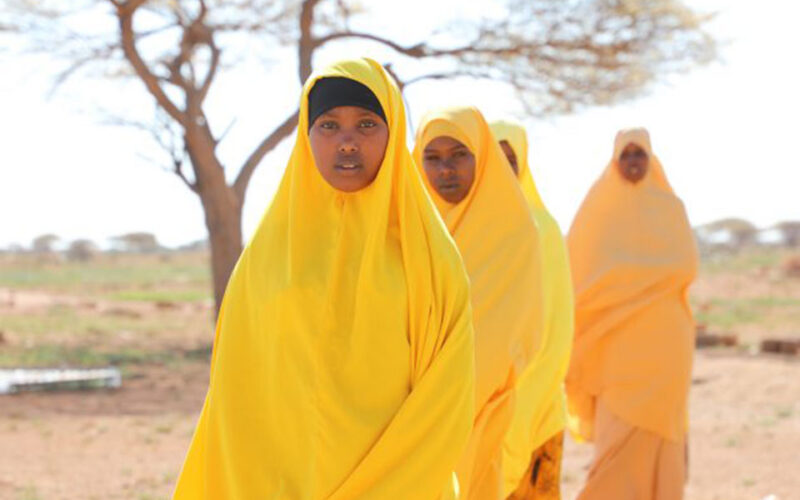
ABDALLE AHMED MUMIN  TEN-YEAR-OLD Sabah Abdi from Ali Isse, a small rural village on the Somaliland-Ethiopian border, scored well in her recent exams, placing third overall in her local village school of 400 students. Yet it was just three years ago Sabah spent her days helping with household chores and herding goats, rather than studying because her pastoralist family could not afford her school fees. “I’m very glad to be among the top three students in the village school. I am hoping to be a doctor and cure sick people in the village when I grow up,” Sabah told IPS. Droughts,…
Read More
Boosting connectivity in African universities: a lofty ideal, but doable

Boosting connectivity in African universities: a lofty ideal, but doable

CONNECTING African universities to high-speed internet can help drive the development of digital skills and capabilities. This would also benefit secondary schools and technical and vocational colleges. WILLIE TAFADZWA CHINYAMURINDI, Professor, University of Fort Hare A strong argument has been made, that improving connectivity should be viewed as a priority infrastructure investment. The World Bank published a report last year pointing out the drawbacks of poor connectivity. It noted that the lack of affordable and high-speed broadband for African universities was the main barrier to the use of technology in education and research. And it prevented African faculty and students…
Read More
Machines can’t ‘personalize’ education, only people can

Machines can’t ‘personalize’ education, only people can

IN the past year, COVID-19 abruptly disrupted schooling, and forced the question of how much kindergarten to Grade 12 education should or will rely on online teaching in the near and distant future. Education has taken a decided technological turn in its massive adaptation to online learning. This is precipitating a critical debate in education right now, with a most uncertain future and much depending on its outcome. MICHAEL MASER, PhD candidate - Faculty of Education, Simon Fraser University Read more: Ontario's ‘choice’ of fully online school would gamble on children for profit One key concern when considering both online…
Read More
Conflict kills education: Rwandan experiences show how lost years can be recovered

Conflict kills education: Rwandan experiences show how lost years can be recovered

HUMANITARIAN situations, especially protracted violent conflicts, are a serious barrier to accessing education. This is why, for 30 years, aid practitioners have been advocating for “Education in Emergencies”. The idea is to try to ensure “the right to education in emergencies and post-conflict reconstruction”. MIHO TAKA, Assistant Professor, Centre for Trust, Peace and Social Relations, Coventry University But violent conflicts pose significant challenges to deliver education in emergencies. For instance, in Rwanda, schooling rapidly deteriorated when the 1990 civil war began. Schooling came to a complete stop in April 1994 and reopened again in September 1994. By this time the…
Read More