Our website use cookies to improve and personalize your experience and to display advertisements (if any). Our website may also include cookies from third parties like Google Adsense, Google Analytics, and Youtube. By using the website, you consent to the use of cookies.

Online learning can be hard for students with disabilities: how to help

Online learning can be hard for students with disabilities: how to help

THE first case of COVID-19 in South Africa was reported in March 2020 and on March 15, President Cyril Ramaphosa announced a series of lockdown measures to curb the spread of the SARS-CoV-2 virus. These included the closure of both basic and higher education institutions. SINDILE NGUBANE, Full Professor, University of South Africa NKOSINATHI ZONGOZZI, Lecturer, University of South Africa Because of the pandemic, most educational institutions, including universities, abruptly went online. Online learning management systems and platforms were consequently adopted. One such university was the University of South Africa, with more than 400,000 students. As an open distance learning…
Read More
South Africa’s higher education funding system can be more realistic without betraying ideals

South Africa’s higher education funding system can be more realistic without betraying ideals

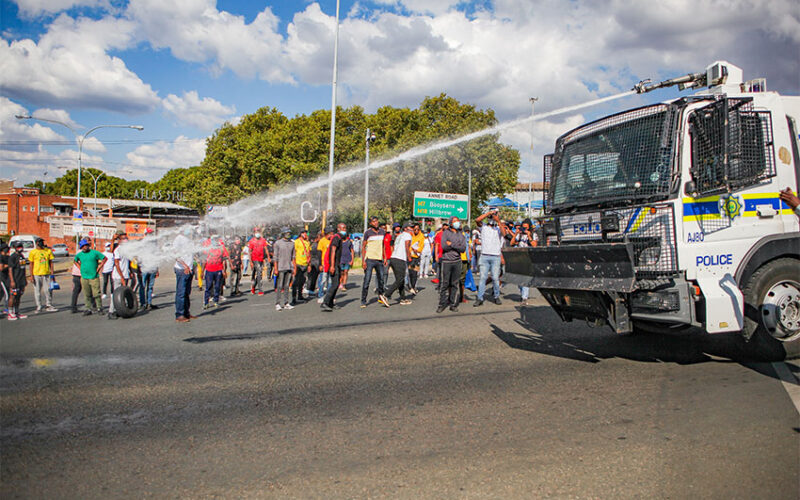
ONGOING student protests in South Africa have once again highlighted various problems with higher education funding. They boil down to challenges of affordability and sustainability. GERALD WANGENGE-OUMA, Director of Institutional Planning, University of Pretoria State funding of universities is inadequate – it hasn’t kept pace with enrolment pressures and the increasing costs of providing higher education. Many students cannot afford to pay fees either. Yet the student financial aid system isn’t a reliable source of support. The result is tension among higher education’s three key actors – universities, the state and students (and society at large). They don’t seem to…
Read More
How to keep Kenyan children in school longer: it’s not only about money

How to keep Kenyan children in school longer: it’s not only about money

THE school completion rate has emerged as one of the most pressing issues facing education in Kenya. Only 58% of pupils enrolled in the first year complete primary school. This proportion falls as they advance to higher levels. Even fewer complete secondary school. CAROLINE SABINA WEKULLO, Research scientist, Masinde Muliro University of Science and Technology Leaving school early is associated with educational deficiencies that are likely to limit students’ social, financial and psychological achievement throughout their lives. Over time, this adds to the inequalities in society. Low retention and completion rates are also likely to cost Kenya scarce resources, challenge…
Read More
How African countries can reform education to get ahead after pandemic school closures

How African countries can reform education to get ahead after pandemic school closures

THE COVID-19 pandemic has resulted in a historic shock to education, shuttering schools for over 1.6 billion children worldwide. This shock will worsen a pre-existing “learning crisis” in which many students in school were learning very little. The World Bank estimates that the percentage of children who are unable to read a simple sentence by age 10 could rise from 53% before the pandemic to 63% as a result of school closures. NOAM ANGRIST, Executive Director, Young 1ove, Fellow, University of Oxford These learning losses could stem from a combination of things: forgetting what was previously known, and missing what…
Read More
Are 3D-printed schools a solution to Africa’s classroom shortage?

Are 3D-printed schools a solution to Africa’s classroom shortage?

CHARLES PENSULO GATHERED under the hot sun, dozens of women danced and sang in jubilation as children from the village of Salima, in central Malawi, started their first day at their new 3D-printed school, which had been built from the ground up in only 15 hours. Made of concrete placed layer by layer through a computer-controlled nozzle, the school is made up of a single room with rounded corners and is big enough to accommodate 50 students. Olipa Elisa said her 10-year-old son used to have to hike 5km (3 miles) every day to the nearest school, often arriving late…
Read More
Understanding Ghana’s students is key to fixing the country

Understanding Ghana’s students is key to fixing the country

A great many African countries had shown steady economic growth in the decade prior to the onset of the COVID-19 pandemic. But all have failed to adequately create opportunities for the young people in their countries. With growing youth populations, creating paths for education and employment is a make or break issue for the continent. KAJSA HALLBERG ADU, Researcher in Higher Education and Migration, KTH Royal Institute of Technology But there’s also good news. Many young people are getting access to secondary education and an increasing number also university education. An increasing share of youth in Africa are university students,…
Read More
Mentorship programmes in Kenya can make graduates more employable. Here’s how one works

Mentorship programmes in Kenya can make graduates more employable. Here’s how one works

SEVERAL studies have shown that besides technical education, “soft skills” are critical for graduates to succeed as innovators, entrepreneurs, and in the formal workplace. These include problem-solving, teamwork and communication. DR. CHAO MBOGHO, Educator, Researcher, Mentor, Kenya Methodist University Mentoring relationships – where an experienced person offers guidance and support to a mentee – are some of the most effective methods to nurture these employability skills. This can be seen in South Africa and in the Middle East and North Africa region. Other benefits that students receive through mentorship include raised learning outcomes and increased completion rates. However, there is…
Read More
Teacher training needs a rethink to integrate language and subject learning

Teacher training needs a rethink to integrate language and subject learning

IN many countries where many languages are spoken, English is often the language of teaching and learning in schools. Learners get their knowledge of school subjects through the use of English – be it reading and writing or speaking and listening. NHLANHLA MPOFU, Associate Professor, Rhodes University MNCEDISI MAPHALALA, Research Professor in the School of Professional Studies in Education Studies, North-West University Learners who are comfortable using specific English language structures, phrases and terms as they are used in each school subject have greater academic success. Some school systems, therefore, aim to teach language and subject content at the same…
Read More
The way Nigeria selects vice-chancellors is deeply flawed. But it can be fixed

The way Nigeria selects vice-chancellors is deeply flawed. But it can be fixed

SOME universities in Nigeria are in crisis over the selection of vice-chancellors. From Ibadan to Lagos, Oye Ekiti and Dutse, things have not been running smoothly. While others like Lokoja and Ndufe Alike have been resolved, there were problems as well. The Conversation Africa’s Wale Fatade asks Ayodeji Olukoju, former vice-chancellor of Caleb University, why this is so and what should be done to tackle it. AYODEJI OLUKOJU, Distinguished Professor of History and Strategic Studies, University of Lagos How are vice-chancellors chosen in Nigerian universities? This depends on the type of university – federal, state or private – as well…
Read More
Kenyan universities face big challenges going digital. But it can be done

Kenyan universities face big challenges going digital. But it can be done

KENYA has over 70 universities, 38 of them public and 35 private. Over 500,000 students were enrolled in the last academic year. Public universities took the lion’s share with over 400,000 of these students. SHEHU SHAGARI AWANDU, Head/Chair, Department of Biomedical Sciences, Jaramogi Oginga Odinga University of Science and Technology While public universities are challenged by overcrowding, inadequate numbers of lecturers and degraded facilities, private ones have lower student to staff ratios and have better facilities and equipment. But all universities have been affected by the pandemic. An entire year of learning was lost due to government closure and universities…
Read More