Our website use cookies to improve and personalize your experience and to display advertisements (if any). Our website may also include cookies from third parties like Google Adsense, Google Analytics, and Youtube. By using the website, you consent to the use of cookies.

Kenya school gives second chance to teen mums forced out of classes

Kenya school gives second chance to teen mums forced out of classes

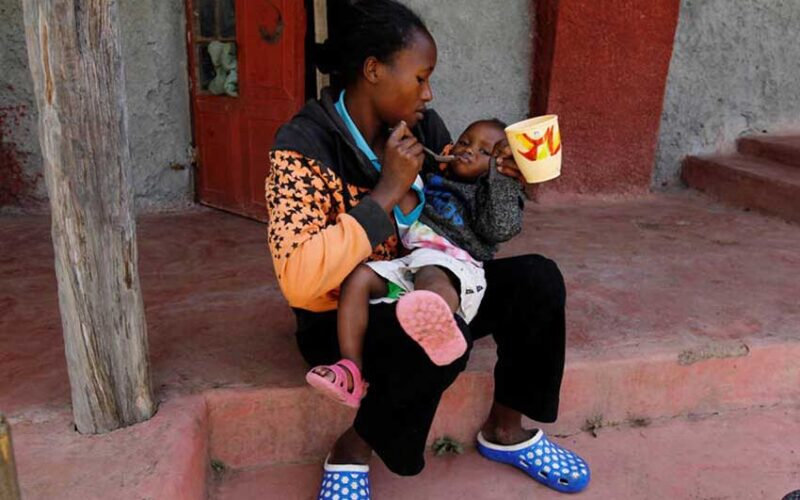
AYENAT MERSIE THE sounds of baby coos and teenage giggles punctuate the lessons at Serene Haven Secondary, a school nestled into a hill below cloud-ringed Mount Kenya. Here, 17 teenage mothers and pregnant girls - many of whom were forced out of their local schools - are getting a second chance to finish their education. In a normal year, stigma, logistics and money compel around 13,000 pregnant girls to drop out, government data show. That is likely to spike this year. COVID-19 lockdowns shut schools and fuelled an increase in adolescent pregnancies and sexual abuse, aid agencies say. Emily, a…
Read More
How to help your children with maths you don’t understand

How to help your children with maths you don’t understand

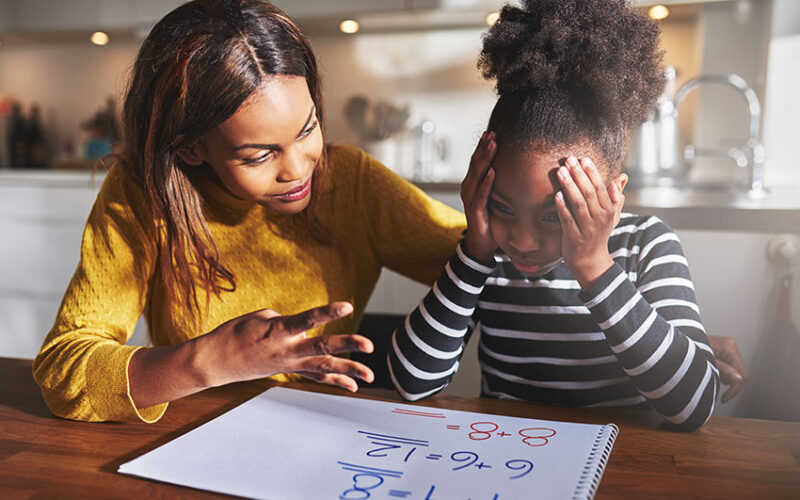
SCHOOL closures have left many parents in charge of overseeing their children’s education at home. If you are one of them, you might be struggling with maths in particular – not least due to having to grapple with topics and techniques you are unfamiliar with, such as number bonds, abundant numbers, chunking and more. DAVIDE PENAZZI, Senior Lecturer in Mathematics, University of Central Lancashire But this is where a positive mindset, and the ability to accept that you are also on a learning path, can help. Here are some tips on the best way to tackle teaching maths you don’t…
Read More
What studying history at school can do for Nigerians

What studying history at school can do for Nigerians

History was removed from the Nigerian school curriculum in 2009 – supposedly because students avoided the subject, graduates didn’t have job prospects and teachers were scarce. But Nigerians weren’t happy with the decision and it has now been reversed. The government has directed that history should be taught as a standalone subject from the 2020/21 academic session. The Conversation Africa’s Wale Fatade asked Ayodeji Olukoju, a professor of history, about the value of studying the subject. AYODEJI OLUKOJU, Distinguished Professor of History and Strategic Studies, University of Lagos Why should young Nigerians study history at school? Many scholars and commentators…
Read More
COVID-19 has dealt a blow to Ethiopia’s private higher education institutions

COVID-19 has dealt a blow to Ethiopia’s private higher education institutions

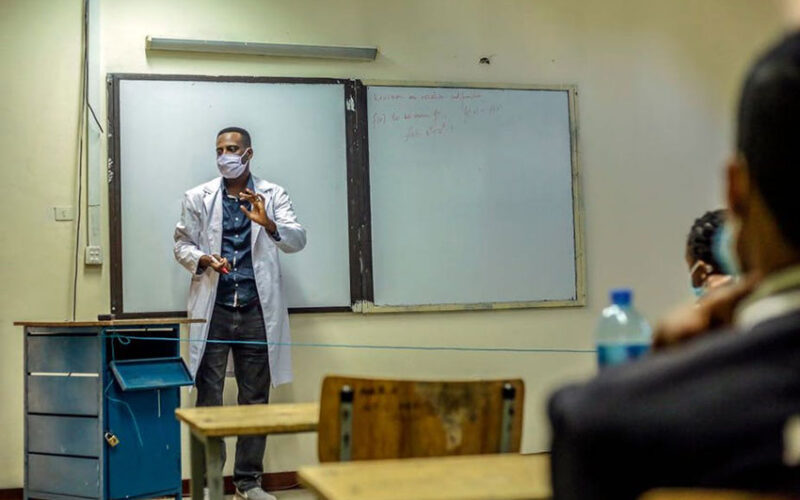
ETHIOPIA’S education sector has seen unprecedented challenges since the onset of the COVID-19 pandemic. Schools and universities were closed for eight months following the confirmation of the first case on March 13, 2020. This put nearly 26 million primary and secondary school students, and around a million tertiary students, out of learning. WONDWOSEN TAMRAT, Associate Professor, St. Mary’s University Over the past few months, the effects of the pandemic have been pronounced in the private higher education sector whose resource base and capacity is too limited to withstand the impact of a crisis of this magnitude. Private higher education institutions…
Read More
Why it’s time to break the cycle of reform and protest at Kenya’s universities

Why it’s time to break the cycle of reform and protest at Kenya’s universities

THE recent announcement of wide-ranging reforms at the University of Nairobi predictably triggered a new bout of student protests. The cost-cutting reforms propose a smaller administrative team, the abolition of a third of its colleges and higher tuition fees. ISHMAEL MUNENE, Professor of Research, Foundations & Higher Education, Northern Arizona University The proposed reforms have also elicited protest from academic and administrative staff. They argue that the proposals are punitive and high-handed. Staff have voiced concerns over lack of consultation in the reform process. Students have threatened further protests and legal action over higher tuition fees. Constant disruption of learning…
Read More
Will learners and teachers make up lost time?

Will learners and teachers make up lost time?

ZANDILE BANGANI IMPOVERISHED pupils attending under-resourced schools were unable to learn properly for much of 2020. The education department needs to do more to counter the learning gap caused by Covid-19. When the coronavirus was declared a global pandemic by the World Health Organization in March 2020, and South Africa subsequently went on lockdown, many of life’s activities had to stop. Schools had to close too. With school doors shut, learners began taking their lessons at home via e-learning channels. But not every school has had the means to extend digital services to their learners. Many are under-resourced and cannot…
Read More
Resilience gives students an edge in rural African universities

Resilience gives students an edge in rural African universities

STUDENTS in rural African universities typically experience several challenges to do with poor infrastructure and a poor education foundation. CHINAZA ULEANYA, Researcher, University of South Africa As a way to deal with learning challenges, some scholars have suggested decolonisation of the curriculum. This implies replacing colonial content and practices with indigenous ones. Other scholars have suggested that other factors should be considered as part of the solution. Some of these factors include personal, family based, social, and institutional factors. I conducted research in two African countries to identify the common learning challenges that rural university students and their lecturers experienced…
Read More
Setting goals to beat previous efforts improves educational outcomes. And the gains are bigger for disadvantaged students

Setting goals to beat previous efforts improves educational outcomes. And the gains are bigger for disadvantaged students

SETTING goals to try to outdo your previous best effort is known as growth goal setting or personal best goals. It is fundamentally focused on self-improvement, such as investing more time or effort in a task than before or striving to achieve a higher result in the next test than the previous one. ANDREW J. MARTIN, Scientia Professor and Professor of Educational Psychology, UNSW EMMA BURNS, Lecturer, Macquarie University KEIKO C. P. BOSTWICK, Research Officer, UNSW REBECCA J COLLIE, Scientia Associate Professor of Educational Psychology, UNSW Research over the past decade into approaches like these in education has shown it…
Read More
A critical look at what’s missing from Muslim education in South Africa

A critical look at what’s missing from Muslim education in South Africa

POLITICAL and social landscapes are shifting in most liberal democracies, and one of the issues coming under the spotlight is the purpose and legitimacy of faith-based schools. The South African Schools Act makes provision for the establishment of independent schools, which includes privately run and faith-based schools. NURAAN DAVIDS, Professor of Philosophy of Education, Stellenbosch University Muslim schooling in the country has its roots in the forced migration of slaves and political prisoners from Indonesia and the Indian sub-continent, which lasted until 1834. It has endured through different political milieus – colonisation, apartheid and now democracy – and a changing…
Read More
School posts on Facebook could threaten student privacy

School posts on Facebook could threaten student privacy

LIKE many of us, schools in the United States are active on social media. They use their accounts to share timely information, build community and highlight staff and students. However, our research has shown that schools’ social media activity may harm students’ privacy. JOSHUA ROSENBERG, Assistant Professor of STEM Education, University of Tennessee As a researcher who specializes in data science in education, I and my colleagues came to the topic of student privacy unintentionally. We were exploring how schools used social media during the early days of the COVID-19 pandemic, specifically March and April of 2020. In the course…
Read More