Our website use cookies to improve and personalize your experience and to display advertisements (if any). Our website may also include cookies from third parties like Google Adsense, Google Analytics, and Youtube. By using the website, you consent to the use of cookies.

The genocide of signed languages: protecting the linguistic rights of Africa’s deaf children

The genocide of signed languages: protecting the linguistic rights of Africa’s deaf children

DEAF rights to language, expression, literacy and education have been marginalised throughout history. And signed languages have taken second place to spoken languages. The 1880 Milan Convention, for example, gave rise to a period when deaf children were forced to use oral language at school. EMMA ASONYE, Speech and Hearing Scientist, University of New Mexico The passing of the convention amounted to a global attack on the linguistic rights of deaf people. The convention passed a resolution that deaf children (and students) should be mandated to ‘speak’ and learn through oral methods. And that the use of signed language in…
Read More
Rewarding academic achievement in schools creates barriers: a South African perspective

Rewarding academic achievement in schools creates barriers: a South African perspective

MOST South African parents and learners are familiar with the school practice of rewarding learners for academic achievement visibly, tangibly and publicly. Schools tend to reward in ways that are both traditional and unique. Some rewards can be seen on the learners’ school uniform – like a special kind of tie or blazer. Other common forms are pins worn on the lapel bearing words such as “Mathematics” or “English”. These serve as a daily reminder of a learner’s achievement, lasting well beyond the ceremony in which they were presented. SAHAKIRA AKABOR, Postdoctoral Research Fellow , University of South Africa Schools…
Read More
Pandemic feared fuelling child abuse at Nigeria’s Islamic schools

Pandemic feared fuelling child abuse at Nigeria’s Islamic schools

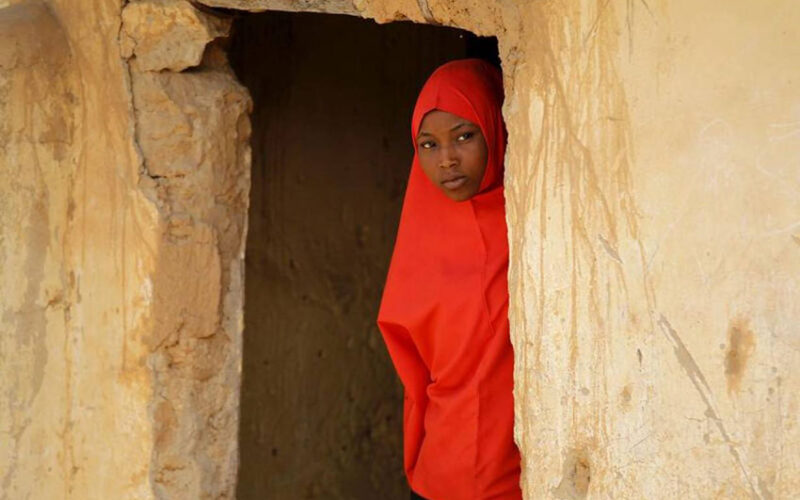
EMELINE WUILBERCQ EFFORTS to stop abuse and forced begging of pupils at Islamic schools in northern Nigeria are at risk as the economic fallout from the coronavirus pandemic could push more struggling families to enrol their children, according to campaigners. The Islamic schools, known locally as almajiri schools, are estimated to host about 10 million children - mainly boys - and hit headlines in 2019 when a series of police raids on the institutions uncovered widespread physical and sexual abuse. Nigeria's northern governors agreed last April to close the schools and send pupils back home due to concerns over COVID-19, which…
Read More
How tutoring companies are bridging the education gap

How tutoring companies are bridging the education gap

LISA WITEPSK EDUCATION – always a contentious topic in South Africa – has been impacted more than most other industries by the Covid-19 pandemic. But, as always, the flipside to challenge is opportunity, as tutoring companies Kitso Technology Excellence Academy (KTEC) and eThuta show. Eight out of every 10 South African school children are unable to read properly – “not in English, not in their home language, not in any language,” laments Moses Mphahlele, co-founder of eThuta, illustrating why so many parents consider extra educational support a necessity.  Reneiloe Seodigeng While this means that individuals offering tutoring services – of…
Read More
South African universities have taken to online teaching: but it can’t be permanent

South African universities have taken to online teaching: but it can’t be permanent

THE uptake of educational technology in South Africa’s higher education sector has been highly uneven and very slow. Before the pandemic, most courses offered in South African universities had some form of Learning Management System presence. Students could access course guides and readings, upload their assignments, and possibly communicate with their lecturer and peers via forums. But beyond that, many academics seemed to resist making use of the technology, even though it could allow for greater engagement and interactive learning. SIOUX MCKENNA, Director of Centre for Postgraduate Studies, Rhodes University And then 2020 happened and suddenly everyone found themselves thrown…
Read More
Varsities: Egypt makes a leap

Varsities: Egypt makes a leap

CONRAD ONYANGO EGYPTIAN Universities’ growing emphasis on churning out high impact research could pave the way for other higher institutions of learning in Africa to enter the top league of the World’s Best Universities. The Times Higher Education World University Rankings 2022, has listed Egyptian Universities among the fastest rising higher institutions of learning over the last four years. At 11 points of growth, the rate is even higher than China’s, which saw an improvement of 9 points. However, China's improvement saw two of its universities enter the top 20, while Egypt has just entered the top 300. Nevertheless, the…
Read More
Children learn in class, and outside. But, over time, they learn more at school

Children learn in class, and outside. But, over time, they learn more at school

SCHOOL is a key component of our societies. In school, children learn to read and write. And being able to read is meant to help people of all ages to think at a higher level and make their lives better. SYMEN A. BROUWERS, Extraordinary Research Scientist, North-West University It is not surprising that literacy is thus an important goal for global development agencies. The “multiplier effect” of literacy is believed to empower people, enabling them to participate in society and improve their livelihoods. The truth is, learning basic skills such as solving arithmetic problems at school doesn’t necessarily make you…
Read More
Scholarships alone are not enough to get more qualified female teachers into Nigeria’s schools

Scholarships alone are not enough to get more qualified female teachers into Nigeria’s schools

NIGERIA'S northern rural regions suffer acute shortages of both female teachers and female pupils. UNICEF estimates that over half of all girls are not in school in the north while under a third of all primary school teachers are women. SARA HUMPHREYS, Visiting Research Fellow, University of Sussex MÁIRÉAD DUNNE, Professor of Sociology of Education, University of Sussex NAUREEN DURRANI, Professor, Graduate School of Education, Nazarbayev University To boost the numbers of female teachers in rural locations, an ambitious scholarship scheme was established to train young women from these areas to become teachers in their home villages. It was hoped…
Read More
Rape culture in South African schools: where it comes from and how to change it

Rape culture in South African schools: where it comes from and how to change it

IN August 2021, a six-year-old grade one learner in South Africa was raped, allegedly by a general worker in her school’s toilet. Public shock and outrage at the ongoing onslaught against children has brought renewed attention to young girls’ particular vulnerability to sexual violence. DEEVIA BHANA, Professor Gender and Childhood Sexuality, University of KwaZulu-Natal One in five children are victims of sexual abuse in South Africa, representing 19.8% compared to a global average of 18% for girls and 8% for boys. In the 2019/2020 Annual Crime Statistics report, more than 24,000 children were sexually assaulted in South Africa. Statistics are…
Read More
How small businesses are making education more accessible online

How small businesses are making education more accessible online

TANYA McCLEAN THERE is no doubt that the Covid-19 pandemic has seen a massive surge in online education, but according to two South African tech companies, the focus should also be on the quality of education and the science of learning. Zibuza.net is an online community platform for teachers which was developed by Marvel Technologies founder, Malcolm Mooi who said that while their platform was for teachers to share, collaborate and improve professional development, his team had to rapidly expand it to learners and their parents during lockdown. Mooi, a computer system engineer left the comfort of the corporate bubble…
Read More