Our website use cookies to improve and personalize your experience and to display advertisements (if any). Our website may also include cookies from third parties like Google Adsense, Google Analytics, and Youtube. By using the website, you consent to the use of cookies.

Historic first as Unisa appoints black female vice-chancellor

Historic first as Unisa appoints black female vice-chancellor

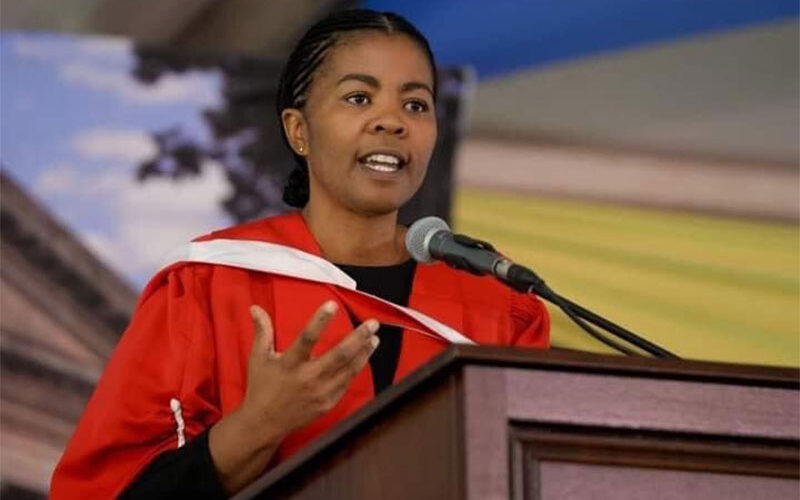
AFRICAN MIRROR REPORTER THE University of South Africa (Unisa) - one of Africa’s biggest tertiary education institutions - has appointed its first female vice chancellor and principal in 148 years. Professor Puleng LenkaBula has been appointed to succeed Professor Mandla Makhanya from January 2021. Unisa announced that the decision to appoint LenkaBula was unanimous and followed a rigorous selection process. The institution said LenkaBula’s appointment was testimony to the transformation project it introduced and drove relentlessly in the university over the years. The appointment also ensured that  Unisa’s workforce was alive to and reflective of the demographics of South Africa…

Read More
Paying commission to academics reduces the value of research

Paying commission to academics reduces the value of research

MANY universities around the world pay academics to publish their research. Our recent study in South Africa, though, suggests they should be cautious of such practices. SIOUX MCKENNA, Director of Centre for Postgraduate Studies, Rhodes University DR EVELYN MUTHAMA, Postdoctoral Fellow, Rhodes University The country’s Department of Higher Education and Training funds public universities for every article published in academic journals on any of six accredited lists. The lists include journals that meet various quality indicators such as peer review. The idea is that funding will drive the country’s participation in the knowledge economy through its contribution to research. Universities…
Read More
We asked university students to tell their own stories in photos: here’s why

We asked university students to tell their own stories in photos: here’s why

MIKATEKO MATHEBULA, Senior Researcher at the SARCHI Chair's Higher Education and Human Development Research Programme, University of the Free State IN South Africa, university students who come from low-income households in rural areas are at a disadvantage. Having generally attended poorly resourced schools, they’re not well resourced or prepared to participate in the processes of making and sharing knowledge at tertiary education level. When they enter universities, they tend to have lower English language proficiency than middle class, urban students. They also tend to be less comfortable using the modes of expression that dominate South African universities. They may find…
Read More
More children in Zimbabwe are working to survive: what’s needed

More children in Zimbabwe are working to survive: what’s needed

THE ability of Zimbabwean families to take care of children has been compromised by a collapsing economy, compounded by COVID-19. About 4.3 million people in rural communities, including children, are food insecure this year. The World Food Programme indicates that at least 60% of the population of Zimbabwe need food aid. DR GETRUDE DADIRAI GWENZI, Early Career Researcher in the Sociology of Child Welfare in Africa, Lingnan University The Vendors Initiative for Social and Economic Transformation in Zimbabwe has estimated that over 20,000 children have turned to vending as a means of survival since the COVID-19 lockdown. According to reports,…
Read More
Spurred by COVID-19, African schools innovate to close learning gap

Spurred by COVID-19, African schools innovate to close learning gap

NELLIE PEYTON and KIM HARRISBERG IN rural Sierra Leone, teenagers tuned into solar-powered radios for their lessons, while Kenyan students texted a code to receive free learning guides on their phones. As COVID-19 shut Africa's schools, governments and charities rushed to make learning accessible to millions of pupils without internet or even electricity, sparking innovations that could keep children learning long after the pandemic has passed. "The situation... pushed all the governments and education ministries to think in a different way," said Elena Locatelli, an advisor on education in emergencies at the U.N. children's agency UNICEF. In a matter of…
Read More
Tanzanian ban on pregnant school girls challenged in African court

Tanzanian ban on pregnant school girls challenged in African court

NITA BHALLA A Tanzanian law that bans pregnant girls and teenage mothers from attending school is being challenged in Africa's top rights court by an international women's charity, which said the "discriminatory" rule trapped girls in poverty. Equality Now said it had filed a joint petition with a local partner at the African Court on Human and Peoples' Rights against the Tanzanian government on Thursday after years of campaigning unsuccessfully for the ban to be lifted. "We have advocated for more than three years for the government of Tanzania to lift the ban on pregnant girls and adolescent mothers accessing…
Read More
Teenage pregnancies rise in parts of Kenya as lockdown shuts schools

Teenage pregnancies rise in parts of Kenya as lockdown shuts schools

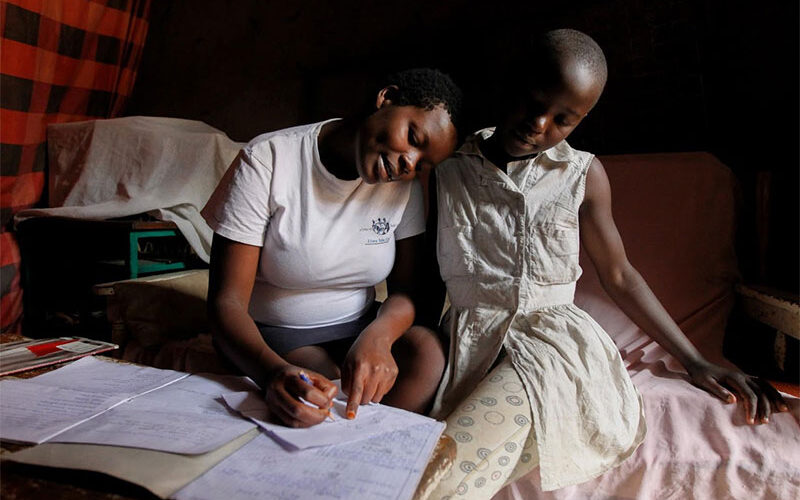
AYENAT MERSIE  JACKLINE Bosibori wept when she found out she was pregnant. The 17-year-old's mother, who is raising six kids alone, collapsed in their one-room home. They had been repeatedly threatened with eviction and couldn't afford another mouth to feed. "If I was in school, this could have not happened," said Bosibori, who wants to become a lawyer. Bosibori stands with her mother Ann Kemunto outside their home in Lindi village.4 NOV 2020. NAIROBI, KENYA. REUTERS/MONICAH MWANGI With schools closed due to the coronavirus pandemic and her mother out selling vegetables on the roadside, Bosibori got involved with a man…
Read More
Education is both the victim and the best weapon in Central Sahel conflict

Education is both the victim and the best weapon in Central Sahel conflict

CRAIG BAILIE, Lecturer in Political Science, Stellenbosch University SOUTH Africa’s first democratically elected president, Nelson Mandela, captured the value of education when he said, “Education is the most powerful weapon which you can use to change the world.” This is why quality education is one of the 17 sustainable development goals “to transform our world” of the United Nations (UN). It’s also why protecting education from attack during armed conflict and in insecure spaces is so important. The UN has had the protection and provision of education during armed conflict on its agenda since 2010. This was when the General…
Read More
Keeping girls in school seen worth billions to developing nations

Keeping girls in school seen worth billions to developing nations

SONIA ELKS  MAKING sure all girls are finishing secondary education by 2030 could boost the gross domestic product (GDP) of developing countries by 10% on average over the next decade, according to a report. Every $1 spent on girls' rights and education would generate a $2.80 return - equivalent to billions of dollars in extra GDP, according to the study by rights group Plan International and financial services firm Citi's Global Insights team. "COVID-19 recovery plans that prioritise investment in girls' education and well-being will help communities and economies build back better and stronger," said Anne-Birgitte Albrectsen, chief executive of…
Read More
What complexity theory can teach leaders of South African universities today

What complexity theory can teach leaders of South African universities today

UNIVERSITIES are complex, dynamic organisations which must adapt in ways that aren’t always planned or predicted. For some university leaders, such challenges present an opportunity to lead for great change within the sector. For others, the sheer speed of unplanned change makes the situation feel chaotic and overwhelming. CYRILL WALTERS, Postdoctoral fellow, Stellenbosch University To succeed, university leaders need to understand that the qualities of leadership that may have worked in the past are different to those required in a complex world. South African higher education institutions experienced significant political unrest since March 2015 when the #RhodesMustFall and #FeesMustFall movements…
Read More