Our website use cookies to improve and personalize your experience and to display advertisements (if any). Our website may also include cookies from third parties like Google Adsense, Google Analytics, and Youtube. By using the website, you consent to the use of cookies.

How Burundi’s independent press lost its freedom

How Burundi’s independent press lost its freedom

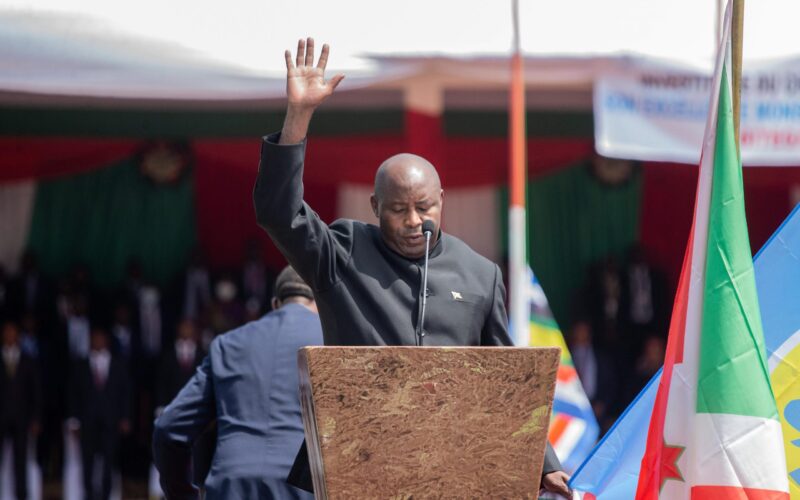
AIMÉ-JULES BIZIMANA, Professeur au Département des sciences sociales, Université du Québec en Outaouais (UQO) OUMAR KANE, Professor of Communication Studies, Université du Québec à Montréal (UQAM) The general and presidential elections of May 2020, followed by the death of President Pierre Nkurunziza, put the international media spotlight on Burundi. The country is now facing one of the darkest times in its history since the 2015 crisis. The crisis that year began when Nkurunziza, who had been in office since 2005, announced he would run for a third term. The move was dubbed unconstitutional and the announcement triggered protests that were…
Read More
How parts of the media in Ghana aid — rather than fight — corruption

How parts of the media in Ghana aid — rather than fight — corruption

JOSEPH YAW ASOMAH, Assistant Professor, St. Thomas University (Canada) CORRUPTION is a significant obstacle to development, democratic consolidation and environmental security, particularly in the developing world. It involves a misuse of power in serving private ends at the public expense. Corruption occurs in both the public and private sectors. There are different forms of corruption. Political corruption is a classic example. It is often committed by politicians and top government officials acting alone or collaborating with other actors to advance private agendas. In democratic societies, free and independent private media can investigate and expose political corruption. They can also pressurise…
Read More
Why some governments fear even teens on TikTok

Why some governments fear even teens on TikTok

CHRIS BARKER, Assistant Professor of Political Science, American University in Cairo IN Egypt, teenager Menna Abdel Aziz used social media to ask for protection after a sexual assault. She was arrested on a variety of charges, including misusing social media and corrupting family values. Two young women, Haneen Hossam, with 915,000 TikTok followers, and Mawada Eladhm, with 3.1 million TikTok followers, were also arrested for their social influencing videos. Renad Imad, another social media influencer, was arrested after allegations of posting indecent content and prostitution. In late June, belly dancer Sama El-Masry was sentenced to three years’ imprisonment for posts…
Read More
Algerian court jails journalist three years

Algerian court jails journalist three years

AN Algerian court has sentenced a journalist and activist to three years in prison on charges of harming national unity, a rights group that defends detainees said. The court in the capital, Algiers, also handed a four-month jail sentence to two other activists for the same charges, according to the National Committee for the Release of Detainees. Justice Ministry officials could not be reached for comment. The sentences against journalist Khaled Drareni and activists Samir Benlarbi and Slimane Hamitouche are linked to protests that toppled President Abdelaziz Bouteflika last year. The protests broke out in February 2019 to reject Bouteflika's…
Read More
We analysed media reports on rape cases in Nigeria. What we found

We analysed media reports on rape cases in Nigeria. What we found

OLUDAYO TADE, Researcher in criminology, victimology, electronic frauds and cybercrime, University of Ibadan IN Nigeria, the media continues to play a key role in tracking rape cases where reporting of rape to the authorities remains low. In a recent study, we examined the coverage of rape incidents in the country. To do the study, we selected two national newspapers with dedicated crime reporting pages. We analysed 331 cases of rape reported by The Punch and The Sun. Our goal was to sift through the rape coverage to identify the characterisation of victims and rapists. To do this, we analysed data…
Read More
Mysterious fire guts Mozambican investigative publication

Mysterious fire guts Mozambican investigative publication

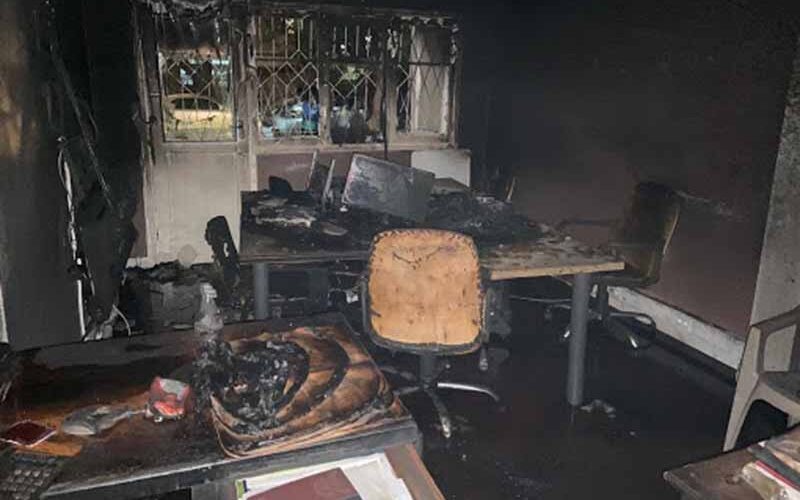
AFRICAN MIRROR REPORTER A mysterious fire that destroyed the equipment of a privately-owned Mozambican investigative publication has not stopped it from meeting its next deadline. Unknown assailants, suspected to be estate agents, set fire to the office of Canal de Mocambique, a media outlet that has been critical of and angered the Mozambican government when it published confidential documents. Soon after the fire destroyed computers and other equipment, good samaritans donated new equipment and the journalists were able to set up offices under a tent and work. “All newspaper equipment was completely burned down but this morning people came over…
Read More
How social media are levelling Kenya’s political field — and lessons learnt

How social media are levelling Kenya’s political field — and lessons learnt

JOHN NDAVULA, Head of Department, Communication Studies, St Paul's University SOCIAL media have opened up spaces for political candidates to engage with voters in more direct ways compared to traditional forms of campaigns such as rallies, billboard advertising, and the legacy media. Social media enhance the flow of information between candidates and voters. Traditional media, in contrast, are expensive; the feedback is constrained and they privilege elite candidates. Political campaigns are all about informing, mobilising, involving and connecting with voters. Social media amplify this and build a community of advocates for a candidate running for office. They allow politicians to…
Read More
Call for more access to information in Africa

Call for more access to information in Africa

AFRICAN MIRROR REPORTER THE African Commission on Human and Peoples Rights (ACHPR) has called on the 36 African countries that have no laws guaranteeing the promotion and protection of citizens access to information to urgently adopt them. In a statement to commemorate the International Day for Universal Access to Information, the ACHPR called for a renewed commitment to creating an environment where the right of access to information is promoted, protected and realized. “In these unprecedented times during the Covid-19 pandemic, the significance of the right of access to information cannot be overstated. The uncertainty and disruption wrought by the…
Read More
Journalism makes blunders but still feeds democracy: an insider’s view

Journalism makes blunders but still feeds democracy: an insider’s view

ANTON HARBER, Caxton Professor of Journalism, University of the Witwatersrand ANTON HARBER, the veteran South African journalist, editor and journalism professor at the University of the Witwatersrand, has a new book out. So, For the Record: Behind the Headlines in an Era of State Capture is a deep dive into the conduct of the media as mega corruption and state capture engulfed and eventually brought down President Jacob Zuma’s administration. Politics editor Thabo Leshilo asked the author to provide the highlights. What prompted you to write the book? For one thing, it is a great story to tell, complete with…
Read More
Egyptian TV host’s comments on hijab spark debate, probe by media watchdog

Egyptian TV host’s comments on hijab spark debate, probe by media watchdog

BEN BARKWAI and MENNA A FAROUK  AN Egyptian TV presenter is being investigated by the country's media watchdog after she said women who wore the hijab were "100,000-times better" than those who shunned the traditional headscarf, sparking a fierce online debate. Women's dress is a sensitive issue in the largely conservative Muslim nation, and while some praised Radwa el-Sherbiny for defending women who opt to wear the headscarf, critics accused the chat show host of fanning prejudice. "(Commenting) whether against hijabi or non-hijabi women is hateful, refers to a lack of respect and acceptance of other people and incites violence,"…
Read More