Our website use cookies to improve and personalize your experience and to display advertisements (if any). Our website may also include cookies from third parties like Google Adsense, Google Analytics, and Youtube. By using the website, you consent to the use of cookies.

How COVID-19 has worsened attacks against journalists in Kenya

How COVID-19 has worsened attacks against journalists in Kenya

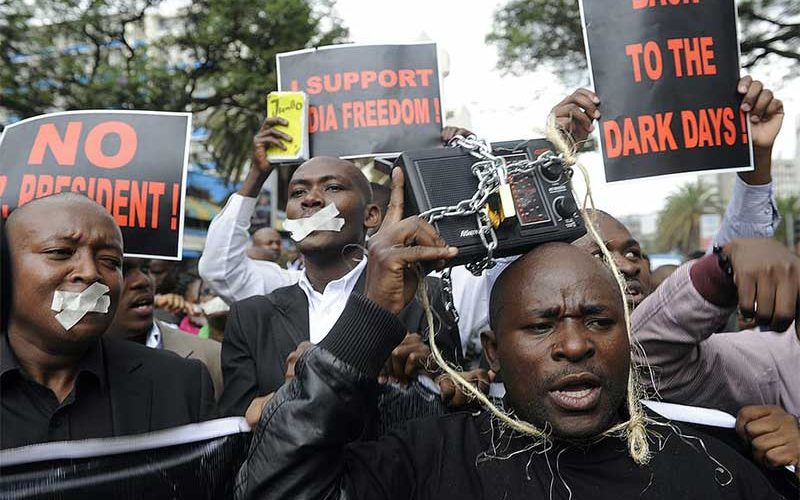
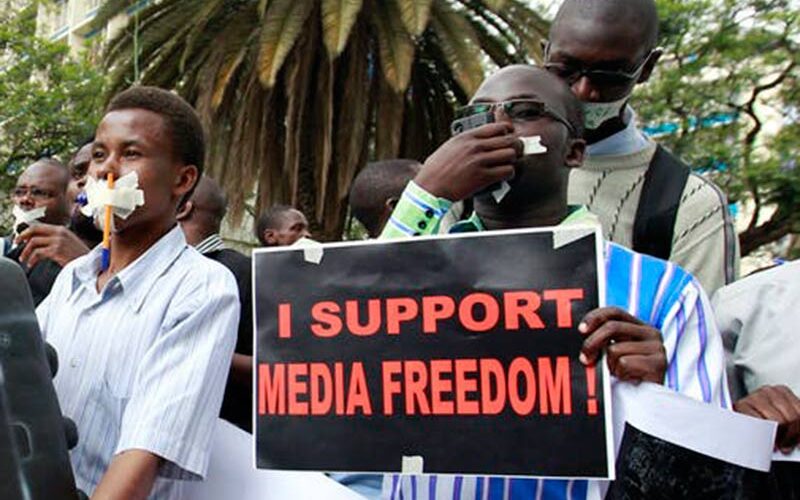
ALMOST a decade after the United Nations set aside November 2 as a day to reflect on ending impunity for crimes against journalists, crimes against media workers in Kenya are still widespread. The coverage of elections and corruption cases has typically prompted these attacks. But now the COVID-19 pandemic has exposed more of the state’s intolerance towards journalists in their line of duty. JOHN NDAVULA, Head of Department, Communication Studies, St Paul's University Kenya confirmed its first case of COVID-19 in mid-March 2020. By the end of the month, the government had imposed a curfew to stem infections. Soon afterwards,…
Read More
Sorting out fact from fiction when it comes to the safety of Ghana’s media practitioners

Sorting out fact from fiction when it comes to the safety of Ghana’s media practitioners

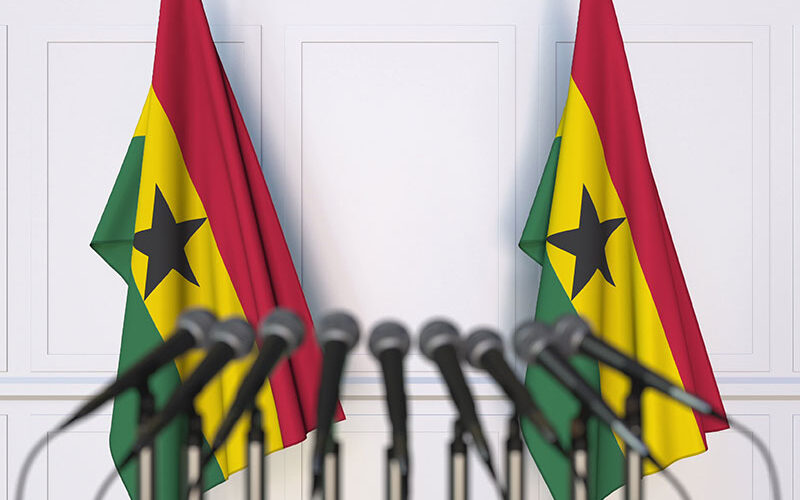
JACOB NYARKO, Lecturer of Communication Studies, University of Cape Coast THE ability of the media to function effectively is inseparable from democracy. And that functioning depends on cooperation from different entities in society. So a clampdown on media practitioners is an assault on democracy. In Ghana, which is regarded as a democracy, concerns have been raised about the spate of assaults and intimidation against media practitioners. These fears have been supported by the fact that Ghana has fallen in the ranking of the World Press Freedom Index. In our study we set out to try and identify the source of…
Read More
Protect Journalists, Protect the Truth

Protect Journalists, Protect the Truth

In the past fourteen years (2006-2019), close to 1,200 journalists have been killed for reporting the news and bringing information to the public. In nine out of ten cases the killers go unpunished. Impunity leads to more killings and is often a symptom of worsening conflict and the breakdown of law and judicial systems.  These figures do not include the many more journalists, who on a daily basis suffer from non-fatal attacks, including torture, enforced disappearances, arbitrary detention, intimidation and harassment in both conflict and non-conflict situations. Furthermore, there are specific risks faced by women journalists, including sexual attacks. Worryingly, only one in…
Read More
Media in Kenya up in arms over new curbs on media freedom

Media in Kenya up in arms over new curbs on media freedom

AFRICAN MIRROR REPORTER THE media industry in Kenya has raised serious concerns about new restrictions on media reporting of political events. In a joint statement, the 13 organisations that make up the Kenyan Working Media Sector Group (KWMSG), said the new restrictions, approved by the Kenyan National Security Advisory Committee (NSAC) and national cabinet, would interfere with the work of the media. The government of Kenya has introduced the new curbs in order to address political activity that threatened law and order. The KWMSG said the new restrictions were unnecessary and called for them to be lifted. The institutions said they…
Read More
Zimbabwe journalist Chin’ono denied bail after second arrest

Zimbabwe journalist Chin’ono denied bail after second arrest

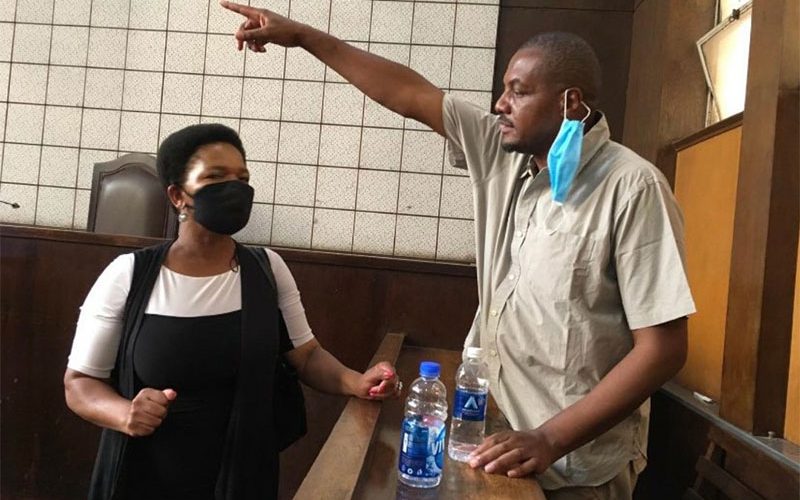
A court in Zimbabwe has denied bail for journalist and government critic Hopewell Chin'ono after his arrest last week on charges of obstruction of justice. The arrest of Chin'ono and dozens of activists in the last four months has led to accusations that the government of President Emmerson Mnangagwa is persecuting the opposition, a charge the authorities deny. Chin'ono, who uses social media posts to criticise the government, was first arrested in July on charges of inciting violent anti-government protests. After his latest arrest, he was charged with contempt of court but prosecutors dropped those charges. He is now accused…
Read More
“Why journalism matters.  The challenges have changed, but has its core purpose?”

“Why journalism matters. The challenges have changed, but has its core purpose?”

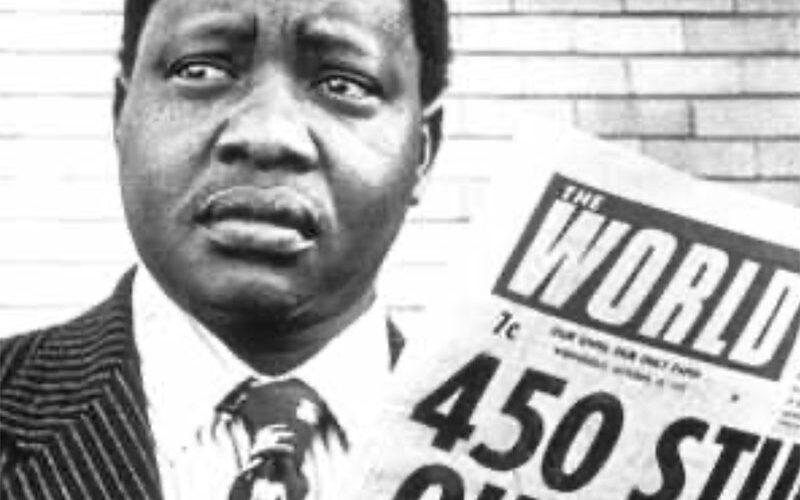
PIPPA GREEN Pippa Green SOME four decades ago, the apartheid government closed down a major black daily, The World, and detained its editor, Percy Qoboza, as well as his deputy Aggrey Klaaste. Government bans the World – read one newspaper poster only slightly ironically That day, October 19th, 1977, became aptly known as “Black Wednesday”. A number of other black journalists were detained at the same time – among them Joe Thloloe, who is the former director of the Press Council. Thloloe was already in jail under Section 6 of the Terrorism Act – which allowed for indefinite detention. So…
Read More
The media have muted the voices of women during COVID-19: can the tide be turned?

The media have muted the voices of women during COVID-19: can the tide be turned?

THEODORA DAME ADJIN-TETTEY, Postdoctoral Research Fellow, Rhodes University COVID-19 has distressed societies to the core. Among the fault lines, it has exposed is the fact that gender bias remains rampant in news coverage. A recent special report – The Missing Perspectives of Women in COVID-19 News – shows that too few women experts have been quoted on the pandemic in the media. The study looked at South Africa, Kenya, India, Nigeria, the US and the UK. Put together by the International Women’s Media Foundation and commissioned by the Bill & Melinda Gates Foundation, the report found that even when a…
Read More
40 years of shaping the meaning of media development

40 years of shaping the meaning of media development

FROM buying and upgrading technical equipment to fixing the institutions and the ecosystem of news, the approach to media development has changed over the past 40 years. With the advent of new technologies, the role of media in achieving sustainable development has new frontiers. Yet with the changes, serious threats to media sustainability have also come along. How is UNESCO, through the role of its unique media development programme, adapting to the new times and preparing for the future? Q&A with Guy Berger and Rosa Gonzalez, secretary and deputy secretary of the IPDC Guy Berger 1. For anyone not familiar…
Read More
Zimbabwe court frees journalist charged with obstructing justice

Zimbabwe court frees journalist charged with obstructing justice

ZIMBABWEAN journalist and government critic Hopewell Chin'ono was freed on bail on Friday after being arrested two weeks ago on charges of obstructing justice. Chin'ono's arrest and that of dozens of activists in the last four months has led to accusations that President Emmerson Mnangagwa's government was persecuting opponents, a charge the authorities deny. Chin'ono, who has criticised the government on social media, was first arrested in July on charges of inciting violent anti-government protests. He denies the separate charges and says the government is persecuting him for exposing corruption. High Court Judge Tawanda Chitapi found on Friday that a…
Read More
Zimbabwe issues six new TV licences, including to defence ministry

Zimbabwe issues six new TV licences, including to defence ministry

ZIMBABWE has issued six new free-to-air TV licences, including to a company owned by the defence ministry, the broadcasting authority has announced after Zimbabweans called for independent broadcasters. The Zimbabwe Broadcasting Corporation, which is solely owned by the government, has been the only broadcaster in the southern African nation since it gained independence from Britain in 1980. Zimbabweans have long called for the Broadcasting Authority of Zimbabwe (BAZ) to license independent broadcasters, and accuse state-owned media of biased coverage in favour of President Emmerson Mnangagwa's ruling ZANU-PF party. BAZ Chairman Charles Sibanda said in a statement that among those issued…
Read More