Our website use cookies to improve and personalize your experience and to display advertisements (if any). Our website may also include cookies from third parties like Google Adsense, Google Analytics, and Youtube. By using the website, you consent to the use of cookies.

Electrifying Africa’s fossil-powered cars

Electrifying Africa’s fossil-powered cars

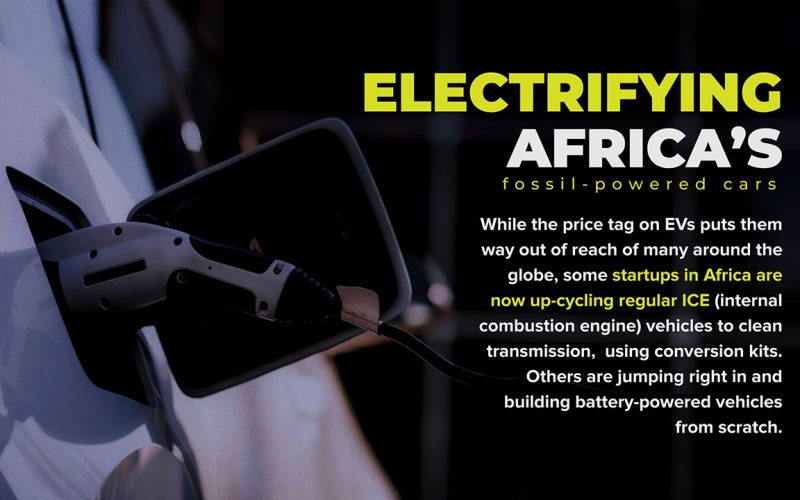
WHILE the price tag on EVs puts them way out of reach of many around the globe, some startups in Africa are now up-cycling regular ICE (internal combustion engine) vehicles to clean transmission, using conversion kits. Others are jumping right in and building battery-powered vehicles from scratch. Electric mass-transit company Roam announced the launch of Roam Rapid on October 19, the first electric mass transit bus in Kenya. In a statement, the Bus Rapid Transit, BRT, versioned buses are “designed to address the unique challenges of public transport in Nairobi and Africa.” The 90-passenger capacity buses will have special seats…
Read More
Africans make up a tiny portion of genomics data: why there’s an urgent need for change

Africans make up a tiny portion of genomics data: why there’s an urgent need for change

A group of Nigerian scientists, in conjunction with the London School of Hygiene and Tropical Medicine, established the Noncommunicable Diseases Genetic Heritage Study consortium in February 2020. The aim is to produce a comprehensive catalogue of human genetic variation in Nigeria and assess the burden of noncommunicable diseases in 100,000 adults in the country. The Conversation Africa asked genetic epidemiologist Segun Fatumo, one of the leaders of the consortium, to explain what they are doing and why. Author SEGUN FATUMO, Associate Professor of Genetic epidemiology & Bioinformatics, London School of Hygiene & Tropical Medicine How does Africa feature in global…
Read More
Using AI in agriculture could boost global food security – but we need to anticipate the risks

Using AI in agriculture could boost global food security – but we need to anticipate the risks

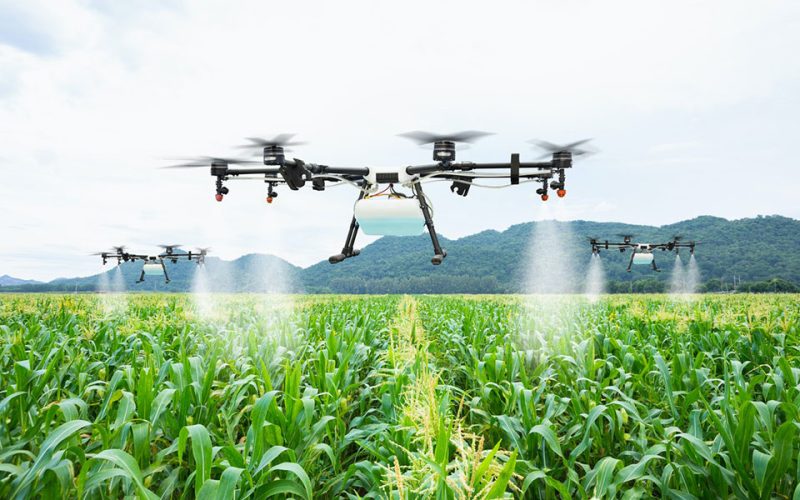
AS the global population has expanded over time, agricultural modernisation has been humanity’s prevailing approach to staving off famine. A variety of mechanical and chemical innovations delivered during the 1950s and 1960s represented the third agricultural revolution. The adoption of pesticides, fertilisers and high-yield crop breeds, among other measures, transformed agriculture and ensured a secure food supply for many millions of people over several decades. Author ASAF TZACHOR, Research Affiliate, Centre for the Study of Existential Risks, University of Cambridge Concurrently, modern agriculture has emerged as a culprit of global warming, responsible for one-third of greenhouse gas emissions, namely carbon…
Read More
Africa connects: High demand for internet services spurs investment in undersea cables

Africa connects: High demand for internet services spurs investment in undersea cables

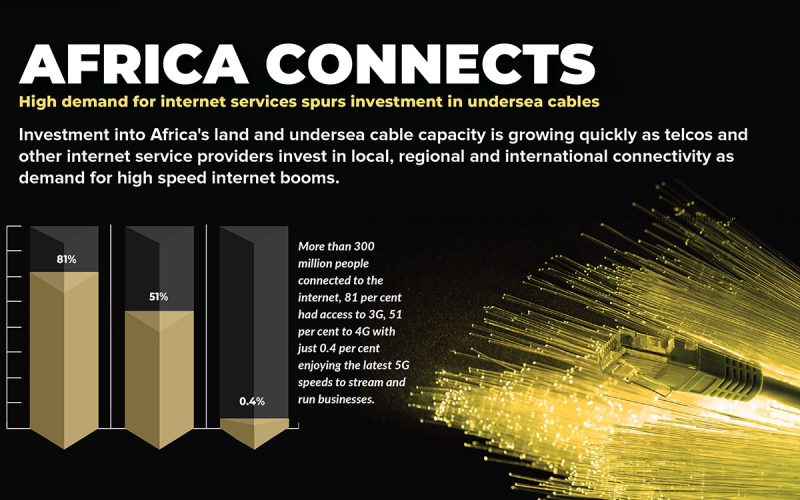
CONRAD ONYANGO, BIRD STORY AGENCY GROWING demand for internet services is spurring large-scale construction of both surface and undersea cables in Africa as technology companies pump in more investments funds to replace old lines and put up new ones. A new ultra-high capacity submarine fibre optic cable that landed in Kenya’s coastal city, Mombasa on Tuesday (March 29) is among the latest additions to the continent's internet cable capacity. The Hong Kong-based PEACE (Pakistan and East Africa Connecting Europe) cable is a multi-million US dollar investment expected to offer a more stable connection between Africa, Europe and Asia. This is…
Read More
Why Africa must invest more in science research

Why Africa must invest more in science research

IN ORDER to achieve an African of their dreams, countries of the continent need to invest more in and prioritise research and development in science, according to a leading think tank Women in Science without Borders (WISWB). In a special report, WISWB was critical of the contribution that the 54 countries make towards  the global investment in research and development. WISWB noted that the continent contributed a lowly 1.3% of the global investment in research and development. The think tank has called for the African Union (AU) to work towards the establishment of  a central portal of data, which would…
Read More
Senamile Masango: a scientist on a mission

Senamile Masango: a scientist on a mission

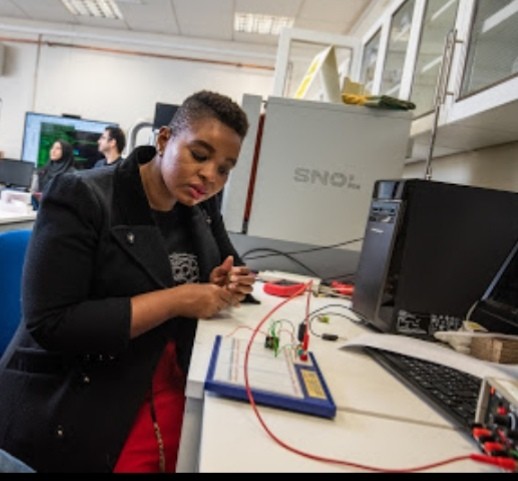
OWN CORRESPONDENT ON APRIL 26, 2002 Senamile Masango’s heart broke into a million pieces. As South Africa and the rest of Africa celebrated the historic achievement of Mark Shuttleworth as the first African in space, Masango was more than sad. She had fallen in love with science at high school and her dream was to become an astronaut as well as to make history by becoming the first African to land in space. Masango’s journey to science excellence began at Mlokothwa High School, in Vryheid, KwaZulu-Natal, South Africa, when her high school geography teacher introduced her to astronauts. Today, the…
Read More
Esther Ngumbi: Steering harm away from the farm

Esther Ngumbi: Steering harm away from the farm

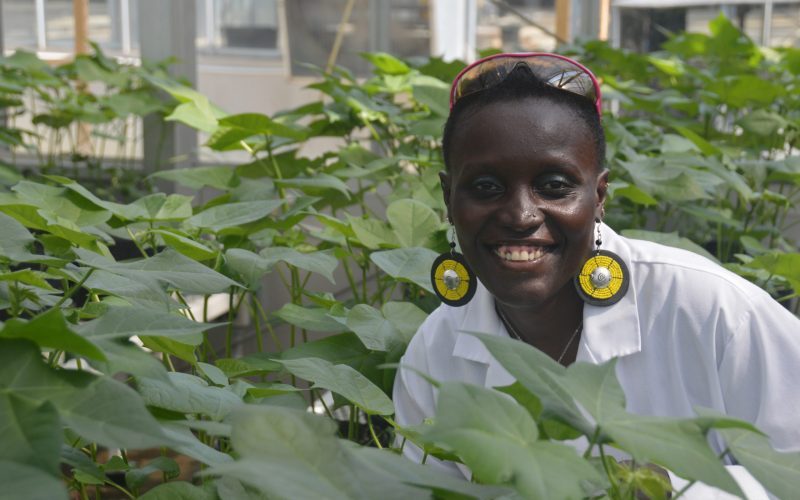
JOVIAL RANTAO GROWING up in a small village in Kenya, Esther Ngumbi experienced first hand the full impact of insect pests and plant diseases on human beings. Ngumi recalls how, as a young girl she and other family members would work hard on the farm, every day, planting their best seed so that they can harvest food one day.   “Then all over, sudden,” she said. “Insects and pests would attack our crops and all our hard work would be in vain. The following months would be difficult for my family and me as well as neighbours.” It was out of…
Read More
Dr Rose Leke: Queen of immunology

Dr Rose Leke: Queen of immunology

JOVIAL RANTAO THE signature at the bottom of the email oozed with confidence and the boldness of an African lioness. It read:” From the Queen Mother - Cameroon Medical Community”.  With a string of accolades that she has garnered over five decades and the lives that she has saved in Cameroon, perhaps Dr Rose Gana Fomban Leke can be allowed to boast about her achievements and the special place she holds in society. Leke, who saved many lives by coming up with ways of preventing the deadly malaria disease, is, in many ways, a special woman. She has spent most…
Read More
Ugandans melt plastic waste into coronavirus face shields

Ugandans melt plastic waste into coronavirus face shields

JOHN OKOT WHEN the Ugandan government ordered all non-essential workplaces shut to contain the coronavirus pandemic in late March, Peter Okwoko and his colleague Paige Balcom kept working. But the pair - who had been turning collected plastic waste into building materials since last year - shifted gear and instead began manufacturing makeshift plastic face shields from discarded plastic bottles. When they posted pictures of their prototypes on social media, they got a surprise phone call from the local public hospital. "The doctor from Gulu regional referral hospital requested we make 10 face shield masks urgently because they didn't have…
Read More
MALARIA BREAKTHROUGH

MALARIA BREAKTHROUGH

JEREMY HERREN MALARIA has been a terrible human disease from before the neolithic period up to present day. It has likely caused more human deaths than any other infectious agent. If realised, malaria eradication could be amongst humankind’s most significant achievements. Jeremy Herren, International Centre of Insect Physiology and Ecology Malaria is caused by parasites in the genus Plasmodium, of which there are five different species that infect humans. These parasites enter the female Anopheles mosquitoes (males don’t bite humans) when they feed on the blood of an infected human. Plasmodium must then cross the Anopheles mosquito’s gut and become established in their salivary glands, at…
Read More