Our website use cookies to improve and personalize your experience and to display advertisements (if any). Our website may also include cookies from third parties like Google Adsense, Google Analytics, and Youtube. By using the website, you consent to the use of cookies.

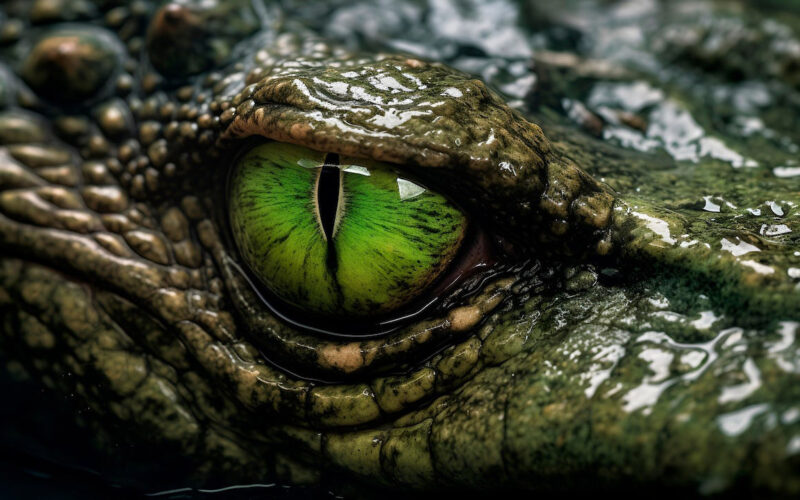
Crocodile’s ‘virgin birth’ is a first for science’s history books

Crocodile’s ‘virgin birth’ is a first for science’s history books

STORIES of virgin births, where young are produced without fertilisation, have been told throughout history. Mars the ancient Roman god, Horus the ancient Egyptian god and Qi from ancient Chinese mythology were all born to virgins. But virgin births actually do happen in the natural world. Author LOUISE GENTLE, Principal Lecturer in Wildlife Conservation, Nottingham Trent University The first evidence of a virgin birth in crocodiles has been reported in a captive American crocodile, Crocodylus acutus, who was housed on her own for 16 years in a zoo in Costa Rica. She laid a clutch of 14 eggs, of which…
Read More
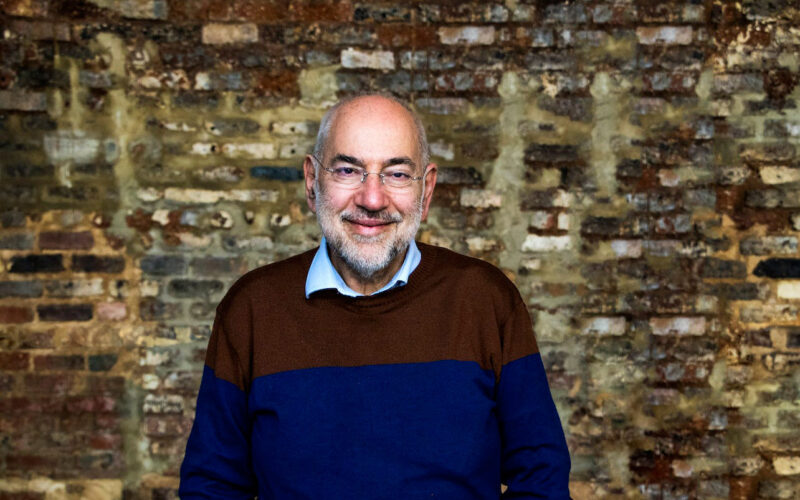
Remembering South Africa’s “Grand Geek” Barry Dwolatzky – engineer and programming pioneer

Remembering South Africa’s “Grand Geek” Barry Dwolatzky – engineer and programming pioneer

TO some of his former students, Professor Barry Dwolatzky was the “Grand Geek” – a name of which he was very proud. But Barry, who passed away in Johannesburg, South Africa on 16 May 2023, was much more than a computer geek. He was also a leader and a visionary in the field of software engineering in South Africa. Author ESTELLE TRENGOVE, Associate Professor in electrical engineering, University of the Witwatersrand At the time of his passing, he was 71 years old. He was by then retired from academia and held the title of Emeritus Professor at the University of…
Read More
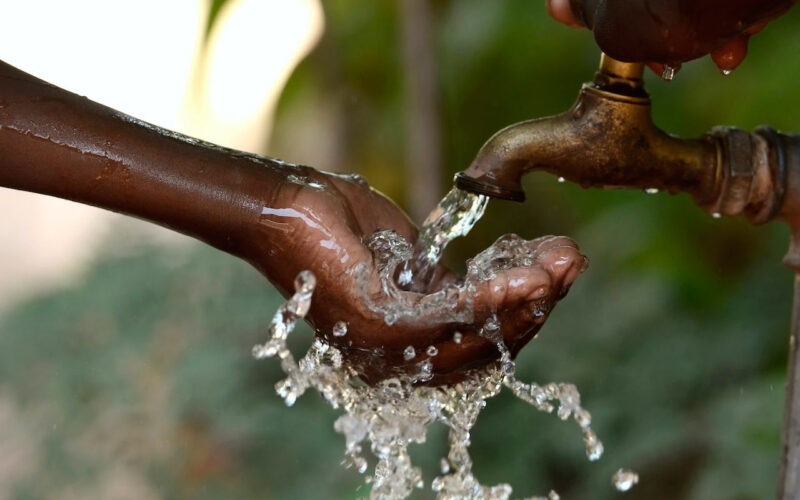
From waste to clean water: tiny carbon particles can do the job

From waste to clean water: tiny carbon particles can do the job

MANY futuristic novels and films have explored what the world might look like without water. But water scarcity isn’t a problem for the far-off future: it’s already here. In its 2021 report, UN-Water outlined the scale of the crisis: 2.3 billion people live in water-stressed countries and 733 million of those people are in “high and critically water-stressed countries”. In 2018 Cape Town, where I live and conduct my research, residents found themselves staring down “day zero”, when household water supplies would run dry. Good rains spared the South African city, but now other parts of the country face similarly…
Read More
From enormous elephants to tiny shrews: how mammals shape and are shaped by Africa’s landscapes

From enormous elephants to tiny shrews: how mammals shape and are shaped by Africa’s landscapes

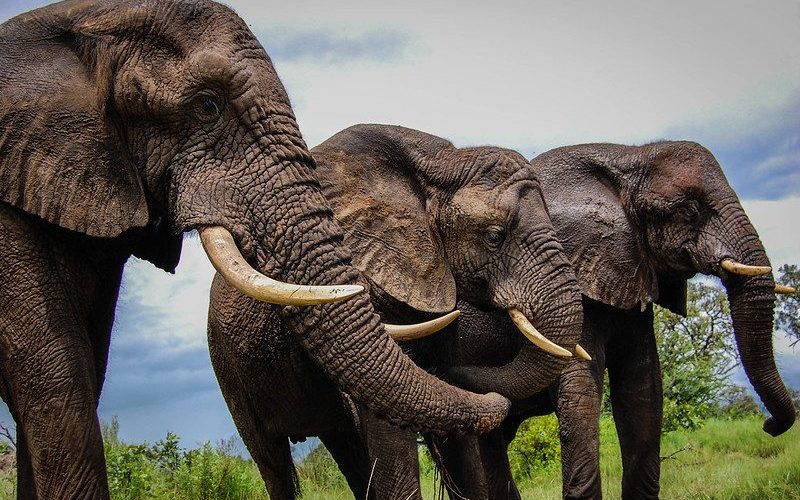
AFRICA is the world’s most diverse continent for large mammals such as antelopes, zebras and elephants. The heaviest of these large mammals top the scales at over one ton and are referred to as megafauna. In fact, it’s the only continent that has not seen a mass extinction of these megafauna. Author ARA MONADJEM, Full Professor in the Department of Biological Sciences, University of Eswatini The continent’s megafauna community includes the world’s largest terrestrial mammal, the African elephant. Adult African bush elephants can weigh as much as 6 tons. Other giants across African continent include hippopotamuses, rhinoceroses and giraffes. So,…
Read More
We pitted ChatGPT against tools for detecting AI-written text, and the results are troubling

We pitted ChatGPT against tools for detecting AI-written text, and the results are troubling

AS the “chatbot wars” rage in Silicon Valley, the growing proliferation of artificial intelligence (AI) tools specifically designed to generate human-like text has left many baffled. Educators in particular are scrambling to adjust to the availability of software that can produce a moderately competent essay on any topic at a moment’s notice. Should we go back to pen-and-paper assessments? Increasing exam supervision? Ban the use of AI entirely? Authors ARMIN ALIMARDANI, Lecturer, University of Wollongong EMMA A. JANE, Associate Professor, UNSW Sydney All these and more have been proposed. However, none of these less-than-ideal measures would be needed if educators…
Read More
Artificial intelligence in South Africa comes with special dilemmas – plus the usual risks

Artificial intelligence in South Africa comes with special dilemmas – plus the usual risks

WHEN people think about artificial intelligence (AI), they may have visions of the future. But AI is already here. At its base, it is the recreation of aspects of human intelligence in computerised form. Like human intelligence, it has wide applications. Voice-operated personal assistants like Siri, self-driving cars, and text and image generators all use AI. It also curates our social media feeds. It helps companies to detect fraud and hire employees. It’s used to manage livestock, enhance crop yields and aid medical diagnoses. Author EMILE ORMOND, PhD candidate, University of South Africa Alongside its growing power and its potential,…
Read More
Technology and sustainable development: a hamlet in rural South Africa shows how one can power the other

Technology and sustainable development: a hamlet in rural South Africa shows how one can power the other

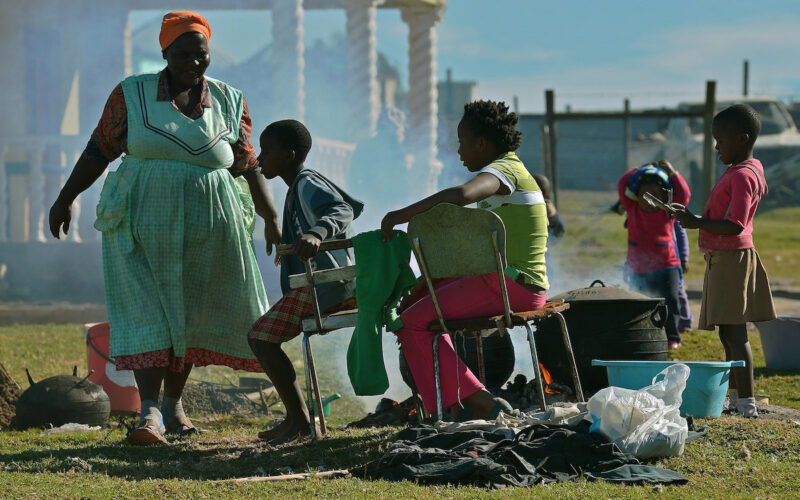
IT'S hard to imagine that the sustainable development goals (SDGs) and the fourth industrial revolution can be part of the same conversation. But, as a briefing paper by the World Economic Forum in collaboration with PricewaterhouseCoopers (PwC) points out: Over 70% of the 136 SDG targets could be enabled by technology applications already in deployment. To be achieved, both ideas – sustainable development and the fourth industrial revolution – require innovative thinking and a change of attitude. Authors SAURABH SINHA, Professor and Deputy Vice-Chancellor: Research and Internationalisation, University of Johannesburg MDUDUZI MBIZA, Research Associate, University of Johannesburg The fourth industrial…
Read More
Construction of Africa’s largest science experiment, world’s largest telescope, underway in South Africa

Construction of Africa’s largest science experiment, world’s largest telescope, underway in South Africa

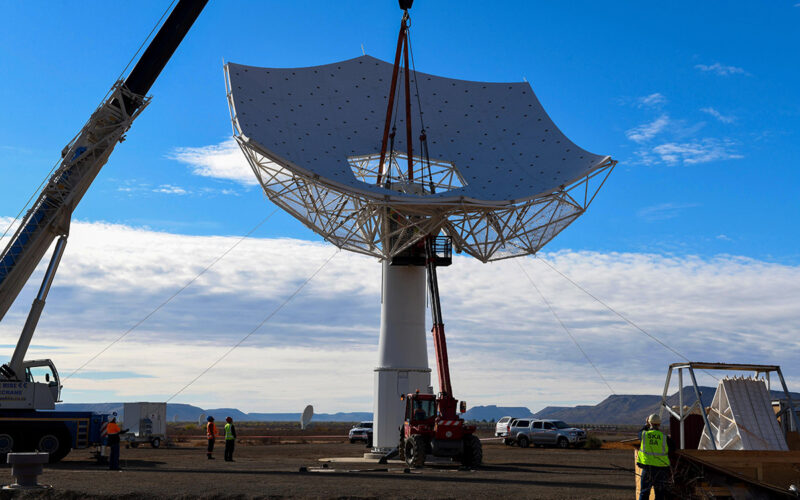
CONSTRUCTION of the world’s largest telescopes has officially begun in South Africa and Australia, with 2028 as the completion date. The Square Kilometer Array (SKA) project will see an area of about 33 000 square meters share data from space that the gigantic complex telescopes will collect. Over 130,000 antennas and 200 satellite dishes will make up the SKA, according to the project's website. The networked telescopes will enable astronomers to study space better and faster and to detect signals from objects in the universe's farthest reaches. According to the project’s scientists, the SKA-Mid in South Africa will operate with…
Read More
Rock stars: how a group of scientists in South Africa rescued a rare 500kg chunk of human history

Rock stars: how a group of scientists in South Africa rescued a rare 500kg chunk of human history

SCIENTIFIC breakthroughs can happen in the strangest ways and places. Alexander Fleming discovered penicillin because of mould growing on a Petri dish left out while he was on holiday. Chinese monks in the 9th century wanted to make a potion for immortality: instead, they discovered gunpowder. Our own remarkable discovery happened on a rugged, remote stretch of coastline east of Still Bay on South Africa’s Cape south coast. It was low tide, and three members of our ichnology team (people who study tracks and traces) were in search of newly exposed Pleistocene vertebrate track sites in aeolianites (cemented dunes). Authors…
Read More
Mozambique had no data about snakebites. Our new study filled the gap – and the results are scary

Mozambique had no data about snakebites. Our new study filled the gap – and the results are scary

EVERY year between 20,000 and 32,000 people in sub-Saharan Africa die after being bitten by snakes. That’s more than five times the number of deaths caused by hippos, crocodiles, elephants, lions and buffalo combined. At least, that’s what the available data suggests. But, the World Health Organization (WHO) acknowledges, that statistics – as well as figures related to non-fatal injury and disability caused by snakebites – are incomplete. Not all snakebite victims are treated in hospitals, especially in poorer countries and communities. Some may be treated by traditional doctors. Others may die before receiving any treatment. Author HARITH OMAR MORGADINHO…
Read More