Our website use cookies to improve and personalize your experience and to display advertisements (if any). Our website may also include cookies from third parties like Google Adsense, Google Analytics, and Youtube. By using the website, you consent to the use of cookies.

South African physicists unveil breakthrough research on mysterious dark matter

South African physicists unveil breakthrough research on mysterious dark matter

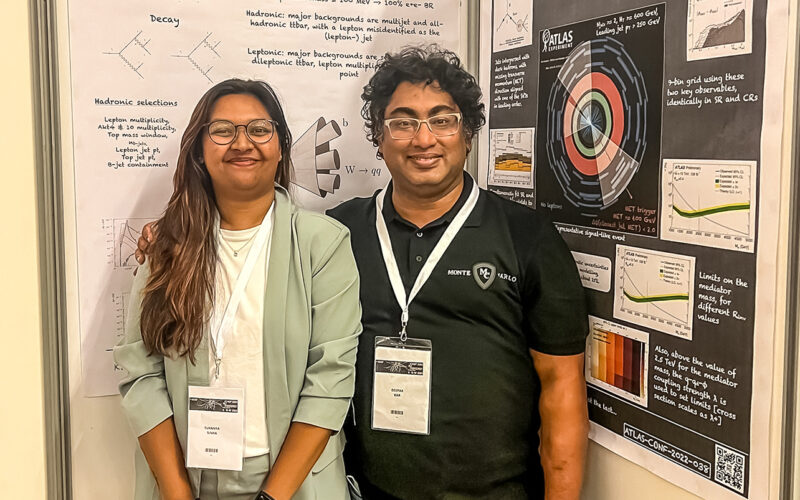
TWO South African physicists, Professor Deepak Kar and his former PhD student Sukanya Sinha, have spearheaded a fresh approach to researching dark matter, a long-standing puzzle among physicists globally, according to the University of the Witwatersrand (Wits). According to the South African university, the study is critical because it offers a new way to research dark matter, which “has been a question that high-energy and astrophysicists around the world have been investigating for decades.” Physics.org describes dark matter as a component recognised solely by its gravitational pull rather than its luminosity. Theorised almost a century ago, dark matter is believed…
Read More
Superdeep diamonds from West Africa and Brazil unveil critical insights on earth’s evolution

Superdeep diamonds from West Africa and Brazil unveil critical insights on earth’s evolution

A scientific analysis of ‘superdeep' diamonds, a type of diamond that originated between 180 and 620 miles deep into the earth and was extracted from mines in Brazil and Western Africa, has exposed new processes of how continents were formed. According to a press statement from the University of Witwatersrand, Johannesburg, the diamonds were analyzed by a team of experts, including Karen Smit of the Wits School of Geosciences. “We wanted to date these diamonds to try and understand how the earliest continents formed,” Smit explains. Formed between 650 and 450 million years ago, the diamonds have shown how supercontinents…
Read More
Meteorite discovery: unusual finds by South African farmer add to space rock heritage

Meteorite discovery: unusual finds by South African farmer add to space rock heritage

METEORITES – fragments of rock that have fallen to Earth from space in spectacularly fiery meteors – have been the subject of public fascination, awe, myths and even religious worship for thousands of years. In recent decades they’ve become a cosmic Rosetta Stone for scientists investigating the birth throes of our solar system and the organic life it hosts. Meteorites are therefore rightly classified by many countries as an integral part of communal natural heritage and are sought after by museums and private collectors. ROGER LAWRENCE GIBSON, Professor of Structural Geology and Metamorphic Petrology, University of the Witwatersrand South Africa,…
Read More
World’s oldest wooden structure unearthed in Zambia

World’s oldest wooden structure unearthed in Zambia

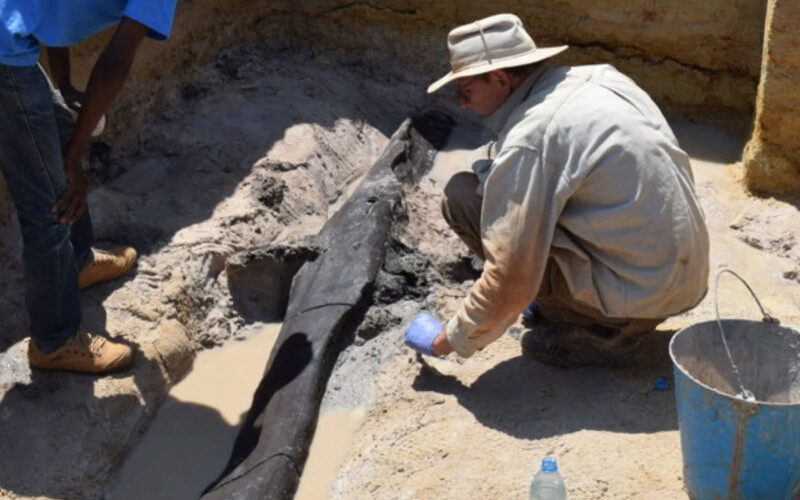
ARCHAEOLOGISTS working in Zambia have made a revolutionary discovery that has the capacity to reshape our understanding of early hominid behaviour. According to the Lusaka Times, the scientists unearthed pre-historic wooden logs, firmly embedded in the riverbank, which indicate that nearly half a million years ago, Stone Age communities used wood for the construction of structures - possibly shelter. "The research… has generated significant excitement in the archaeological community. It is led by Professor Larry Barham from the University of Liverpool, who heads the Deep Roots of Humanity research project responsible for excavating and analysing this ancient timber," the Lusaka…
Read More
South African hominin fossils were sent into space and scientists are enraged

South African hominin fossils were sent into space and scientists are enraged

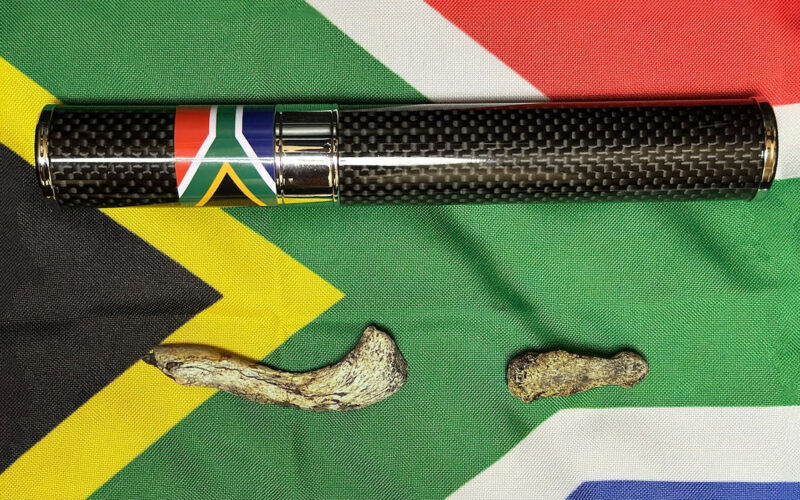
WHEN a Virgin Galactic commercial flight soared into space on 8 September 2023, there were two Virgin Galactic pilots, an instructor and three passengers on board – as well as two fossils of ancient prehuman relatives from South Africa. Timothy Nash, a businessman, carried a clavicle belonging to Australopithecus sediba and the thumb bone of a Homo naledi specimen. The fossils’ brief journey – the VSS Unity’s flight lasted just an hour – was organised by palaeontologist Lee Berger, who led the team that discovered and described Homo naledi in 2015. Berger was granted an export permit in July by…
Read More
Giant sea lizards: fossils in Morocco reveal the astounding diversity of marine life 66 million years ago, just before the asteroid hit

Giant sea lizards: fossils in Morocco reveal the astounding diversity of marine life 66 million years ago, just before the asteroid hit

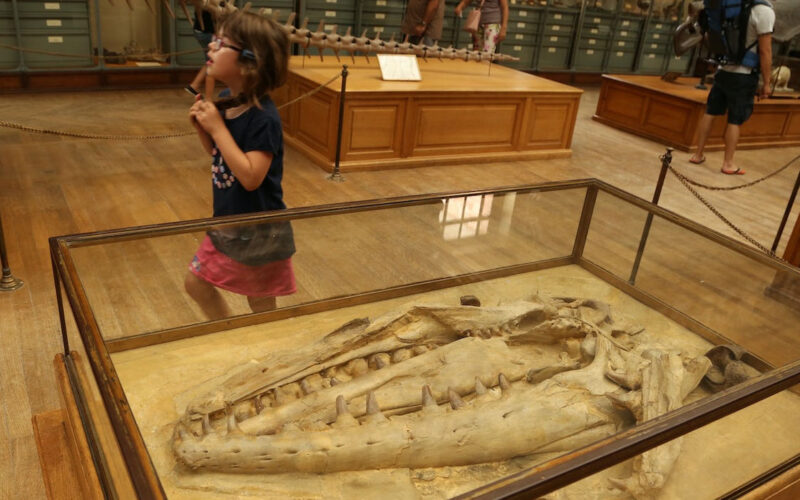
SIXTY-SIX million years ago, the Cretaceous period ended. Dinosaurs disappeared, along with around 90% of all species on Earth. The patterns and causes of this extinction have been debated since palaeontology began. Was it a slow, inevitable decline, or did the end come quickly, driven by a sudden, unpredictable disaster? NICHOLAS R. LONGRICH, Senior Lecturer in Paleontology and Evolutionary Biology, Life Sciences at the University of Bath, University of Bath Georges Cuvier, working in the early 19th century, was one of the first palaeontologists. He believed that geological catastrophes, or “revolutions”, drove waves of sudden extinction. In part, his ideas…
Read More
Price wars drive adoption of cleaner cabs, carpooling in Africa

Price wars drive adoption of cleaner cabs, carpooling in Africa

CONSUMERS love cheaper rides and there's always a driver willing to take less per ride. To cushion themselves from losses, many taxi and rideshare drivers are turning to smaller, fuel-efficient cars, hybrids, LPG-powered, and fully electric vehicles. This trend, driven by both economics and a growing environmental consciousness, has begun to reshape the taxi industry across Africa. It also comes as the continent sees a shift in attitudes to polluting staples like plastic and fossil fuels, according to a report released by a unit at bird story agency, The African Climate Awareness Report 2023. As cities across Africa expand, shared…
Read More
How the cookie crackdown plays to Africa’s text messaging strengths

How the cookie crackdown plays to Africa’s text messaging strengths

AFRICAN businesses are continuing to find value in a technology that is largely being forgotten by the latest offerings of the metaverse, artificial intelligence (AI) and blockchain technologies. Despite a whirlwind of digital advancement, including a surge in smartphone penetration across the continent and the emergence of world-leading mobile money solutions, Africa remains a huge market for feature phones, which offer text-based communications and are not reliant on an internet connection. Consequently, "old-school" USSD or Unstructured Supplementary Service Data (known by most of us as text messaging services) have remained a cornerstone for many African companies' sales and services offerings.…
Read More
Scientific fraud is rising, and automated systems won’t stop it. We need research detectives

Scientific fraud is rising, and automated systems won’t stop it. We need research detectives

FRAUD in science is alarmingly common. Sometimes researchers lie about results and invent data to win funding and prestige. Other times, researchers might pay to the stage and publish entirely bogus studies to win an undeserved pay rise – fuelling a “paper mill” industry worth an estimated €1 billion a year. ADRIAN BARNETT, Professor of Statistics, Queensland University of Technology Some of this rubbish can be easily spotted by peer reviewers, but the peer review system has become badly stretched by ever-rising paper numbers. And there’s a new threat, as more sophisticated AI is able to generate plausible scientific data.…
Read More
New evidence surfaces in South Africa regarding a small-brained human ancestor

New evidence surfaces in South Africa regarding a small-brained human ancestor

EDITH MAGAK, BIRD STORY AGENCY NEW evidence by researchers in the Rising Star cave system in South Africa shows that an ancient, small-brained human cousin may have buried its dead and carved symbols into cave walls as meaning-making, behaviours considered exclusive to large-brained hominins. These short-statured species are thought to have lived in Southern Africa between 335,000 and 241,000 years ago. "We are facing a remarkable discovery here of hominids, nonhumans with brains a third of the size of humans… burying their dead, using symbols, and engaging in meaning-making activities," said anthropologist Lee Berger of the University of the Witwatersrand…
Read More