Our website use cookies to improve and personalize your experience and to display advertisements (if any). Our website may also include cookies from third parties like Google Adsense, Google Analytics, and Youtube. By using the website, you consent to the use of cookies.

Drought can make farmers feel worried and hopeless: Ghana study finds social networks help

Drought can make farmers feel worried and hopeless: Ghana study finds social networks help

DROUGHTS are a familiar hardship in Ghana’s semi-arid north, where rainfall is erratic and agriculture is the mainstay of rural economies. The economic and environmental effects of drought have been well documented. But less attention is paid to its psychological toll on farmers and their families. We conducted a study in the Talensi district of Ghana’s Upper East region to assess the impact of drought on the mental well-being of peri-urban farmers in semi-arid Ghana. We are a multidisciplinary team of scholars working in the area of resilience, sustainability and more recently, psychological well-being. We also investigated whether social capital…
Read More
“Africans were taught this unreal map of Africa” — now what?

“Africans were taught this unreal map of Africa” — now what?

AS momentum builds on the campaign to adopt a “correct map” of Africa, older generations who were taught using the Mercator projection throughout their lives are voicing various views around the recent debate. For many, the map was simply part of the classroom furniture, a tool that defined their earliest understanding of the world. But later on in their professional lives, some began to question how the projection shaped the geography and identity of Africa. Keith Claybrook, an Associate Professor of Africana Studies at California State University, Long Beach, in an interview with bird, recalled growing up, seeing and studying…
Read More
African women have less access to the internet than men – solutions the G20 can champion

African women have less access to the internet than men – solutions the G20 can champion

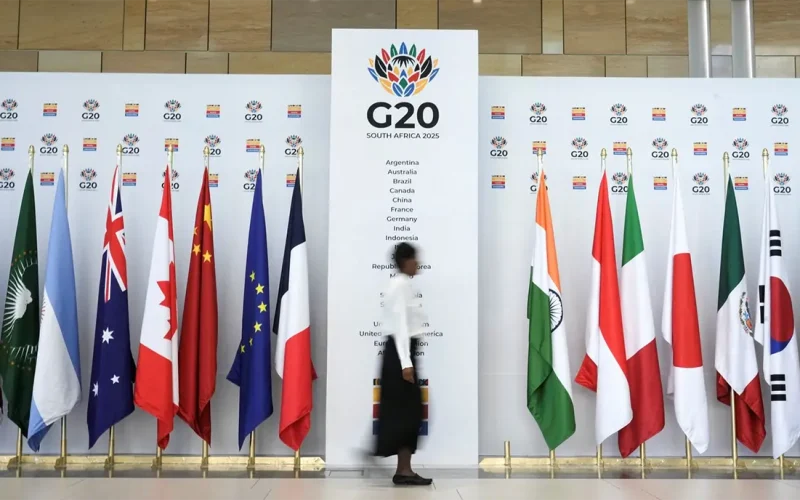
ACROSS Africa, women have less access to the internet than men. In Ethiopia, Uganda, Rwanda and Tanzania, only 15%-28% of women own smartphones. Tinuade Adekunbi Ojo is a feminist political economist and director of the Centre for the Study of Race, Gender and Class at the University of Johannesburg. She researches gender inequality in digital resources, and sets out what the G20 group of the world’s most powerful nations should do to close the gendered digital divide. What is the gendered digital divide? It refers to the systemic inequalities between women and men in accessing, using and benefiting from digital…
Read More
African migration: 5 trends and what’s driving them

African migration: 5 trends and what’s driving them

THE Donald Trump administration issued an executive order in June 2025 banning nationals from 12 countries from travelling to the United States. It also imposed entry restrictions on nationals from seven other countries. About half of the countries affected by these measures are in Africa. This raises concerns about the future of African migration to the US. The restrictions are among several new threats and opportunities that affect the dynamics of African migration. I am a social demographer, and in a recent study, my co-author and I identified trends that will shape the future of African migration flows and are…
Read More
250,000 Ethiopians migrate every year: what drives them and what needs to change

250,000 Ethiopians migrate every year: what drives them and what needs to change

MIGRATION is increasingly replacing the traditional, education-focused life paths that shaped previous generations in Ethiopia. In the past, becoming a civil servant after completing secondary and tertiary education was seen as both socially respected and economically rewarding. Although access to education at all levels has expanded in recent decades, its value has diminished as many graduates struggle to find employment and decent livelihood opportunities. In Ethiopia, individuals under the age of 30 comprise approximately 70% of the total population, and the urban youth unemployment rate stood at around 25.3% as of 2022. The consequences are often tragic. Irregular migration involving…
Read More
2 in 3 Africans will live in cities by 2050: how planners can put this to good use

2 in 3 Africans will live in cities by 2050: how planners can put this to good use

AFRICA’S population is projected to nearly double by 2050, with 80% of that growth being concentrated in urban areas, leaving two out of three Africans living in cities. This expansion of cities at an unprecedented rate will bring both challenges and opportunities for African countries. In this edited extract from a discussion with the OECD’s Women Leading Change podcast series, feminist urban economist Astrid R.N. Haas explores three pillars for inclusive and sustainable growth: governance, planning and financing. What can policymakers do to plan effectively for this rapid growth? Policymakers must be more proactive. They need to anticipate future needs…
Read More
TikTok’s online wild meat sellers – study finds endangered species on offer in west Africa

TikTok’s online wild meat sellers – study finds endangered species on offer in west Africa

IN Togo and much of West Africa, wild meat remains an important part of daily life, valued for its taste, cultural traditions, and as a source of income for those who sell it. It is often seen as a luxury food in urban centres, commanding higher prices than domesticated meat. This risks driving higher demand. Wild meat is openly sold in urban markets and at roadside stalls throughout Togo, with vendors catering to both local customers and passing travellers. In rural areas, it is common to see dead rodents, pythons and cobras displayed by the roadside, ready to be purchased…
Read More
Ghana’s war on illegal mining has failed – we set out to find out why

Ghana’s war on illegal mining has failed – we set out to find out why

EARLY in his eight-year tenure, in 2017, then-Ghanaian president Nana Akufo-Addo declared a moratorium on all small-scale gold mining. He established an inter-ministerial committee on illegal mining and a joint military-police taskforce – Operation Vanguard – to enforce the ban. The tough measures aimed to reduce the severe environmental degradation caused by illegal small-scale gold mining, known as “galamsey”. Initially for six months, the ban lasted for 20 months until December 2018, when it was lifted for newly registered miners. But illegal mining continued unabated. A statement made in Ghana’s parliament by the country’s lands minister outlined the scale and…
Read More
Child malnutrition is a sign of conflict to come: Nigerian study links climate change, food and violence

Child malnutrition is a sign of conflict to come: Nigerian study links climate change, food and violence

THE pathway from climate change to violent conflict is not simple. There are the obvious immediate effects of global warming, like water scarcity and crop failure. But beyond these, climate stress can pave the road to violence through indirect channels – a gradual rise in food insecurity and growing social tensions that set the stage for more armed violence. We are a team of researchers who investigate the links between climate change, food systems and conflict. We set out to explore the relationship between climate variability, child malnutrition and violent conflict. Our study focused on Nigeria. The country has faced…
Read More
Succès Masra: how Chad’s opposition firebrand came to be sentenced to 20 years in prison

Succès Masra: how Chad’s opposition firebrand came to be sentenced to 20 years in prison

CHAD’S opposition firebrand and a former prime minister, Succès Masra, was sentenced to 20 years in prison on 9 August. He was accused of inciting violence and hate speech on social media, leading to the death of 42 people in a clash between herders and farmers in the village of Mandakao in 2023. The opposition leader had been arrested at his home on 16 May by men in military uniform. He was initially charged with “inciting hatred, inciting armed groups to revolt, complicity in murder, arson, and desecration of graves”. Masra rose to prominence as one of the main opponents…
Read More