Our website use cookies to improve and personalize your experience and to display advertisements (if any). Our website may also include cookies from third parties like Google Adsense, Google Analytics, and Youtube. By using the website, you consent to the use of cookies.

33 million women grow food on plots in sub-Saharan Africa. Greener farming can boost their earnings – study

33 million women grow food on plots in sub-Saharan Africa. Greener farming can boost their earnings – study

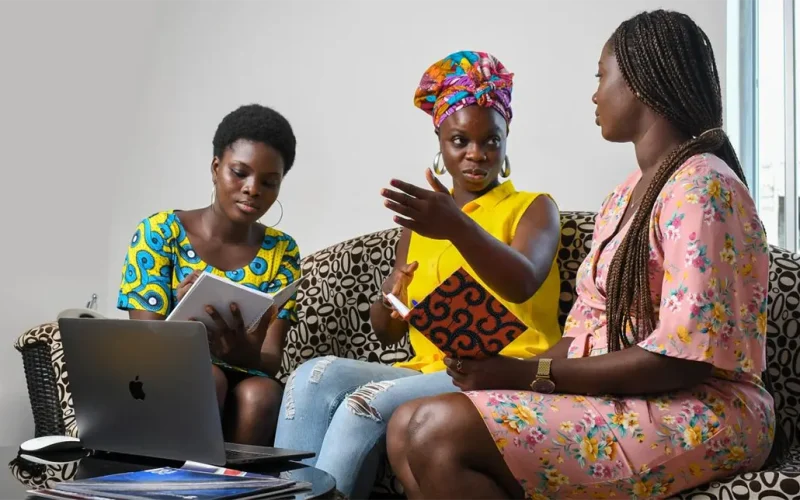
THERE are 33 million smallholder farmers in sub-Saharan Africa, making up 80% of the total farmer population. These farmers cultivate small plots of land of less than two hectares and don’t make much money, as they generally sell their produce in local markets. They usually lack the funds needed to process their crops into a product that could sell for a higher price, and they struggle to get into supply chains where they could sell for higher prices. Agricultural economist Lesley Hope has researched what is needed for women smallholder farmers to switch to agroecology – environmentally friendly farming that…
Read More
South Africa and China set up a quantum communication link: how we did it and why it’s historic

South Africa and China set up a quantum communication link: how we did it and why it’s historic

A major breakthrough in quantum technology was achieved in October 2024: the first-ever quantum satellite communication link between China and South Africa. The connection spanned a remarkable 12,900km: the longest intercontinental quantum communication link established to date. The longest before this was 7,600km, and within the northern hemisphere only. It was achieved with quantum key distribution, a method for a sender and receiver to share a secure key that they can use to safely send messages. Any interception during transmission leaves traces that can be detected. It involves sending single photons (tiny particles of light). If someone tries to intercept…
Read More
South Africa’s electricity price is soaring. Why protests are often the only way for people to be heard

South Africa’s electricity price is soaring. Why protests are often the only way for people to be heard

MILLIONS of unemployed South Africans, many of whom survive on a Social Relief of Distress Grant government grant of R370 (about US$21) per month, are not able to pay for electricity and still afford food and shelter. In the working-class community of Thembisa in South Africa’s industrial heartland of Gauteng, the local government recently tried to make all families pay a fixed monthly fee of R126 (US$7) for electricity. But the residents could not afford this, and in late July, they occupied the roads and shut down the area. Within a day, the mayor scrapped the electricity fee. Luke Sinwell,…
Read More
South Sudan’s new chief justice has a chance to reform the judiciary – if he’s allowed to do his job

South Sudan’s new chief justice has a chance to reform the judiciary – if he’s allowed to do his job

SOUTH Sudan’s chief justice, Chan Reec Madut, was sacked in late May 2025 after more than 13 years on the bench. Madut leaves behind a legacy of inefficiency and accusations of judicial graft. But the sacking violated South Sudan’s 2011 transitional constitution and the law. Ultimately, the president’s decision threatens the rule of law and judicial independence. Constitutional scholar Mark Deng discusses this worrying development. What was envisaged for South Sudan’s post-independence judiciary? South Sudan won independent statehood following an internationally supervised referendum in 2011. The transitional constitution, drafted after the referendum, is the country’s founding law. It provides for…
Read More
Namibia’s forgotten genocide: how Bushmen were hunted and killed under German colonial rule

Namibia’s forgotten genocide: how Bushmen were hunted and killed under German colonial rule

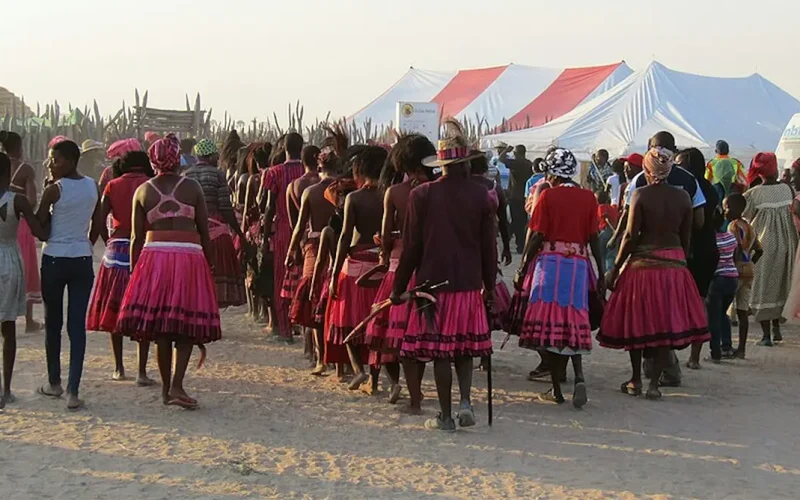
THE genocide of Namibia’s Ovaherero and Nama people by German colonial forces (1904-1907) is widely documented. But much less is made of what came next – the genocide of the country’s Bushmen, also known as the San. In 1992, anthropologist Robert J. Gordon published a book, The Bushman Myth and the Making of a Namibian Underclass, about these indigenous people of Namibia and how they were hunted and turned into servants by German colonisers. Now it has been thoroughly revised and has been republished as The Bushman Myth Revisited: Genocide, Dispossession and the Road to Servitude. We asked him five…
Read More
Sudan’s rebel force has declared a parallel government: what this means for the war

Sudan’s rebel force has declared a parallel government: what this means for the war

SUDAN’S southwestern city of Nyala in Darfur recently became the centre of a significant political development. After more than two years of fighting Sudan’s army, an alliance of armed and political groups backed by the paramilitary Rapid Support Forces announced the formation of a parallel government on 20 July 2025. The new administration, dubbed the Government of Peace and Unity, is a coalition of armed movements from Darfur in Sudan’s western region and Kordofan in the central region. Together, these regions account for about 46% of Sudan’s total land area. The coalition has made Nyala its base. The city is…
Read More
The global health system can build back better after US aid cuts – here’s how

The global health system can build back better after US aid cuts – here’s how

WHATEVER emerges from the current crisis, it will look very different from the past. As someone who has spent a 25-year career in global health and human rights and now teaches the subject to graduate students in California, I am often asked whether young people can hope for a future in the field. My answer is a resounding yes. More than ever, we need the dedication, humility and vision of the next generation to reinvent the field of global health, so that it is never again so vulnerable to the political fortunes of a single country. And more than ever,…
Read More
Ubuntu matters: rural South Africans believe community care should go hand-in-hand with development

Ubuntu matters: rural South Africans believe community care should go hand-in-hand with development

THE failure of many development initiatives has led some scholars, especially those associated with the post-development and decolonial schools of thought, to call for alternatives to development. The idea of development is a very influential way of explaining inequalities between different parts of the world. Most people think of some parts of the world as ‘developed’ and others as ‘developing’ and believe that those in the ‘developing’ world need to follow in the footsteps of those ahead of them on a universal path to development. However, critics of development reject this way of thinking. They believe that development damages the…
Read More
8 policies that would help fight poverty in South Africa’s economic hub Gauteng

8 policies that would help fight poverty in South Africa’s economic hub Gauteng

POVERTY goes beyond income. It often arises when health, education and opportunities fall short of meeting people’s needs. Individuals are classified as impoverished when they face deprivation in one-third or more of the indicators in a multidimensional poverty index. The index reflects the various influences on socioeconomic class. These include housing, sanitation, electricity, cooking fuel, nutrition and school attendance. The index is one of the most comprehensive measures of poverty. The fact that the multidimensional index captures multiple dimensions enables it to reflect overlapping disadvantages. And provides a fuller picture of well-being. Other monetary measures, such as income, aren’t as…
Read More
Apongo was a rebel leader in Jamaica – a diary entry sheds light on his west African origins

Apongo was a rebel leader in Jamaica – a diary entry sheds light on his west African origins

FOR over three centuries, between 1526 and 1866, at least 10.5 million Africans were forcibly trafficked to the Americas in the transatlantic slave trade. Over half of them (with known places of departure) left from a 3,000km stretch of the west African coast between what are today Senegal and Gabon. Scholars trying to uncover the lives of these diasporic Africans are forced to work with historical records produced by their European and American enslavers. These writers mostly ignored Africans’ individual identities. They gave them Western names and wrote about them as products belonging to a set of supposedly distinct “ethnic”…
Read More