Our website use cookies to improve and personalize your experience and to display advertisements (if any). Our website may also include cookies from third parties like Google Adsense, Google Analytics, and Youtube. By using the website, you consent to the use of cookies.

We all need toilets – expert insights into what happens when there aren’t enough of them

We all need toilets – expert insights into what happens when there aren’t enough of them

“SAFE toilets for all by 2030” is one of the Sustainable Development Goal targets. But, with just more than five years to go until 2030, the United Nations says the world is “seriously off-track … 3.5 billion people still live without safely managed sanitation, including 419 million who practise open defecation”. That includes millions of people across Africa. On 19 November each year, the UN marks World Toilet Day. In 2024, people’s ability to access safe, hygienic toilets is being disrupted by climate change, war and disaster in parts of the continent affected by flooding, climate-induced migration and conflict. The…
Read More
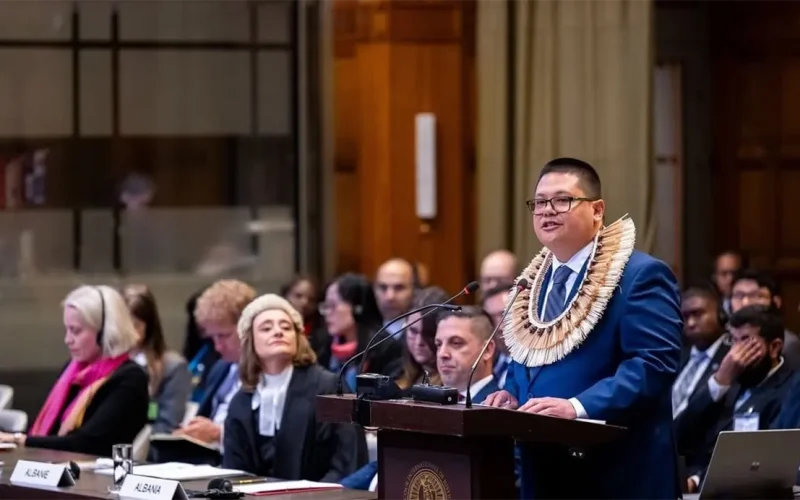
Thousands of corporate lobbyists are at the UN climate summit in Baku. But what exactly is ‘lobbying’ and how does it work?

Thousands of corporate lobbyists are at the UN climate summit in Baku. But what exactly is ‘lobbying’ and how does it work?

REPRESENTATIVES of the world’s governments are gathered in Baku, Azerbaijan, to negotiate international climate policy at the COP29 summit. Of the more than 30,000 participants, thousands will be representatives of companies or business associations – so-called “corporate lobbyists”. There’s nothing especially new about this. The business community has sought to influence climate policy since global warming first came onto the political agenda in the 1980s. But there has been a notable increase in the number of corporate lobbyists at climate summits in recent years. The number of fossil fuel lobbyists alone went from an already high 503 at Cop26 in…
Read More
Rachid Mekhloufi was more than a football star, he was a symbol of Algerian resistance

Rachid Mekhloufi was more than a football star, he was a symbol of Algerian resistance

THE death of football star Rachid Mekhloufi at the age of 88 has marked the end of an era. For more than half a century, he was an integral part of Algeria’s football landscape, becoming one of the country’s most loved and respected figures. His journey is a symbol of perseverance, talent, political courage, sacrifice and sportsmanship. Indeed, as a player he was never given a single card for foul play – never sent off, nor flagged by a referee. Those players who have known him closely speak of a humble man, generous with his time and advice to young…
Read More
Is South Africa one of the most politically polarised countries in the world? No, it’s not – sociologist

Is South Africa one of the most politically polarised countries in the world? No, it’s not – sociologist

A number of reports have called South Africa a politically polarised society. This may seem uncontroversial, given the country’s history of dispossession and discrimination during colonialism and apartheid, and its continuing legacy after 30 years of democracy. But my analysis of South African history and politics disputes this view. The Atlantic Council reported ahead of the country’s May elections that, although the country ranked “very high” on elections and political rights, a slight negative trend may be attributed to political polarisation. The Democracy and Development Progam said party loyalty and political popularisation could make it difficult for people to accept…
Read More
Who is Fano? Inside Ethiopia’s Amhara rebellion

Who is Fano? Inside Ethiopia’s Amhara rebellion

This story was originally published by The New Humanitarian.By Simon Vera FOR the past 20 months, Ethiopia’s Amhara region has been torn apart by a bloody conflict between federal forces and a coalition of militia known as Fano, who demand full Amhara control of all territory they regard as part of their homeland. It’s a war in which the Ethiopian National Defense Force (ENDF) has been accused of extreme human rights abuses, and indiscriminate drone strikes by the military have killed hundreds of civilians. The conflict is largely waged in the rural highlands, but Fano has also managed to penetrate…
Read More
The lack of water in South Africa is the result of a long history of injustice – and legislation should start there

The lack of water in South Africa is the result of a long history of injustice – and legislation should start there

WATER scarcity is a serious problem in many parts of the world. It adds to inequalities between communities and keeps historical injustices in place. One of the countries where this is an issue is South Africa. The country has a semi-arid climate, frequent droughts and relatively low average annual rainfall. But households’ experiences of water scarcity are also tied up with the country’s history. The legacies of colonialism and apartheid mean that Black communities – who make up 81.4% of South Africa’s population – still do not have the same water access as white communities. As a sociologist who investigates…
Read More
Salva Kiir: South Sudan’s president fought for independence, but then fuelled division, violence and corruption

Salva Kiir: South Sudan’s president fought for independence, but then fuelled division, violence and corruption

SALVA Kiir Mayardit has served as South Sudan’s president since the country’s independence in 2011. South Sudan’s secession from Sudan came on the heels of a long and bloody civil war that resulted in a referendum on independence. The initial optimism about the new state faded within two years when Kiir fell out with his vice president, Riek Machar. The resulting civil war displaced some four million people and killed an estimated 388,000 people. With the two warring sides unable to reach an agreement, the government postponed elections indefinitely in 2015 amid continuing civil strife. Kiir and Machar signed a…
Read More
What lies behind Mozambique’s failure to find lasting peace and true democracy

What lies behind Mozambique’s failure to find lasting peace and true democracy

MOZAMBIQUE gained independence from Portugal in 1975 following a bloody liberation war that lasted about 11 years. But independence did not mean the end of conflict. The dominant liberation movement, Liberation Front of Mozambique (Frelimo), got embroiled in civil conflicts with the smaller Mozambican National Resistance (Renamo) immediately after the political independence of the state. This is not unique to Mozambique. Independence wars in Africa were in many instances followed by civil conflict. This was the case in Angola, South Sudan, the Democratic Republic of Conglo and Zimbabwe. In others, the quality of the peace implemented has been low. Mozambique…
Read More
Food security in Africa: managing water will be vital in a rapidly growing region

Food security in Africa: managing water will be vital in a rapidly growing region

SUB-SAHARAN Africa’s population is growing at 2.7% per year and is expected to reach two billion by the year 2050. The region’s urban population is growing even faster: it was at 533 million in 2023, a 3.85% increase from 2022. The need to feed this population will put pressure on land and water resources. I’m part of a group of researchers who have looked at whether regional food production would be sufficient to supply growing urban populations. By and large, we have found high levels of food self-sufficiency. But climate change could put a spanner in the works. We have…
Read More
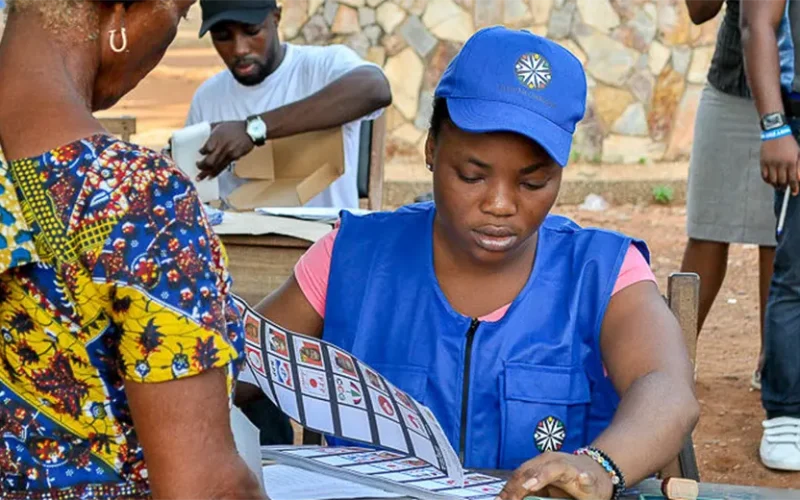
Namibia’s game-changing 2024 elections: Swapo might face defeat for the first time since independence in 1990

Namibia’s game-changing 2024 elections: Swapo might face defeat for the first time since independence in 1990

THE former liberation movement South West Africa People’s Organisation (Swapo) has been in firm political control of Namibia since independence in 1990. Support for the party in the national assembly and presidential elections reached a high point in November 2014. The 2019 elections marked a turning point, however: Swapo lost its two-thirds majority in parliament. President Hage Geingob was re-elected with the worst result yet – 56% – from 87% in 2014. This reflected disappointment over the unfulfilled promises he had made. Votes shifted to his Swapo comrade Panduleni Itula. After being expelled from the party in 2020, Itula founded…
Read More