Our website use cookies to improve and personalize your experience and to display advertisements (if any). Our website may also include cookies from third parties like Google Adsense, Google Analytics, and Youtube. By using the website, you consent to the use of cookies.

Ghana elections: religion and ethnicity are key to voters – and political leaders know it

Ghana elections: religion and ethnicity are key to voters – and political leaders know it

SINCE Ghana returned to democracy in 1992, the country has held nine consecutive elections In all these elections ethnicity and religion have played a role, even though the country’s constitution bars the explicit use of social identities in party politics. For the first time in over three decades, the 2024 elections had two politicians from different religions leading the biggest parties. One a Muslim, Mahamudu Bawumia, and another a Christian, John Mahama. Bawumia, the current vice president, leads the incumbent New Patriotic Party while Mahama, himself a former president, leads the National Democratic Congress. The Conversation Africa’s Godfred Akoto Boafo…
Read More
African-led peacekeeping fills a UN-sized hole

African-led peacekeeping fills a UN-sized hole

This story was originally published by The New Humanitarian.By Obi Anyadike IN 2011, Ugandan and Burundian troops of the African Union Mission in Somalia (AMISOM) fought for control of a shattered Mogadishu in bloody house-to-house combat against determined jihadist militants that lasted for almost a year.  It was grinding urban warfare. In one month alone, more than 50 African Union troops were killed – as were an unknown number of civilians. It wasn’t until October 2011 that AMISOM finally overran al-Shabab’s last strongholds in the north of the city. (See The New Humanitarian’s film Soldiers’ Stories, which followed Ugandan troops during the so-called "Battle for Mogadishu”.) This…
Read More
South Africa’s poverty relief grant should be increased rather than paid to be more people – economists explain why

South Africa’s poverty relief grant should be increased rather than paid to be more people – economists explain why

SOUTH Africa’s unemployment rate stands at a staggering 33.5%, one of the highest in the world. Coupled with an alarming poverty rate – where more than half of the population lives on less than R1,558 (about US$88) a month – the socioeconomic landscape is dire. The country’s social assistance system has been a critical tool in the fight against poverty and unemployment. In fact, South Africa has one of the largest cash transfer programmes in Africa. More than 19 million grants are paid out every month. These are the Care Dependency Grant, Child Support Grant, Disability Grant, Foster Child Grant,…
Read More
Will al-Shabaab get stronger in Ethiopia? Two reasons why it’s unlikely – analyst

Will al-Shabaab get stronger in Ethiopia? Two reasons why it’s unlikely – analyst

THERE have been numerous reports of arrests of al-Shabaab insurgents, the dismantling of an al-Shabaab terrorist network and the interception of arms in Ethiopia in 2024. Reports have also suggested that al-Shabaab is seeking to establish “an active combat presence” in the Bale mountains. These reports have led to mounting fears that the terror group could seek to establish a presence in Ethiopia, as it has in Kenya. The Somali jihadist group is active in Kenya. It targets civilians, security officers and telecommunication infrastructure. Its 2011 kidnapping of a Frenchwoman contributed to Kenya’s invasion of Somalia. The subsequent hostilities led…
Read More
Lagos street hawkers are blamed for crimes in traffic – but gangs are the real problem

Lagos street hawkers are blamed for crimes in traffic – but gangs are the real problem

TRAFFIC in Lagos, Nigeria’s biggest city, is congested and chaotic. About 1.8 million vehicles used Lagos roads in 2022. The city has 226 vehicles per kilometre. The global average is 11 cars per km and the Nigerian national average is 16. Congestion isn’t the only problem, though. Another is the risk of being a victim of crime in the traffic. Statistics are hard to come by, but the mainstream media regularly report stories about Lagos residents being robbed or even losing their lives in attacks by criminal gangs on the roads. The population of Lagos is estimated to be nearly…
Read More
Dangerous pesticides are a problem in South Africa – pests and poor controls are to blame

Dangerous pesticides are a problem in South Africa – pests and poor controls are to blame

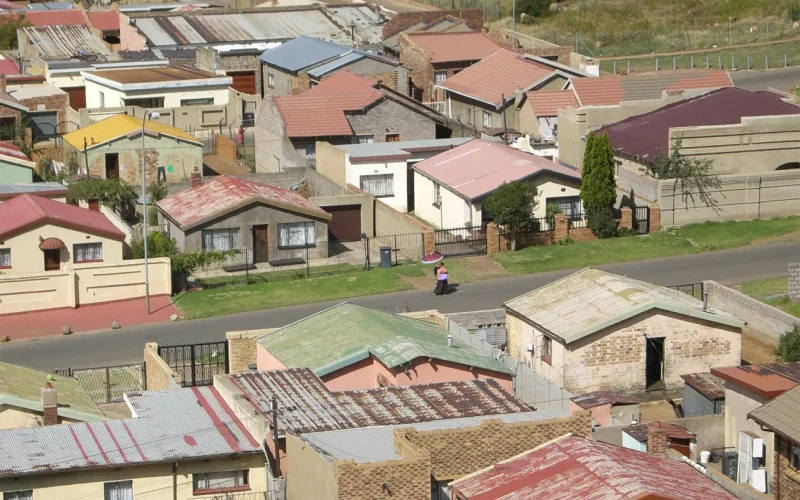
SOUTH Africa’s townships – urban areas created for black people under apartheid – have long experienced problems with massive pest infestations and the selling of pesticides on the streets and in informal markets. Street pesticides are poisonous substances that are legally registered for agricultural uses but are decanted illegally into unlabelled beverage bottles or packets for home use. Or they might be illegally packaged pesticides imported into South Africa and not registered for use. The dangers of these substances have been in the news lately with the deaths of more than 20 children who were exposed to them. On 21…
Read More
Gangs, guns and bibles in Cape Town: what it takes to quit a life of violence and stay alive

Gangs, guns and bibles in Cape Town: what it takes to quit a life of violence and stay alive

“BLOOD in and blood out” is a well-known saying in the townships of Cape Town, South Africa. It refers to the violent initiation rituals often needed to enter a gang – and the likelihood of being killed before one can get out. These are the perils that people face when entering and trying to exit the estimated 130 gangs that control various parts of the city. “Getting into gangs is easy, but getting out is impossible” is another popular saying in Cape Town’s gang-affected neighbourhoods. It also gives the impression that gang membership inevitably ends violently. That’s seemingly confirmed by…
Read More
Somaliland’s new government is ready to drive change: these are its 3 big goals

Somaliland’s new government is ready to drive change: these are its 3 big goals

THE fierce electoral competition in Somaliland – coupled with clan politics and governance challenges – makes it important to understand the implications of the de facto independent state’s recent presidential election outcome. The opposition coalition Waddani won the November election over the ruling party, Kulmiye. Abdirahman Mohamed Abdullahi (also known as Cirro/Irro) secured a five-year mandate. This election represents a pivotal moment for Somaliland, the Horn of Africa and international politics. Waddani’s victory shows Somaliland’s democratic resilience and potential for inclusive governance. The election was held after a two-year delay brought on by financial and technical challenges, according to outgoing…
Read More
Military rule is on the rise in Africa – nothing good came from it in the past

Military rule is on the rise in Africa – nothing good came from it in the past

IN the last few years, there has been a spate of military coups in Mali, Niger, Burkina Faso, Sudan and Guinea. Military rule, long dormant in African politics, is back. Coup leaders have suppressed protest, gagged the media and spilled much civilian blood in the name of public safety. They claim to be protecting their people from enemies both internal and external – some invented to justify their takeovers and others very real (while military regimes have arguably made violent extremism worse, they did not create it). The generals fight with one another as much as with their enemies, leading…
Read More
How Burkina Faso’s military junta outlawed local peace talks with jihadists

How Burkina Faso’s military junta outlawed local peace talks with jihadists

This story was originally published by The New Humanitarian. By A Burkinabé journalist ON the day that a new junta seized power in Burkina Faso two years ago, community leader Ibrahim Zongo* was in a remote jihadist bush camp. He was holding a dialogue with the fighters, hoping it might help restore security in his volatile area. Previous administrations had given Zongo clearance to negotiate with the fighters, but when he travelled to Ouagadougou, the capital, to brief the new rulers on the latest talks, the junta’s message to him was clear: no more dialogues, no more accords. From that…
Read More