Our website use cookies to improve and personalize your experience and to display advertisements (if any). Our website may also include cookies from third parties like Google Adsense, Google Analytics, and Youtube. By using the website, you consent to the use of cookies.

Slavery, tax evasion, resistance: the story of 11 Africans in South America’s gold mines in the 1500s

Slavery, tax evasion, resistance: the story of 11 Africans in South America’s gold mines in the 1500s

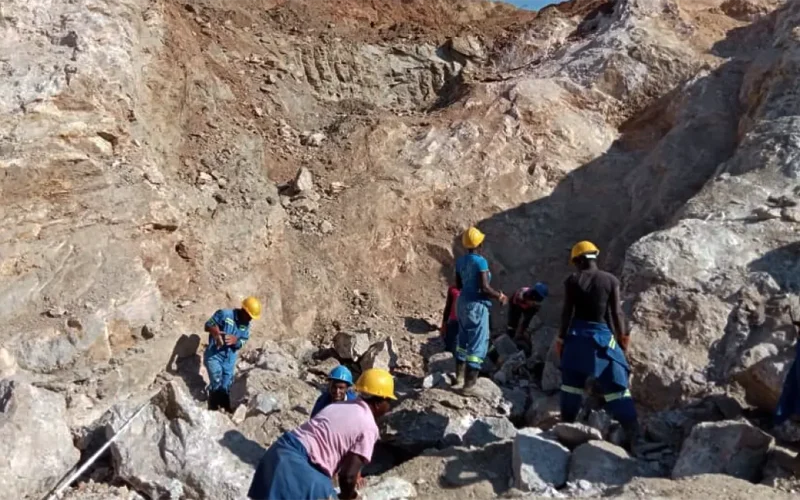
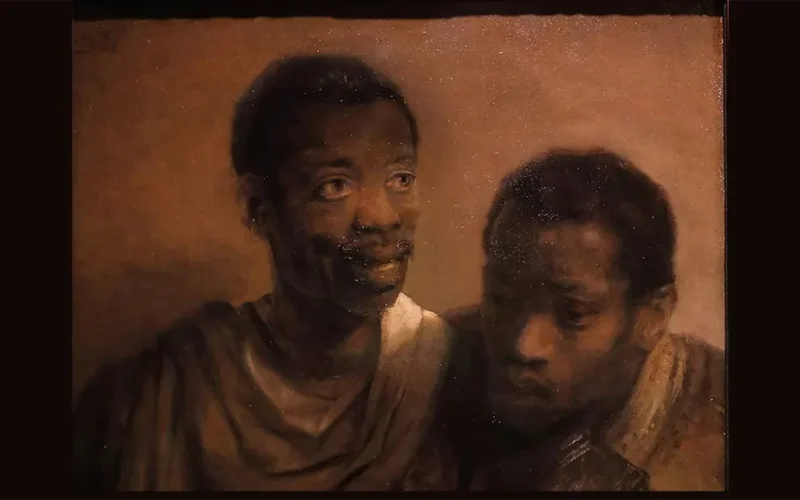
THE transatlantic slave trade was one of the most devastating and inhumane processes in human history. It is the subject of many studies, but the individual life histories of the arrival and survival of enslaved people in foreign lands remain largely untold. A lawsuit filed against a slaver in 1589 in Antioquia (a province in today’s Colombia) allowed me to trace the paths of 11 enslaved Africans. The slaver needed to prove these Africans entered legally on ships and over land from Africa into the heart of a South American mining operation. Their lives were extraordinarily challenging. They were captured…
Read More
Brain implants, agentic AI and answers on dark matter: what to expect from science in 2025 – podcast

Brain implants, agentic AI and answers on dark matter: what to expect from science in 2025 – podcast

IN a special episode of The Conversation Weekly podcast to start 2025, we’ve brought together three science editors from The Conversation’s editions around the world to discuss what to look out for in the world of science and technology in the coming year. Host Gemma Ware is joined by Paul Rincon from The Conversation in the UK, Elsa Couderc from The Conversation in France and Signe Dean from The Conversation in Australia. AI As the rapid commercialisation of AI tools continues, one big growth area in the coming year is likely to be what’s known as agentic AI, where the…
Read More
Drought and farming: how women in South Africa are using Indigenous knowledge to cope

Drought and farming: how women in South Africa are using Indigenous knowledge to cope

AFRICA’S small-scale farmers make up nearly 80% of all farms in the agriculture sector. In South Africa, there are about 2 million small-scale farmers, predominantly Black and based in the eastern summer rainfall region of the country. A small-scale farmer produces food for their family on land that is generally smaller than five hectares. Small-scale farmers sell their excess produce but have limited access to resources, technology and big markets. Africa’s small-scale farming sector is hit hard when there’s a drought because these farmers rely on rainwater. South Africa has been affected by major drought episodes over the years. However,…
Read More
Kenya’s forgotten Mau Mau freedom fighters and the impeached deputy president that stood up for them

Kenya’s forgotten Mau Mau freedom fighters and the impeached deputy president that stood up for them

KENYA’S ousted deputy president, Rigathi Gachagua, who was impeached in October 2024, established his name early enough as a forceful politician unafraid to take a stand. These include his aggressive push for justice for Mau Mau ex-freedom fighters and those who survived them. Landless veterans of the guerrilla war against British colonialists were infamously left out of the post-independence stakes as the new government pledged to forgive and forget the exploitative colonial past. Benson Waiganjo Kanyingi, who has studied land grievances among the ex-freedom fighters and the silenced history of the Mbeere ex-freedom fighters in Embu county sets out the…
Read More
Who owns the traditional ‘family home’ in South Africa? Court sets a new precedent, but the law remains murky

Who owns the traditional ‘family home’ in South Africa? Court sets a new precedent, but the law remains murky

A recent ruling by the Johannesburg high court in South Africa has put the definition and control of the “family house” under African customary law under the spotlight. The ruling touches on sensitive issues of cultural heritage, statutory laws of property, and South Africa’s history of racial discrimination. It highlights the tension between customary norms, which underlie the idea of a communal family house, and the common law, which restricts ownership to the individual whose name appears in a title deed. The notion of a family house is not provided for in South African law. And prior to this ruling,…
Read More
South Africa’s low-cost housing model is broken – study suggests how to fix it

South Africa’s low-cost housing model is broken – study suggests how to fix it

THE backlog of subsidised public housing in South Africa is estimated at 2.4 million. In this interview, Hlengiwe Maila, a research fellow at the School of Public Management and Administration at the University of Pretoria, answers questions posed by associate professor Adrino Mazenda about possible solutions. Maila’s PhD thesis, which was jointly supervised by Mazenda and Professor Lianne Malan, focused on developing a new model for the South African housing sector. What’s the current system and what’s wrong with it? Currently, public housing is built on the basis of contracts issued by the government. But the model is failing. First,…
Read More
Historic climate change advisory: what the case before the International Court of Justice might mean

Historic climate change advisory: what the case before the International Court of Justice might mean

THE International Court of Justice, the world’s highest court, held hearings in mid-December 2024 on the legal obligations that governments have under international law to protect the environment and limit climate change. It’s the biggest case the court has ever heard. The court is expected to hand down a legal advisory opinion in 2025. This will shape international climate law and governance. Climate law specialist Zunaida Moosa Wadiwala explains. What triggered this case? This climate change case started in 2021 when a group of law students lobbied the government of Vanuatu, a tiny South Pacific island nation threatened by rising…
Read More
Kenya has moved people out of the country illegally: what the law says about extraordinary rendition

Kenya has moved people out of the country illegally: what the law says about extraordinary rendition

KENYA has been accused by various non-state and state actors of supporting extraordinary rendition, which refers to the secret transfer of people from one country to another without due process of law and against their will. The most recent case of extraordinary rendition was the removal of Ugandan opposition politician Kizza Besigye in November 2024 from Kenya to a military jail in Uganda. Oscar Gakuo Mwangi, who studies regional security and governance, explains. What is extraordinary rendition? Extraordinary rendition refers to the illegal transfer of a detainee to the custody of a foreign government for purposes of detention and interrogation.…
Read More
How Sudan’s mutual aid groups are supporting out of school children

How Sudan’s mutual aid groups are supporting out of school children

This story was originally published by The New Humanitarian.By Mohamed Mustafa COMMUNITY groups and mutual aid networks in war-hit parts of Sudan have set up learning centres and safe spaces for children amid almost two years of disrupted schooling and because of continued inadequate support from international humanitarian agencies. But members of the groups said they need more resources to expand their operations, ensure that children aren’t turning up to classes hungry, and recruit and properly support teachers and volunteers who are themselves impacted by the conflict. “We try to shield the children as much as we can, but the…
Read More
Rape is still rape even if you’re married – report finds some South African men don’t believe it is

Rape is still rape even if you’re married – report finds some South African men don’t believe it is

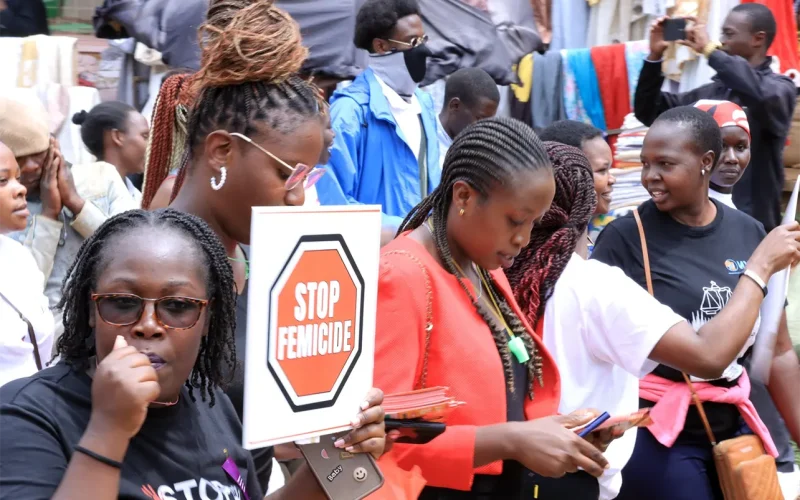
SEXUAL violence, as defined by the World Health Organization (WHO), includes any sexual act or attempt to obtain sex through coercion, regardless of the relationship between the parties. This encompasses rape, unwanted sexual touching, and non-contact forms of sexual violence. One of the factors that differentiates healthy intimate partner sex from violent sexual encounters is consent: the voluntary, ongoing agreement to engage in sexual activity. It is essential in every sexual act, regardless of relationship status or prior interactions. And it can be withdrawn at any time. Yet, deeply rooted cultural and societal beliefs continue to shape how consent is…
Read More