Our website use cookies to improve and personalize your experience and to display advertisements (if any). Our website may also include cookies from third parties like Google Adsense, Google Analytics, and Youtube. By using the website, you consent to the use of cookies.

Rereading Rembrandt: how the slave trade helped establish the golden age of Dutch painting

Rereading Rembrandt: how the slave trade helped establish the golden age of Dutch painting

THE so-called golden age of Dutch painting in the 1600s coincided with an economic boom that had a lot to do with the transatlantic slave trade. But how did the slave trade shape the art market in the Netherlands? And how is it reflected in the paintings of the time? This is the subject of a new book called Slavery and the Invention of Dutch Art by art historian Caroline Fowler. We asked about her study. What was Dutch art about before slavery and what was the golden age? The earliest paintings that would be called Dutch were predominantly religious.…
Read More
What France loses by closing its military bases in Africa

What France loses by closing its military bases in Africa

SENEGALESE president Bassirou Diomaye Faye announced on 31 December 2024 that all foreign military bases in his country would close by 2025. On the same day, the Ivorian president said France would hand over control of the Abidjan military base to his country’s army. These announcements followed the planned withdrawal of French forces from Chad, Burkina Faso, Mali and Niger. Researcher Thierry Vircoulon discusses the potential implications of these decisions for France. What advantages could France lose by withdrawing its troops from African countries? France’s military presence in French-speaking Africa has evolved in strategic importance over the past 65 years.…
Read More
Industrial scale farming is flawed: what ecologically-friendly farming practices could look like in Africa

Industrial scale farming is flawed: what ecologically-friendly farming practices could look like in Africa

AFRICAN Perspectives on Agroecology is a new book with 33 contributions from academics, non-governmental organisations, farmer organisations and policymakers. It is free to download, and reviewers have described it as a “must-read for all who care about the future of Africa and its people”. The book outlines how agroecology, which brings ecological principles into farming practices and food systems, can solve food shortages and environmental damage caused by mass, commercial farming. We asked the book’s editor and the South African Research Chair on Environmental and Social Dimensions of the Bio-economy, Rachel Wynberg, to set out why this book is so…
Read More
Informal mining in South Africa is here to stay. Police brutality won’t end it – here’s what will

Informal mining in South Africa is here to stay. Police brutality won’t end it – here’s what will

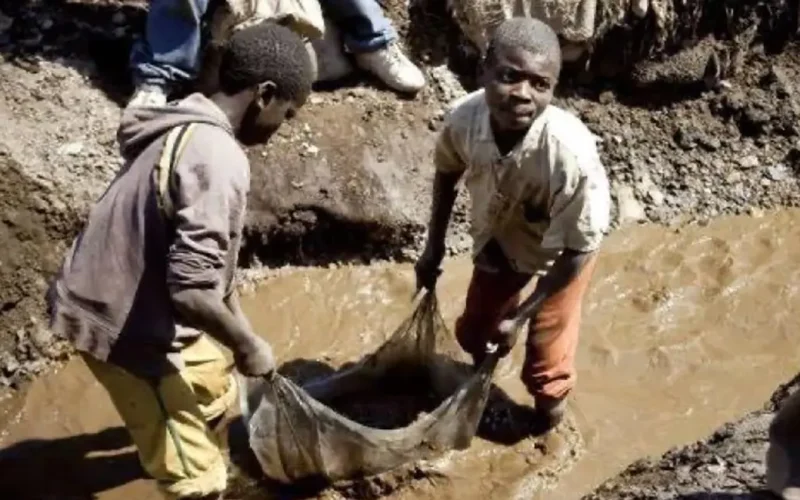
IN mid-January 2025 over 1,000 hunger-weakened miners exited two abandoned mine shafts in Stilfontein, near Johannesburg in South Africa. They had been starved out by the police in Operation Vala Umgodi — meaning “plug the hole” – which had cut off food and water in an effort to “smoke out” a shadow workforce. An estimated 6,100 closed mines are distributed across the country. Although closed, they are not sealed. Residual gold remains in these ruins and is extracted by miners who come from across the region. They are mainly unlicensed or undocumented migrants and work in groups that range from…
Read More
Using your own laptop or phone for work? Why it’s a security hazard for businesses

Using your own laptop or phone for work? Why it’s a security hazard for businesses

NEXT time you’re working in a coffee shop or similar public space, take a moment to look around at your “co-workers” for the day, busy, like you are, with laptops, cellphones and tablets. How many of those devices belong to the organisations that employ them? Or are they – and you – using personal devices to conduct company business? Many businesses are embracing the convenience of a practice known as “bring your own device”. This allows employees to use their personal or privately owned devices such as smartphones, laptops, USB drives, and even personal cloud storage, for work purposes. A…
Read More
Kenya’s farmers have lots of digital tools to help boost productivity – how they can be made more effective

Kenya’s farmers have lots of digital tools to help boost productivity – how they can be made more effective

DIGITAL agriculture is often hailed as an almost magical trigger for promoting successful farming, even among smallholder farmers in the developing world. Its proponents argue that using digital tools to, for instance, generate records and calendar schedules, can help farmers grow better crops, manage their resources more efficiently, and connect with organised markets, all while reducing post-harvest losses. But not all researchers are convinced that digital solutions are the answer to farmers’ problems. Some argue that the hype around these tools diverts attention from the real, on-the-ground challenges farmers face. One Kenyan avocado farmer, speaking to a researcher in 2021,…
Read More
How to fix democracy? Ancient philosopher Plato may have an answer

How to fix democracy? Ancient philosopher Plato may have an answer

THE Republic, the best-known work of ancient Greek philosopher Plato, authored around 375 BCE, has shaped Western political thought. Greece is now known as the “cradle of democracy”. Not only was the first democracy in the world in Athens, but the word itself comes from the Greek demos (people) and kratos (rule). Yet Plato’s The Republic relentlessly argues against democracy. This might be surprising, given that Westerners typically think that it is very important to live in a democracy. Almost all Western countries are democratic. In the most recent election in the US, both Trump voters and Harris voters claimed…
Read More
Why Africa’s young scientists should help check the quality of climate change research

Why Africa’s young scientists should help check the quality of climate change research

SCIENTIFIC research is essential for addressing the climate crisis. The Intergovernmental Panel on Climate Change (IPCC), a United Nations body, assesses the science of climate change through its regular assessment reports. These reports reflect scientific consensus on the causes and impacts of and possible solutions to climate change. The reports are not only scientific publications. They inform environmental policy at global, regional and country levels relating to anthropogenic (human-caused) climate change and the state of the environment. The reports also undergo rigorous peer review to ensure their scientific merit and credibility before they are finally published. Researchers from high-income countries…
Read More
Tanzania’s Maasai are being forced off their ancestral land – the tactics the government uses

Tanzania’s Maasai are being forced off their ancestral land – the tactics the government uses

TANZANIA has a long and troubling history of evicting communities from their lands. This has happened under the guise of expanding protected conservation areas, which make up over 40% of its territory. In recent years, the Maasai of the Ngorongoro district – a region renowned for abundant wildlife and the iconic Ngorongoro Crater – have been the target of these evictions. They’ve faced threats to their nomadic lifestyle, centred on cattle herding. The government claims that the evictions are necessary to protect the environment from a large Maasai population. Currently, around 100,000 Maasai reside within the protected area. The reality,…
Read More
Peacekeeping armies: what are they, why do African states build them and what impact do they have?

Peacekeeping armies: what are they, why do African states build them and what impact do they have?

SINCE 1948, more than two million uniformed peacekeepers have served in over 70 United Nations (UN) peacekeeping missions. They have come from over 120 UN member states. But a few countries have regularly contributed a significant proportion of their troops. They have also made peacekeeping a foreign policy priority, and have adapted their own armed forces to fit UN requirements. These states have developed what we call “peacekeeping armies”. Since the end of the Cold War, the vast majority of these peacekeepers have been deployed in Africa, many of them by African countries. Today, 11 of the 20 countries that…
Read More