Our website use cookies to improve and personalize your experience and to display advertisements (if any). Our website may also include cookies from third parties like Google Adsense, Google Analytics, and Youtube. By using the website, you consent to the use of cookies.

UN security council: African countries face hurdles and dangers in getting permanent seats

UN security council: African countries face hurdles and dangers in getting permanent seats

THERE is growing global consensus among the members of the United Nations that the UN Security Council, responsible for maintaining international peace and security, requires reform or restructuring to reflect the current balance of forces, and to improve its working methods and ability to do its work. There is also growing consensus among members of the African Union that Africa deserves a permanent presence at the council. The debate took a new turn on 13 September, when the US announced it would support the creation of two new permanent seats for African countries, and a non-permanent seat for small island…
Read More
Lesotho needs constitutional reforms to help gain political stability – but the latest attempt is flawed

Lesotho needs constitutional reforms to help gain political stability – but the latest attempt is flawed

LESOTHO, a small country landlocked by South Africa, has been struggling to make constitutional reforms since the advent of coalition politics in 2012. It needs reforms to address political instability which has been a feature of the country for more than five decades. The judiciary, security agencies and civil service have been politicised, resulting in the institutions being abused for political ends, stoking recurrent instability. The reform project has encountered many headwinds. High government turnover amid unstable governing coalitions, the reform processes being declared invalid numerous times by the judiciary, and a sheer lack of political will are just a…
Read More
Lithium mining in Zimbabwe: a story of loss for one community

Lithium mining in Zimbabwe: a story of loss for one community

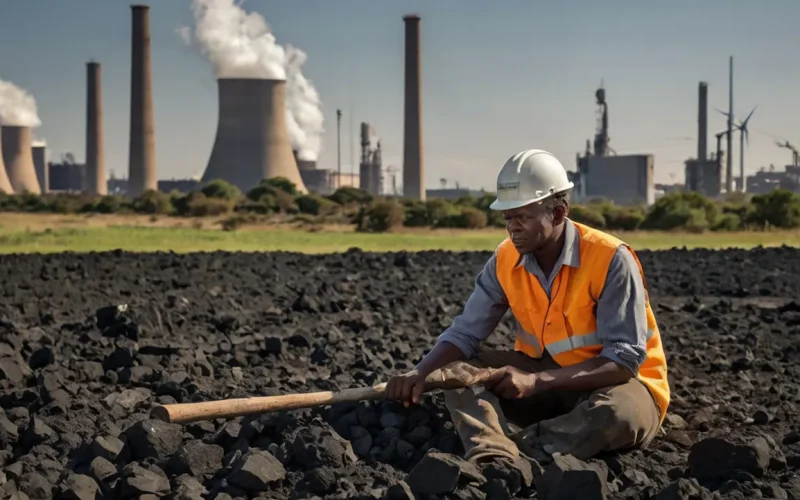
LITHIUM is an essential component of electric vehicle batteries, which are becoming more important as the world moves to a low-carbon energy future. Large deposits of lithium exist in Argentina, Chile, Brazil, Bolivia, Canada, the US, Australia, Portugal, Namibia, Zimbabwe and Ghana. Zimbabwe is the largest producer of lithium in Africa and the ninth largest in the world. The Zimbabwean government promotes mining to stimulate socio-economic development. But new lithium mining has had devastating environmental and social effects. One of them is that communities have been displaced from their ancestral land. I am a social scientist who conducts research on…
Read More
Four ways Africa is already seeing the effects of climate change – and what can be done about it

Four ways Africa is already seeing the effects of climate change – and what can be done about it

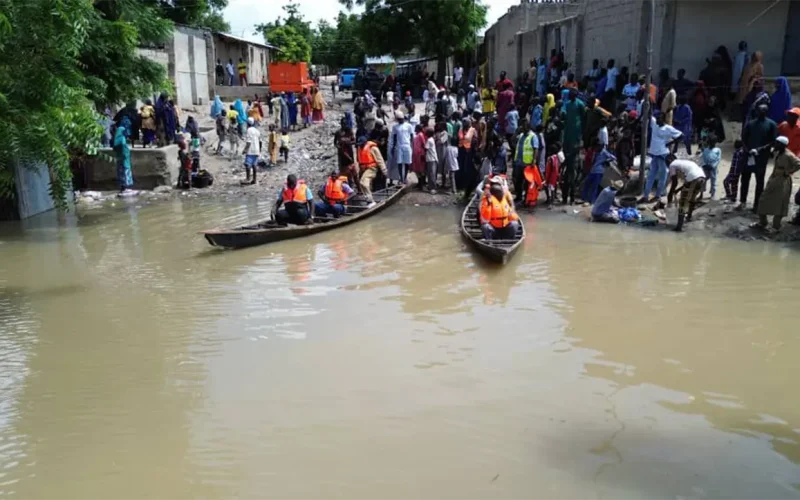
AFRICA is already being heavily affected by climate change. Between 1991 and 2023, the African continent warmed at a rate of 0.3°C per decade, a rate slightly faster than the global average. This has brought more frequent and severe weather extremes. The cost of adapting to these changes and events is also immense. This was emphasised in a recent report by the World Meteorological Organization. The UN agency found that, on average, African countries were losing 2%-5% of their GDP – a measure of economic output – annually and many were diverting up to 9% of their budgets in response…
Read More
Nigerian farmers lack insurance: payouts triggered by weather data offer a solution

Nigerian farmers lack insurance: payouts triggered by weather data offer a solution

AGRICULTURE is hugely important to Nigeria. It makes up about a quarter of the country’s economy, and almost half of the population are smallholder farmers. Most farm on less than 10 hectares of land. It can be a tough way to make a living. Smallholder farmers in Nigeria regularly lose crops and livestock to floods and droughts. For instance, Nigeria lost over 1.7 million metric tonnes of grain to drought in 2021. Extreme weather events can devastate farmer families for a long time because agriculture is their main source of income. But research shows that up to 82.7% of Nigeria’s…
Read More
Dadaab Voices: Kenya’s flagship refugee plan marred by lack of consultation

Dadaab Voices: Kenya’s flagship refugee plan marred by lack of consultation

This story was originally published by The New Humanitarian. By Obi Anyadike THE Kenyan government has announced a plan that could transform the lives of the more than 670,000 refugees sheltering in the country – ending a three-decade-old policy that has forced them to remain in isolated, overcrowded, and chronically underfunded camps. Launched with fanfare last year, the Shirika plan aims to turn the country’s two huge camp complexes – Dadaab and Kakuma – into self-reliant integrated settlements, allowing refugees and host communities to live and work side by side, both benefiting from government services. But while the vision of…
Read More
Demolitions in Ethiopia are giving rise to a new Addis Ababa – it comes at the expense of the city’s residents

Demolitions in Ethiopia are giving rise to a new Addis Ababa – it comes at the expense of the city’s residents

A spate of demolitions radically transformed one of the oldest parts of the Ethiopian capital, Addis Ababa, in early 2024. The city is home to an estimated 4 million people. These demolitions were concentrated in the city’s historical Piassa neighbourhood – established over 100 years ago. Thousands of households were displaced in the span of a few weeks, some with as little as five days’ notice. The demolitions in Piassa drew international attention because of the destruction of numerous historical buildings. However, demolitions in Addis Ababa have become commonplace under Ethiopian Prime Minister Abiy Ahmed’s urban agenda. This agenda prioritises…
Read More
Chinese and Russian disinformation flourishes in some African countries – anti-US sentiment helps it take hold

Chinese and Russian disinformation flourishes in some African countries – anti-US sentiment helps it take hold

THE spread of disinformation is one of the biggest risks to societies. Recent examples have been conspiracy narratives about COVID-19 vaccinations and false claims about Russia’s invasion of Ukraine. The trend is linked partly to competition among world powers, which is being played out in Africa too. Across the continent, multiple foreign powers, including China, France, Russia, the US and others, are competing to shape public opinion. In most cases, states use legitimate approaches to get their messages across. However, there are many recent examples of foreign powers spreading misleading or false narratives about current affairs. For example, in 2020,…
Read More
Climate change has deep historical roots – Amitav Ghosh explores how capitalism and colonialism fit in

Climate change has deep historical roots – Amitav Ghosh explores how capitalism and colonialism fit in

AMITAV Ghosh is an internationally celebrated author of 20 historical fiction and non-fiction books. The Indian thinker and writer has written extensively on the legacies of colonialism, violence and extractivism. His most famous works explore migration, globalisation and commercial violence and conquest during the colonial period, against the backdrop of the opium trade in the 1800s. Caroline Southey, from The Conversation Africa, asked economics professor Imraan Valodia and climate and inequality researcher Julia Taylor about the significance of his work. What has Ghosh contributed to our understanding about the root causes of climate change? Julia Taylor: In Ghosh’s recent non-fiction…
Read More
China’s investments in Africa aren’t working as well as they should for cities: this needs to change

China’s investments in Africa aren’t working as well as they should for cities: this needs to change

OVER the past two decades African leaders have become increasingly drawn to Chinese financing and investment. These investments are made rapidly and with reportedly less stringent conditions than traditional financing sources. Some also suggest that China’s approach aligns more closely with African priorities. This sentiment was summarised by the former president of Senegal, Abdoulaye Wade, in 2008: China’s approach to our needs is simply better adapted than the slow and sometimes patronising post-colonial approach of European investors, donor organisations and non-governmental organisations … China has helped African nations build infrastructure projects in record time. African leaders attending this year’s 8th…
Read More