Our website use cookies to improve and personalize your experience and to display advertisements (if any). Our website may also include cookies from third parties like Google Adsense, Google Analytics, and Youtube. By using the website, you consent to the use of cookies.

Competition in South Africa’s electricity market: new law paves the way, but it won’t be a smooth ride

Competition in South Africa’s electricity market: new law paves the way, but it won’t be a smooth ride

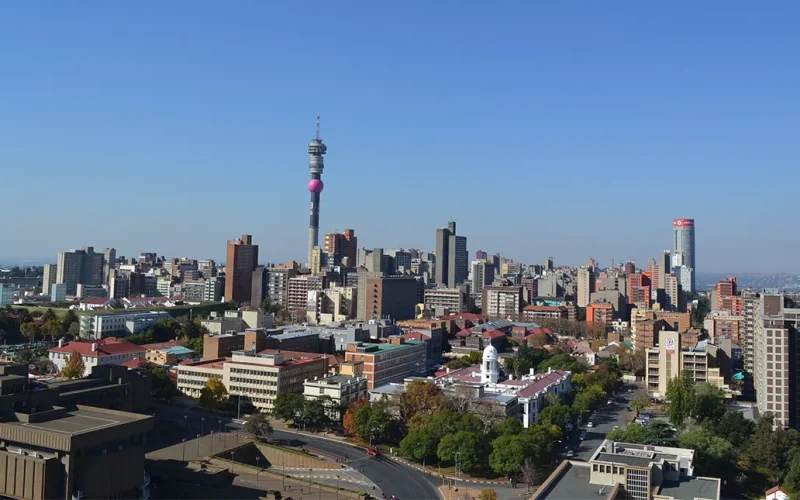
SOUTH Africa endured an electricity crisis from 2008 characterised by intermittent rolling blackouts and a growing culture of non-payment. The state-owned utility, Eskom, came to be regarded as the single largest risk to South Africa’s economy. At the end of March 2020, Eskom’s debt stood at R488 billion (US$27.4 billion). The government has attempted several measures to overcome the country’s energy problems. These have included new Eskom boards, new CEOs, bailouts for Eskom and a National Energy Crisis Committee that includes the private sector. Now it’s trying legislative reform. In mid-August 2024 President Cyril Ramaphosa approved a new law that…
Read More
Sudan Armed Forces are on a path to self-destruction – risking state collapse

Sudan Armed Forces are on a path to self-destruction – risking state collapse

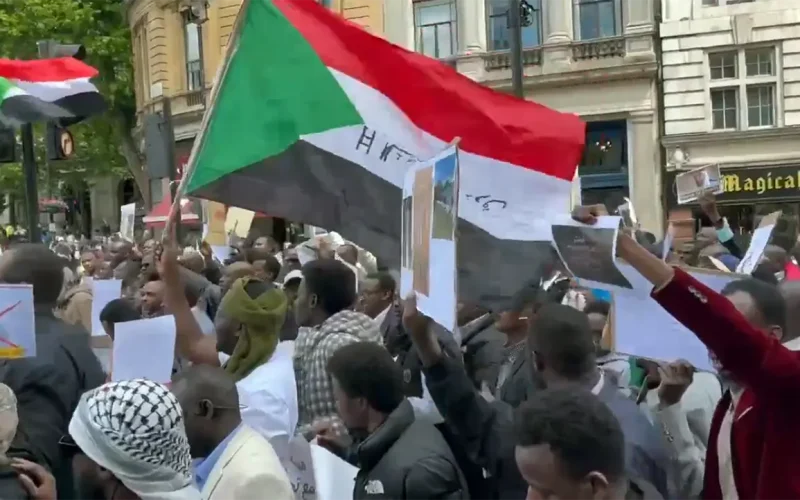
IT is now 10 months since the outbreak of civil war in Sudan in April 2023, pitting the Sudan Armed Forces against the Rapid Support Forces, a powerful paramilitary group. The war, which erupted after relations between the two wings of Sudan’s security apparatus broke down, rapidly spread beyond the capital, Khartoum. More recently, the Sudan Armed Forces have suffered numerous setbacks at the hands of the Rapid Support Forces. For months, army units have struggled to break their grip on much of the capital. The Rapid Support Forces and their allied militias have overrun most of Darfur and swathes…
Read More
Is ‘Africa’ a racial slur and should the continent be renamed?

Is ‘Africa’ a racial slur and should the continent be renamed?

SHOULD African people be called black – or is the categorising of people by skin colour a racist practice? How about Africa? Is the name of the continent a racial slur because it was chosen by European exploiters and based on the weather rather than the people – and should it be renamed? These are questions that African philosophy scholar Jonathan Okeke Chimakonam considers in a research paper. We asked him what he and his co-author concluded. Who named Africa and what does the name mean? The name Africa was given to the continent by European exploiters, slavers and colonists…
Read More
Rwanda is creating shiny, modern cities after the genocide – but this won’t help communities heal from the past

Rwanda is creating shiny, modern cities after the genocide – but this won’t help communities heal from the past

OVER the past 17 years, Rwanda has cleared informal settlements to make way for modern urban construction. Kigali’s ambitious city master plan is expected to be fully realised by 2050. But what about the people who are pushed out in the process and their memories? Shakirah E. Hudani presents some of their stories in her new book Master Plans and Minor Acts: Repairing the City in Post-Genocide Rwanda. She answers questions about Kigali’s emergence from conflict, and what could be. What has emerged from the state’s vision for Kigali? Kigali was established as a colonial outpost in 1907 by German…
Read More
Nigeria has seen a lot of conflict over the years: resistance from minority groups is a strong driver

Nigeria has seen a lot of conflict over the years: resistance from minority groups is a strong driver

CONFLICT and tension in Nigeria are not new. Ever since independence in 1960, there have been conflicts over natural resources and political agitations. The country has also experienced a civil war, the Nigerian-Biafran war, and the 12 June 1993 presidential election was annulled – leading to a major political conflict. Peace and conflict studies expert Onyekachi Nnabuihe, in a recent paper, highlights the role of minority groups resisting different forms of domination. How serious are ethnic tension and conflict in Nigeria? Both are serious. Nigeria is a deeply divided state in which major political issues are contested along complex ethnic,…
Read More
Soccer betting is on the rise among young Zimbabweans – our study found it can serve a positive purpose

Soccer betting is on the rise among young Zimbabweans – our study found it can serve a positive purpose

BETTING on soccer games is a popular pastime in many African countries. A 2024 report by GeoPoll found that 76.16% of respondents from Kenya, South Africa, Ghana, Uganda, Tanzania and Nigeria had gambled or placed bets and that soccer was by far the most popular sport to bet on. Young men (aged 16 to 34) make up the bulk of soccer bettors in those countries. Much has been written about the negative aspects of sports betting, including the risk of gambling addiction and becoming involved in money laundering. But, as we show in recent research from Zimbabwe, there are perhaps…
Read More
Maize prices in Kenya and Malawi have soared, but Tanzania’s haven’t: economists explain why

Maize prices in Kenya and Malawi have soared, but Tanzania’s haven’t: economists explain why

FOR more than a year maize prices in Kenya and Malawi have been much higher compared with other countries in the East and Southern Africa (ESA) region. Several factors explain this. In Malawi, high fertiliser prices which resulted in lower fertiliser usage affected maize supply. This was compounded by adverse weather and trade bans, leading to lower-than-usual production. In Kenya, high maize prices have been driven up by excessive margins. Sellers are charging prices that are more than the import parity price – the maize price from surplus-producing countries, plus transport costs for importing into Kenya. This is particularly concerning…
Read More
Drought is devastating southern Africa’s crops: why it’s happening and what can be learned

Drought is devastating southern Africa’s crops: why it’s happening and what can be learned

SOUTHERN Africa’s worst drought in years has destroyed crops of the staple food, maize, across the region. Malawi, South Africa, Zambia, Zimbabwe, Botswana, Lesotho and Namibia have all been affected by the drought. Crop failures in South Africa, Zambia and Zimbabwe – the largest maize producers in southern Africa – have destabilised food security in the whole region. The situation is escalating: the Southern African Development Community (SADC) has now announced that 68 million people need urgent food aid. The drought is driven by El Niño, an unusual warming of surface waters in the eastern tropical Pacific Ocean that shifts…
Read More
Sierra Leone’s women farmers use a custom called bora to access land – but it’s making them more vulnerable

Sierra Leone’s women farmers use a custom called bora to access land – but it’s making them more vulnerable

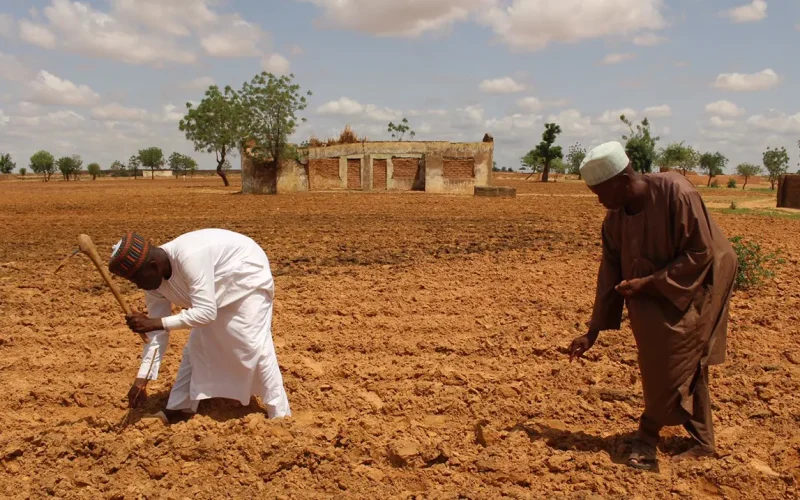
BORA – a type of thank you gift – is a Sierra Leonean custom of respect that is often used in relation to land. For instance, informal farmers pay bora to landowners to be able to farm on their land. But bora has changed over the years and is having a negative impact on women, who are responsible for much of the West African country’s farming. In Sierra Leone, land ownership – and therefore use of land for farming – vests in men. Women’s access to land for sustainable livelihoods is the subject of a PhD by land rights scholar…
Read More
From ecocide to resource-stripping: War’s collateral damage on the planet

From ecocide to resource-stripping: War’s collateral damage on the planet

This story was originally published by The New Humanitarian. By Obi Anyadike THE death and destruction that conflicts cause are visible and immediate tragedies, but often overlooked are the long-term environmental consequences of that violence – insidious, poisonous legacies. Even before a shot is fired, standing armies are climate-hostile. Voraciously energy-hungry and wasteful, military establishments are believed to account for 5.5% of all global greenhouse gas emissions. The globe-spanning US Armed Forces, with their fleets of ships, tanks, and high-performance aircraft, are the world’s largest institutional users of petrol. As a result, their carbon footprint is greater than most countries,…
Read More