Our website use cookies to improve and personalize your experience and to display advertisements (if any). Our website may also include cookies from third parties like Google Adsense, Google Analytics, and Youtube. By using the website, you consent to the use of cookies.

Digital trade protocol for Africa: why it matters, what’s in it and what’s still missing

Digital trade protocol for Africa: why it matters, what’s in it and what’s still missing

IN February 2024, African heads of state adopted a draft protocol to regulate digital trade within the continent. This significant yet challenging course for Africa’s digital economy fits into the broader trade agreement, designed to create a single continental market for the free movement of goods, services, capital and people. Franziska Sucker explains the protocol, why it matters and what still needs to be done. What is digital trade, and how big is it in Africa? Digital trade refers to the cross-border exchange of goods, services and other tradable items that is enabled by digital technologies. Africa’s market share of…
Read More
Kenya’s greylisting for weak action on money laundering and terrorism financing: what that means and what must happen next

Kenya’s greylisting for weak action on money laundering and terrorism financing: what that means and what must happen next

KENYA and Namibia are the latest African countries to be placed on the Financial Action Task Force’s grey list over their weak measures against money laundering and terrorism financing. Being on the grey list is typically seen as an indictment of a country’s ability to identify and effectively redress financial crimes. It warns investors to be cautious in dealings with the country. Financial crimes researcher Louis de Koker, who has recently studied the economic consequences of greylisting, answers questions on the move. Why is Kenya on the grey list? In February 2024 Kenya was greylisted by the Financial Action Task…
Read More
South Africa’s electricity crisis: what political parties say in their election manifestos about solving it

South Africa’s electricity crisis: what political parties say in their election manifestos about solving it

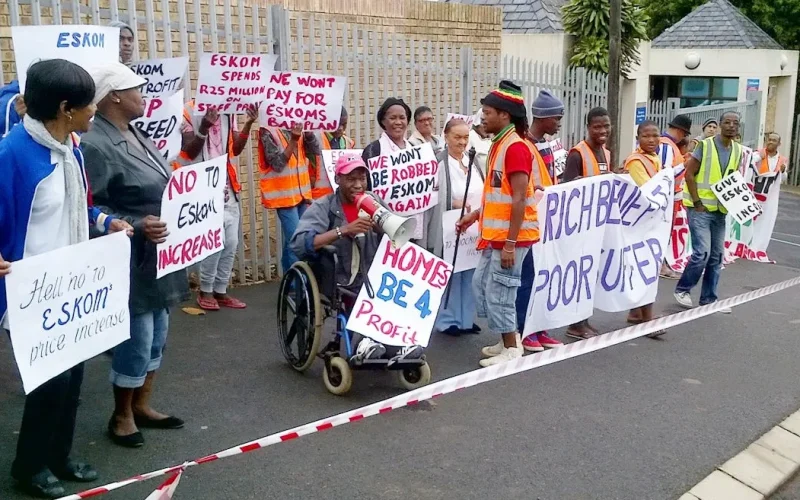
SOUTH Africa is in the middle of a deep electricity crisis. In 2023 the public, many of whom are voters, experienced the worst load-shedding to date, losing power for an average of five hours a day. The power shortages were largely due to excessive breakdowns in the country’s coal power plant fleet, which generates over 80% of South Africa’s electricity, combined with delays in developing new generation capacity. The power crisis is a key election topic with national elections scheduled for 29 May. The ruling African National Congress (ANC) is tipped to lose its absolute majority in parliament. One reason…
Read More
Kenya has tightened its laws to stop money laundering: why banks are the focus

Kenya has tightened its laws to stop money laundering: why banks are the focus

KENYA’S banking industry has in recent years been in the crosshairs of national, regional and international watchdogs, given the country’s role as a financial hub in eastern Africa. In 2023 Kenya enacted laws to curb money laundering and combat terrorism financing. While the laws have led to tougher sanctions on some banks, the risk of money laundering remains, and the country was recently greylisted by the Financial Action Task Force. A grey list contains countries that are actively working with the Financial Action Task Force to address loopholes in countering money laundering, terrorist financing, and proliferation financing. Constance Gikonyo, a…
Read More
Zulu culture and sexual orientation: South African study reveals the health costs of stigma

Zulu culture and sexual orientation: South African study reveals the health costs of stigma

Same-sex relationships are legal in South Africa and protected by the constitution. Unfair discrimination on the basis of sexual orientation is against the law. But in practice, many cultures don’t necessarily see this as a right. Traditional Zulu culture, for example, perceives same-sex relationships and sexual intercourse as taboo and unAfrican. Statements like “real men are not gay” indicate some people’s ideas about masculinity and sexuality. These cultural norms have profoundly negative effects on Zulu men who have sex with men. This abuse often triggers depression, suicide and drug abuse. As a public health specialist with an interest in marginalised…
Read More
Senegal election a welcome boost for coup-prone West Africa

Senegal election a welcome boost for coup-prone West Africa

FOR all the drama and the sometimes violent protests in the run-up to Senegal's presidential election, the former French colony looked set for a peaceful transition of power on Monday - a welcome boost for democracy in coup-prone West Africa. Sunday's vote, which was delayed from its original date of February 25, went off smoothly with supporters of opposition candidate Bassirou Diomaye Faye celebrating in the streets overnight as preliminary results put him firmly ahead. On Monday, both Faye's rival in the ruling coalition, Amadou Ba, and outgoing President Macky Sall congratulated Faye for winning the election before any official results from the electoral…
Read More
Nigeria’s fuel subsidy removal was too sudden: why a gradual approach would have been better

Nigeria’s fuel subsidy removal was too sudden: why a gradual approach would have been better

NIGERIA removed fuel subsidies entirely in May 2023. This came as a surprise because of the political risks associated with subsidy removal. Previous administrations were reluctant to jettison the subsidies. The subsidies had been in place since the 1970s, when the government sold petrol to Nigerians at a price below cost – though most consumers weren’t aware of this. The 1977 Price Control Act made it illegal for some products (including petrol) to be sold above the regulated price. The Olusegun Obasanjo regime introduced this law to cushion the effects of inflation, caused by a worldwide increase in energy prices.…
Read More
Inflation in Nigeria is still climbing while it has slowed globally: here’s why

Inflation in Nigeria is still climbing while it has slowed globally: here’s why

JUST as Nigerians were gradually digging out from the devastating effects of the COVID-19 pandemic, they were hit by high inflation. The Nigerian economy contracted by 6.1% at the peak of COVID-19 in the second quarter of 2020. Unemployment rate rose from 27% in the second quarter of 2020 to 33% in the fourth quarter of the same year. STEPHEN ONYEIWU, Professor of Economics & Business, Allegheny College The World Bank estimated that 11 million Nigerians were pushed into poverty during the pandemic, in addition to the 100 million (out of 200 million people in the country) who were already…
Read More
Gaza in-depth: Why Israel wants to end UNRWA and what its closure would mean

Gaza in-depth: Why Israel wants to end UNRWA and what its closure would mean

FACING allegations of violations of humanitarian neutrality, a funding freeze by major donors, and calls by Israeli officials for it to be dismantled, UNRWA, the UN’s agency for Palestine refugees is at a breaking point, according to its director-general Philippe Lazzarini. The crisis is threatening to collapse the largest aid agency in the Gaza Strip even as children have begun to die of malnutrition and dehydration due to Israel’s five-month bombardment and siege of the enclave. The immediate cause of UNRWA’s troubles stems from Israeli allegations in January that 12 of its around 13,000 staff members in Gaza were involved…
Read More
Somalia-Turkey maritime deal is a win for both countries, and not a power play for the Horn of Africa

Somalia-Turkey maritime deal is a win for both countries, and not a power play for the Horn of Africa

A recent defence deal between Somalia and Turkey has great significance for Somalia and the region’s security. The agreement, which covers both land and sea, aims to enhance defence cooperation between Turkey and Somalia. It includes the possibility of Turkey providing both training and equipment for a Somali navy. Its near-term impact should, however, not be exaggerated. BRENDON J. CANNON, Assistant Professor, Khalifa University Instead, it should be understood as a good-faith agreement signed between asymmetric powers whose interests overlap a little, at present. My research on the geopolitics and security agreements over the past few decades covering Turkey, Somalia…
Read More