Our website use cookies to improve and personalize your experience and to display advertisements (if any). Our website may also include cookies from third parties like Google Adsense, Google Analytics, and Youtube. By using the website, you consent to the use of cookies.

Analysis: Caught between riots and debt crises, African countries cut fuel subsidies

Analysis: Caught between riots and debt crises, African countries cut fuel subsidies

ABDOULAYE Diallo is paying over 50% more to fill up his "thiak-thiak" motorbike taxi in Keur Mbaye Fall, a suburb of Senegal's capital Dakar, than he was before the government began lifting fuel subsidies in January. Diallo, 25, is already navigating punishing inflation and deadly political riots, but his biggest problem is he cannot pass on the cost of filling his fuel tank, which has risen to 3,500 CFA ($5.82), from 2,000 CFA last year. "The customers...don't realize how difficult it is," Diallo said. "That's the kind of thing we need to protest against." Senegal, like Nigeria and Angola, is removing costly…
Read More
What does the Wagner Group do? Operations in Africa and the rest of the world explained

What does the Wagner Group do? Operations in Africa and the rest of the world explained

THE abortive mutiny by Russia's Wagner group last week calls into question the fate of the group's wide network of military and commercial operations across Europe, the Middle East and Africa. This factbox shows what Wagner is doing and where. UKRAINE Wagner deployed in Ukraine soon after the invasion began early last year and by the summer it was enlisting thousands of prisoners to fight for it on the front lines. By December, as it took a central role in the battle for Bakhmut, U.S. intelligence estimated it had 40,000 prisoner recruits fighting in Ukraine, though Wagner itself has not commented on…
Read More
Migrant numbers are rising: conflict, climate and harassment are forcing tens of millions to leave their homes

Migrant numbers are rising: conflict, climate and harassment are forcing tens of millions to leave their homes

THE number of forcibly displaced people increased to 108 million in 2022 and is expected to reach 117 million by the end of 2023, according to the United Nations Refugee Agency (UNHCR). Of these, just over 60 million were internally displaced – people who have been forced to leave their homes but have not crossed their (internationally recognised) borders. Almost 30 million were refugees outside their country of origin. The remainder were asylum seekers, stateless persons, returnees and persons in need of international protection. BORJA SANTOS PORRAS, Director Ejecutivo - IE School of Global and Public Affairs, IE University UNHCR…
Read More
Analysis: Nigeria’s Tinubu faces daunting hurdles after reform sprint

Analysis: Nigeria’s Tinubu faces daunting hurdles after reform sprint

NEW Nigerian President Bola Tinubu has moved at lightning speed in his first month in office, implementing a raft of radical changes aimed at finally unleashing the full potential of Africa's sluggish economic giant. But while his rapid headway on reforms has wowed investors, some analysts, observers and business leaders warn that bigger challenges await and question whether the 71-year-old - viewed by many as part of Nigeria's old guard - is really the man to take them on. "There has been a big policy shift (but) I think there are things that investors would like to see happening to really be convinced…
Read More
Sierra Leone has been at peace for 20 years after a brutal civil war – what went right

Sierra Leone has been at peace for 20 years after a brutal civil war – what went right

SIERRA Leone’s June 2023 parliamentary elections are the fifth since the end of the civil war in 2002. They also mark a decade since the closure of the Special Court for Sierra Leone. The court prosecuted high-level commanders deemed responsible for the suffering experienced during the war. CHRISTINA MAMMONE, Early Careers Researcher in Peace and Conflict Studies, Flinders University The 11-year-long civil war (1991-2002) was estimated to have killed over 50,000 people. Thousands were maimed and their limbs amputated. Half of the population was displaced. Almost all the people of Sierra Leone were affected by the war, leaving an enduring…
Read More
Ugandan church waged rebellion against tradition – today’s homophobic views are at odds with history

Ugandan church waged rebellion against tradition – today’s homophobic views are at odds with history

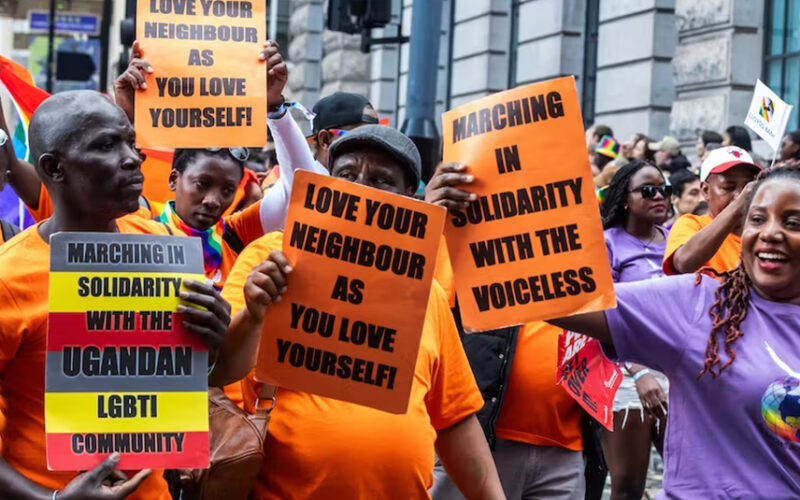
ON 26 May Uganda’s president, Yoweri Museveni assented to the “anti-homosexuality bill” of 2023. The bill’s aim is to protect the “cherished culture of the people of Uganda, (and the) legal, religious, and traditional family values of Ugandans”. In the name of family values the law punishes “serial offenders” with the death penalty. Author DEREK R. PETERSON, Professor of History and African Studies, University of Michigan The Church of Uganda’s archbishop, Stephen Kaziimba, has supported the bill, and when it was signed he expressed his church’s gratitude to the president. Anita Among, the speaker of parliament, celebrated the new law’s…
Read More
Gold fraud: the Goldenberg scam that cost Kenya billions of dollars in the 1990s – and no one was jailed

Gold fraud: the Goldenberg scam that cost Kenya billions of dollars in the 1990s – and no one was jailed

THE Goldenberg scandal in the early 1990s is Kenya’s largest documented gold fraud. The scheme involved Goldenberg International Limited, which pretended to export gold and diamonds, and in exchange received substantial subsidies from the government for “earning” foreign exchange. Kenyan businessman Kamlesh Pattni – who was at the centre of the scandal and was charged with fraud but eventually acquitted – was recently named in a new investigation into gold fraud. This time his operation is allegedly being run through Zimbabwe from his base in Dubai. Economists Roman Grynberg and Fwasa Singogo, who have researched the Goldenberg case, and the…
Read More
South Africa’s power crisis will continue until 2025 – and blackouts will take 5 years to phase out

South Africa’s power crisis will continue until 2025 – and blackouts will take 5 years to phase out

SOUTH Africa is in the middle of a severe electricity crisis, with enforced power cuts that have worsened every year. Electricity is sometimes unavailable for 10 hours a day. The shortfall is the consequence of frequent breakdowns at its ageing coal power plants, which constitute 74% of the country’s generating capacity. In theory, improving the performance and reliability of the existing coal plants would resolve the power crisis. This remedy is promoted in some quarters. But it’s easier said than done. To function satisfactorily, many of the plants would require a complete overhaul, which would be both time-consuming and prohibitively…
Read More
China’s population grew older and richer: policy lessons for some African countries

China’s population grew older and richer: policy lessons for some African countries

FOR decades China was the world’s most populous country. But that’s changed. Its population has peaked, and is now falling. The country has achieved high levels of economic growth for four decades, reducing poverty and raising per capita incomes. Between 1978 and 2018 China’s economy grew by an average of 9.8 per cent per annum. Today it is the second biggest economy in the world after the US. Author LAUREN JOHNSTON, Senior Researcher, South African Institute of International Affairs and Associate Professor at the China Studies Centre, University of Sydney China’s demographic profile has played a key role in its…
Read More
South Africa’s power blackouts: solutions lie in solar farms and battery storage at scale, and an end to state monopoly

South Africa’s power blackouts: solutions lie in solar farms and battery storage at scale, and an end to state monopoly

ROLLING blackouts are costing South Africa dearly. The electricity crisis is a barrier to growth, destroys investor confidence and handicaps almost every economic activity. It has raised input costs for producers and retailers and has triggered a new round of inflation and interest rate increases. Author DAVID RICHARD WALWYN, Professor of Technology Management, University of Pretoria Any solution will obviously incur cost because it will require the adoption of new technologies, such as large-scale grid-connected solar farms that are linked to battery energy storage. But these technologies are expensive. A solar farm consisting of 50 MW of photovoltaic panels with…
Read More