Our website use cookies to improve and personalize your experience and to display advertisements (if any). Our website may also include cookies from third parties like Google Adsense, Google Analytics, and Youtube. By using the website, you consent to the use of cookies.

Burkina Faso’s nature reserves are worth protecting – but people have to be part of the plan

Burkina Faso’s nature reserves are worth protecting – but people have to be part of the plan

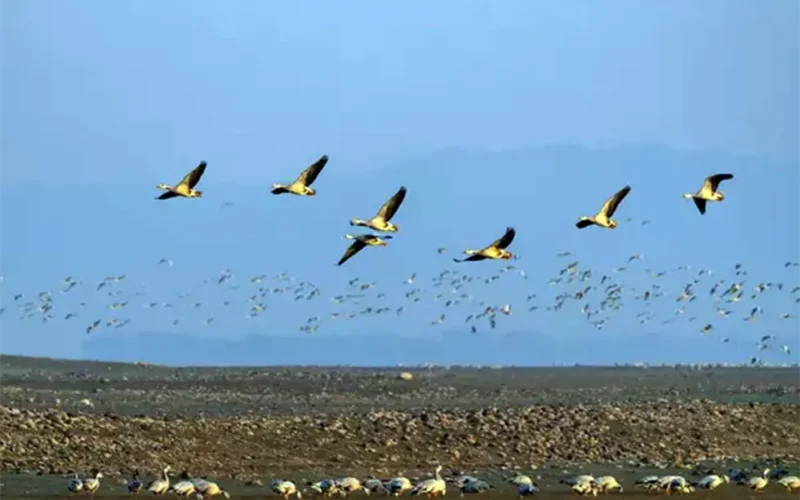
BURKINA Faso is a West African dryland country known for its diverse ecosystems, including savannas, forests and wetlands. Large herbivores like elephants, giraffes and hippopotamuses, and predators like lions, leopards and the African lynx, roam the country’s savannas. Many bird species use the country as a stopover or wintering ground, making it an important migratory route between Europe and Africa. Nature reserves as protected areas cover 14% of the country’s land. They are surrounded by heavily populated areas. Demand for food, fuelwood and land to settle on has stimulated agricultural activity, grazing and woodcutting near these protected areas. As part…
Read More
Burundi is losing its trees: how to break heavy charcoal use and tree clearing through climate reforms

Burundi is losing its trees: how to break heavy charcoal use and tree clearing through climate reforms

BURUNDI faces serious climate and environmental challenges. The biggest is the country’s overdependence on the use of biomass (firewood). The second is outdated agricultural practices that have led to deforestation. In turn, this has increased the country’s vulnerability to climate shocks. A landlocked country on the northeastern shores of Lake Tanganyika, Burundi is extremely poor, with 76% of the population living below the poverty line (US$2.15 per day) in 2023. It is also ranked the 22nd most vulnerable to climate change in the world. Burundi produces very little CO2 (less than 0.02% of global greenhouse gas emissions). Its challenge is…
Read More
Climate finance and care services: why public investment is necessary

Climate finance and care services: why public investment is necessary

THE care economy is an important but unrecognised sector for climate change adaptation. I use the term “care economy” to encompass the work of caring for people that is paid and unpaid, largely undertaken by women. This work takes place in a range of places. This includes private and public settings, such as households, community centres, hospitals, schools, and care homes. In a climate adaptation context, investing in infrastructure and quality services for care can help build the resilience of families and communities. It can also strengthen preparedness and response efforts to various climate hazards. However, in countries around the…
Read More
A hot and troubled world of work: how South Africa’s bold new climate act and labour law can align to drive a just transition

A hot and troubled world of work: how South Africa’s bold new climate act and labour law can align to drive a just transition

INCREASED average temperatures, climate variability, and extreme weather events are taking a toll on the environment and disproportionately affecting the lives and livelihoods of vulnerable communities. This is intensifying challenges in the world of work. Working on a warmer planet increases health and safety risks and affects workers’ well-being and productivity. These risks are a challenge for employment, labour standards, and the creation of decent work. Temperatures in South Africa are rising faster than the global average. And finding ways to adapt to climate change and navigate its challenges is becoming increasingly urgent. These challenges are compounded by the disruptions…
Read More
Urban food gardens produce more than vegetables, they create bonds for young Capetonians – study

Urban food gardens produce more than vegetables, they create bonds for young Capetonians – study

URBAN agriculture takes many forms, among them community, school or rooftop gardens, commercial urban farms, and hydroponic or aquaponic systems. These activities have been shown to promote sustainable cities in a number of ways. They enhance local food security and foster economic opportunities through small-scale farming initiatives. They also strengthen social cohesion by creating shared spaces for collaboration and learning. However, evidence from some African countries (and other parts of the world) shows that very few young people are getting involved in agriculture, whether in urban, peri-urban or rural areas. Studies from Kenya, Tanzania, Ethiopia and Nigeria show that people…
Read More
Women are seen as ‘saviours’ or ‘victims’ in climate change debates: why this is a problem

Women are seen as ‘saviours’ or ‘victims’ in climate change debates: why this is a problem

CERTAIN stereotypes about women have become commonplace in climate and development literature. One example is that women are either represented as “saviours” who protect nature or as “victims” more vulnerable to climate impacts than men and less equipped to cope. Simple either/or ways of seeing women overlook the power dynamics and structural factors that give rise to the stereotypes. Based on our decades of research into gender issues and the environment, we use evidence from the global south to unpack underlying assumptions. We call for a more complex framing of gender, care and climate change. This will help ensure that…
Read More
Africa’s climate change balancing act: green energy vs economic development

Africa’s climate change balancing act: green energy vs economic development

AFRICAN countries face a conundrum. On the one hand, they need to develop economically and industrially. On the other, they must also meet their commitments to reduce greenhouse gas emissions globally. This risks a conflict between climate mitigation ambitions and Africa’s development agenda. There are 45 nations on the United Nations’ global list of “Least Developed Countries”; 33 (72%) are located in Africa. These countries face enormous problems, including low-income levels and limited levels of industry. They are also affected by climate change disasters like floods and droughts. Africa contributes just 4% of the world’s greenhouse gas emissions. But all…
Read More
Relentless warming is driving the water cycle to new extremes, the 2024 global water report shows

Relentless warming is driving the water cycle to new extremes, the 2024 global water report shows

LAST year, Earth experienced its hottest year on record - for the fourth year in a row. Rising temperatures are changing the way water moves around our planet, wreaking havoc on the water cycle. The 2024 Global Water Monitor Report released today shows how these changes are driving extreme events around the world. Our international team of researchers used data from thousands of ground stations and satellites to analyse real-time information on weather and water underground, in rivers and in water bodies. We found rainfall records are being broken with increasing regularity. For example, record-high monthly rainfall totals were achieved…
Read More
South Africa’s rare succulent plants are threatened by illegal trade – how to stop it

South Africa’s rare succulent plants are threatened by illegal trade – how to stop it

SOUTH Africa’s succulents – small, fleshy, green plants sometimes shaped like roses or stars, and often found peeping out between rocks in dry areas – are sought after by an increasingly international collector market. The popular Conophytum, Lithops and Tylecodon are part of the group of rare and aesthetically unique succulents which are now being illegally traded all over the world. Since 2019, over 1 million succulent plants from 650 species unique to South Africa have been illegally harvested in South Africa. As social scientists who have extensively researched conservation conflicts, community centred conservation and the illegal wildlife trade, we…
Read More
Giant freshwater aquifer in southern Africa is under threat from mining

Giant freshwater aquifer in southern Africa is under threat from mining

A huge underground water resource the size of Austria, the Stampriet Transboundary Aquifer System, stretches for 87,000km² across Namibia, South Africa and Botswana. It supplies 50,000 people in several towns with water pure enough to drink and is their only source of water. However,the Namibian government has awarded uranium prospecting licences to several mining companies across the aquifer system. Other mining companies already have the right to prospect for rare earth metals in the aquifer. Surina Esterhuyse and Anton Lukas are groundwater scientists and mining specialists. They say if mining goes ahead, the groundwater may become contaminated by metals that…
Read More