Our website use cookies to improve and personalize your experience and to display advertisements (if any). Our website may also include cookies from third parties like Google Adsense, Google Analytics, and Youtube. By using the website, you consent to the use of cookies.

South Africa’s new energy plan needs a mix of nuclear, gas, renewables and coal – expert

South Africa’s new energy plan needs a mix of nuclear, gas, renewables and coal – expert

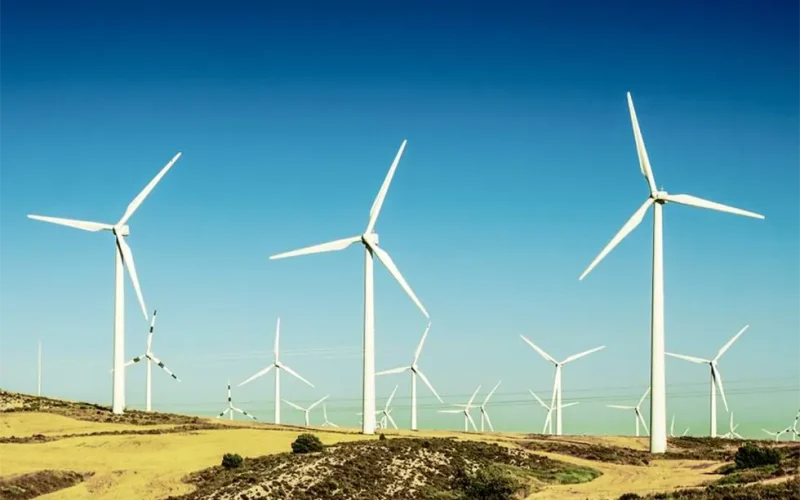
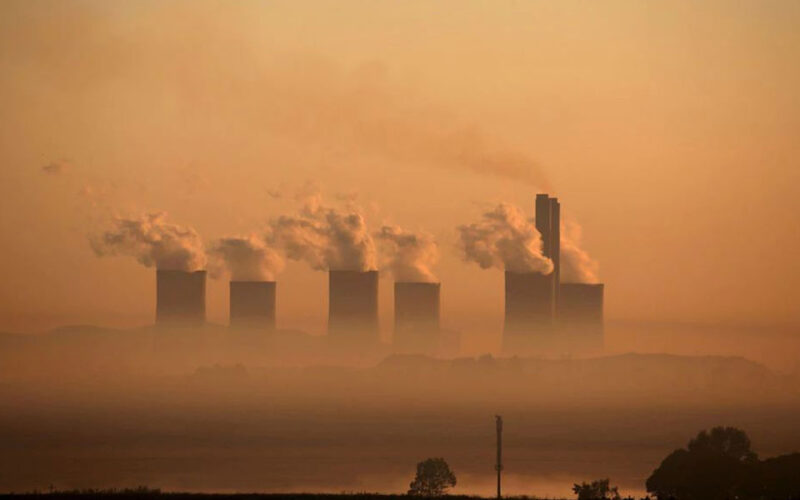
SOUTH Africa’s economy has been hard hit by 15 years of load-shedding (rolling blackouts). The country’s coal-fired power plants have a maintenance backlog and frequently experience unexpected technical failures. On the other hand, South Africa has committed, under the Paris Agreement, to transition to low-carbon energy generation technologies by 2050. This puts South Africa at an energy crossroads where it needs well-thought-out policy development and implementation to make the transition possible. South Africa’s reliance on coal-fired power to supply about 72% of its energy needs is catching up with it as coal plants fail. But switching to renewable energy technologies…
Read More
Africa’s renewable energy sector is shattering gender norms

Africa’s renewable energy sector is shattering gender norms

AFRICA'S fast-evolving renewable energy landscape is catalysing a shift in gender dynamics, with more women seizing employment opportunities than in the traditional energy sector, according to a new report. According to the report, “more women are assuming positions as business creators, energy producers, distributors, and service providers,” challenging longstanding gender norms prevalent in the energy industry. The report, “Empowering Women in Clean Energy: Advancing and Retaining an Equitable Workforce”, by The Global Energy Alliance for People and Planet draws insights from over 150 female professionals employed at different levels in the renewable energy sector. Traditionally, the energy sector has been…
Read More
Nigeria risks losing all its forest elephants – what we found when we went looking for them

Nigeria risks losing all its forest elephants – what we found when we went looking for them

NIGERIA is one of 37 African countries where elephants are found in the wild. Savannah elephants (Loxodonta africana) can be found in the north and forest elephants (Loxodonta cyclotis) in the south. It’s not clear how many elephants there are in Nigeria. Eighteen years ago, the African Elephant Study Report estimated that there were just 94 elephants left in the country. In 2021, it was estimated that there could be about 400 elephants in areas not systematically surveyed. What we do know, however, is that the numbers and ranges of elephants in Nigeria have declined greatly over time. The main…
Read More
Women battle when trying to take climate change cases to court – South Africa and Nigeria study shows why

Women battle when trying to take climate change cases to court – South Africa and Nigeria study shows why

ACROSS domestic courts in Africa, climate cases have been decided in South Africa, Nigeria and Kenya, with some cases pending in Uganda. However, climate litigation is still fairly new. Climate lawsuits are an important way to access justice. This is particularly true for African women because, as research has shown, climate change affects women more than men in key areas including farming, health, water, access to electricity, migration and conflict. PEDI OBANI, Associate Professor, School of Law, University of Bradford I research how the law can be applied to cases of climate change, inclusive development, water governance and sustainability. In…
Read More
Kenya’s had unusually hot weather – an expert unpacks what could be causing it

Kenya’s had unusually hot weather – an expert unpacks what could be causing it

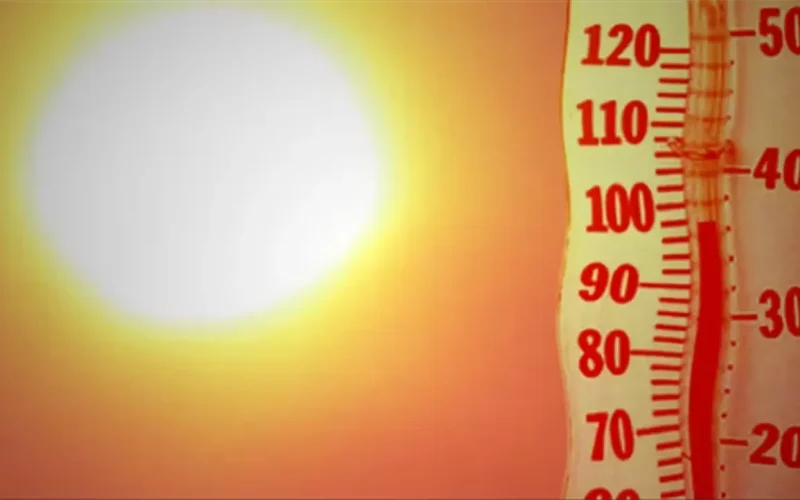
IN early 2024 most parts of Kenya, including Nairobi, experienced unusually high temperatures. The World Meteorological Organisation described the hot weather as a global phenomenon: record high temperatures were recorded in 2023. January 2024 has been recorded as the hottest month on record so far worldwide. Gilbert Ouma, the coordinator of the University of Nairobi’s Institute for Climate Change and Adaptation, and an associate professor at the Department of Meteorology, answers some key questions. GILBERT OUMA, Associate Professor, Meteorology Department, University of Nairobi What is unusual about the weather in Nairobi? The annual average temperatures for Nairobi are normally moderate,…
Read More
Ghana: can contract farming help smallholder farmers build resilience to climate change?

Ghana: can contract farming help smallholder farmers build resilience to climate change?

In northern Ghana, many smallholder farmers who grow crops on less than one hectare of land each are entering into contract farming. This gives them guaranteed buyers for their crops. Human geographer and climate change adaptation expert Frederick Dapilah has found that contract farming offers many lessons about building resilience in the face of climate change. FREDERICK DAPILAH, Senior Lecturer, Department of Community Development, SD Dombo University of Business and Integrated Development Studies What is contract farming? Contract farming is when farmers grow crops to meet contracts they have signed with buyers. They agree on a fixed price upfront. As…
Read More
Africa to be $2.5 trillion short of climate finance by 2030, UN says

Africa to be $2.5 trillion short of climate finance by 2030, UN says

AFRICA will be $2.5 trillion short of the finance it needs to cope with climate change by 2030, a U.N. official said, adding that the continent has contributed the least to greenhouse gas emissions while seeing some of the worst impacts. Africa attracts only 2% of global investments in clean energy but needs $2.8 trillion of investment in the sector by 2030, United Nations Economic Commission for Africa chief economist Hanan Morsy told a conference in Victoria Falls, Zimbabwe, warning against the consequences of under-funding. "We end up in a vicious circle with investment shortfalls increasing exposure risk and worsening…
Read More
Serengeti migration: fire and rain affect how zebras, wildebeest and gazelles make the journey

Serengeti migration: fire and rain affect how zebras, wildebeest and gazelles make the journey

TANZANIA’S Serengeti ecosystem is like a time machine. As one of the world’s last remaining fully intact grazing ecosystems, it provides a glimpse of what others in Australia, Eurasia and the Americas might have looked like when communities of large grazing mammals roamed freely across these continents. T. MICHAEL ANDERSON, Professor of Biology, Wake Forest University During the Late Pleistocene, which spanned from 129,000 to 11,700 years ago and is sometimes referred to as the “ice age”, populations of these grazing animals collapsed all over the world. But those populations left a mark: the effect they had on plant communities.…
Read More
South Africa says climate targets on track if coal switch not delayed again

South Africa says climate targets on track if coal switch not delayed again

SOUTH Africa's delay in taking coal-fired power stations offline will only harm its commitment to net-zero emissions by 2050 if the plants continue to burn well into the 2030s, the head of its donor-funded green energy plan said on Tuesday. Officials admitted privately in November that South Africa will miss its binding 2030 carbon emissions targets under the Paris climate agreement, as Africa's most industrialised country will run eight coal-fired power plants for longer than planned. Countries around the world, including Canada, Britain and Germany have delayed or watered down energy transition plans. South Africa is the 15th biggest emitter in the…
Read More
Traditional weather forecasts: expert shares 5 ways Africa’s coastal residents predict floods

Traditional weather forecasts: expert shares 5 ways Africa’s coastal residents predict floods

IN the Lapai Gwari community of Niger state, north-central Nigeria, elders predict the weather by observing a large stone in the Chachanga River. The LapanGwagwan stone serves as a tool to determine the frequency of flooding and gauge the severity of rainfall. When the colour of the stone changes to brown, it signifies an imminent heavy downpour, while a grey colour indicates either light or moderate rainfall. OLASUNKANMI HABEEB OKUNOLA, Visiting Scientist, United Nations University – Institute for Environment and Human Security (UNU-EHS), United Nations University This traditional knowledge helps the community to prepare for potential flooding. This is just…
Read More