Our website use cookies to improve and personalize your experience and to display advertisements (if any). Our website may also include cookies from third parties like Google Adsense, Google Analytics, and Youtube. By using the website, you consent to the use of cookies.

Senegal’s remote Bassari people talk about climate change, and how their local knowledge is key to coping strategies

Senegal’s remote Bassari people talk about climate change, and how their local knowledge is key to coping strategies

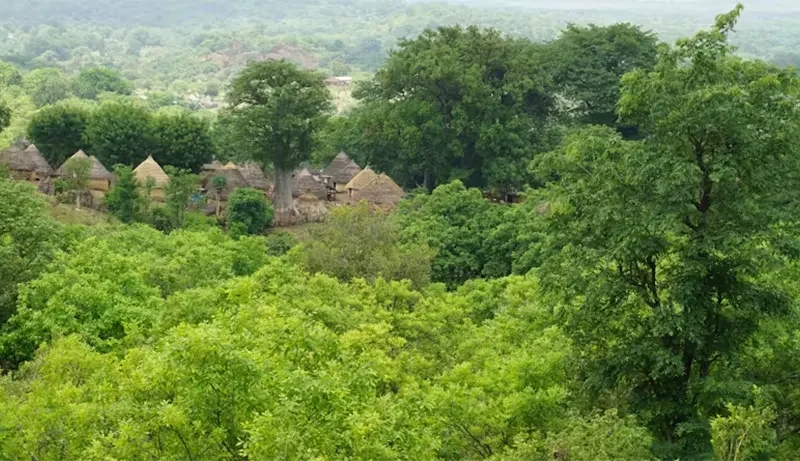
THE Bassari people, a farming community of about 20,000 people, live in an area between Senegal and Guinea. During French colonial rule, the Bassari lost part of their communal land to a national park and were subjected to poll taxes and forced labour. Senegal achieved independence in 1960 and in 2012 the Bassari area was declared a world heritage site, a change that bolstered small-scale tourism. Today, the Bassari peoples’ main livelihood comes from rainfed smallholder farming, supplemented by activities such as petty trade, crafts, wage labour, artisanal gold mining, and gathering honey and wild edible plants. They have limited…
Read More
Farming with a mixture of crops, animals and trees is better for the environment and for people – evidence from Ghana and Malawi

Farming with a mixture of crops, animals and trees is better for the environment and for people – evidence from Ghana and Malawi

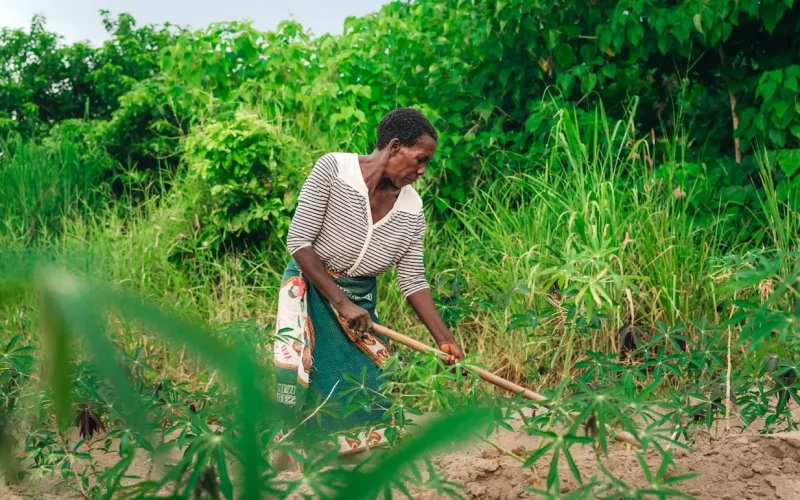
FARMING just one kind of crop in a field at a time, and using a lot of chemicals, pose a risk to both people and nature. This simplified intensive agriculture often goes hand in hand with increased greenhouse gas emissions, land and water degradation, and loss of biodiversity. There’s another way to farm: increasing the number of crop and livestock species. This is biologically diversified agriculture. Growing more than just a single crop year after year is one way to diversify. Farmers might rotate between corn one year, then pigeon peas intercropped with peanuts the second year, and beans the…
Read More
South Africa: Gold mine pollution is poisoning Soweto’s water and soil – study finds food gardens are at risk

South Africa: Gold mine pollution is poisoning Soweto’s water and soil – study finds food gardens are at risk

FOR 140 years, gold mines in Johannesburg, South Africa have been leaking wastewater contaminated with heavy metals. The acid mine drainage from Johannesburg’s estimated 278 abandoned mines and 200 mine dumps includes uranium (a radioactive metal), toxic arsenic, copper, cobalt, nickel, lead and zinc. Acid mine drainage can pollute land and water sources up to 20 kilometres away from a mine unless it is remediated by mining companies. The contamination cascades through food webs and poisons river water, plants and animals. Before 1994 in South Africa, African communities were forcibly relocated to places near mine dumps in Soweto, south-west of…
Read More
Ghana’s forests are being wiped out: what’s behind this and why attempts to stop it aren’t working

Ghana’s forests are being wiped out: what’s behind this and why attempts to stop it aren’t working

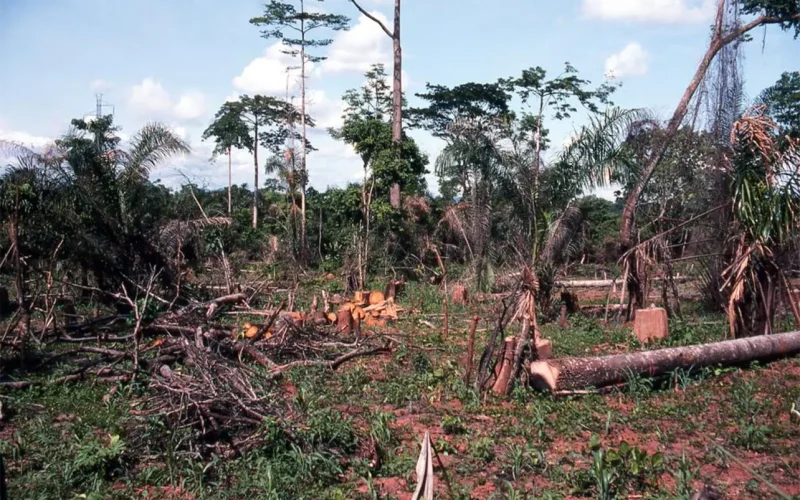
GHANA has around 7.9 million hectares of forested land (35% of the total land area), according to the Food and Agriculture Organization. Around 7.6 million hectares are primary or naturally regenerated forest, and around 297,000 hectares are planted forest. In 2022, Ghana lost 18,000 hectares of primary forest, a nearly 70% increase from 2021. It was the biggest increase in forest loss of any country in recent years. A new study by the International Union of Forest Research Organisations notes that deforestation rates have risen despite an abundance of sustainable cocoa standards, corporate pledges and carbon-offset projects. The Conversation Africa’s…
Read More
Africa dramatically dried out 5,500 years ago – our new study may warn us of future climate tipping points

Africa dramatically dried out 5,500 years ago – our new study may warn us of future climate tipping points

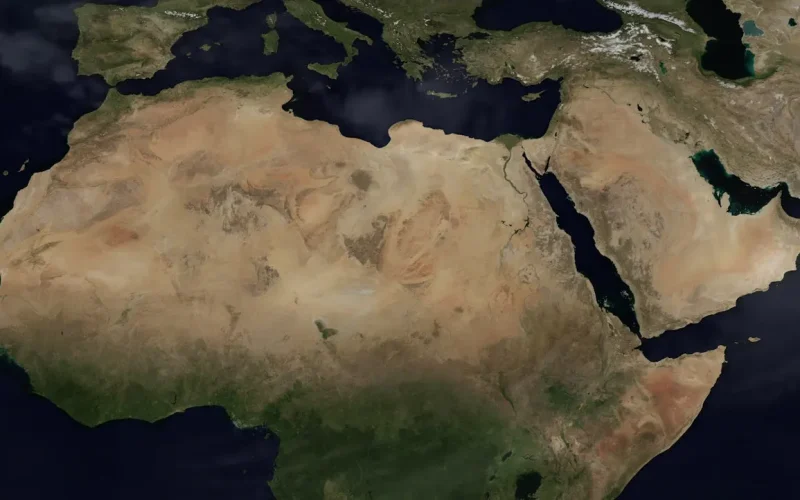
AROUND five and a half millennia ago, northern Africa went through a dramatic transformation. The Sahara desert expanded and grasslands, forests and lakes favoured by humans disappeared. Humans were forced to retreat to the mountains, the oases, and the Nile valley and delta. As a relatively large and dispersed population was squeezed into smaller and more fertile areas, it needed to innovate new ways to produce food and organise society. Soon after, one of the world’s first great civilisations emerged – ancient Egypt. This transition from the most recent “African humid period”, which lasted from 15,000 to 5,500 years ago,…
Read More
South Africa’s plan to move away from coal: 8 steps to make it succeed

South Africa’s plan to move away from coal: 8 steps to make it succeed

THE South African government’s Just Energy Transition Implementation Plan was launched in November 2023. It is a roadmap guiding the country away from reliance on coal-fired power towards renewable energy alternatives by 2027. It aims to include all communities and workers who will be affected by the energy transition. The plan says everyone should have access to electricity through a mix which includes renewable energy. This energy transition must also create new employment opportunities, particularly in the burgeoning renewable energy sector, and contribute to economic development. At the same time, it must set up an energy future where power is…
Read More
Electricity from farm waste: how biogas could help Malawians with no power

Electricity from farm waste: how biogas could help Malawians with no power

IN sub-Saharan Africa, over 600 million people (more than 50% of the population) are without access to electricity. Malawi has one of the world’s lowest electricity access rates – just 14.1% of the total population have access to the main grid. In rural areas, the electrification access rate is even lower, estimated at 5.6% in 2021. Decentralised household and community-scale renewable energy systems like biogas plants may provide a solution. Ehiaze Ehimen and Thomas Robin study energy efficiency and energy poverty in marginalised communities. They unpack what they found in their research into the potential role of small biogas plants…
Read More
Africa’s megacities threatened by heat, floods and disease – urgent action is needed to start greening and adapt to climate change

Africa’s megacities threatened by heat, floods and disease – urgent action is needed to start greening and adapt to climate change

CITIES cover just 3% of the planet. But they emit 78% of all global greenhouse gas emissions, absorb 80% of final global energy (what consumers use) and consume 60% of clean drinking water. African megacities like Lagos, Nigeria (with 21 million residents) and Cairo, Egypt (with 10 million residents) are experiencing significant temperature increases due to the urban heat island effect and climate change. Meelan Thondoo is a medical anthropologist and environmental epidemiologist who researches the health impacts of climate change in cities of fast-developing countries. She explains what cities in Africa are doing to mitigate climate change, and what…
Read More
Planting trees in grasslands won’t save the planet – rather protect and restore forests

Planting trees in grasslands won’t save the planet – rather protect and restore forests

TREE planting is one of the nature-based solutions being used to offset greenhouse gas emissions. Trees absorb atmospheric carbon dioxide. Many of these tree-planting projects target Africa’s rangelands (open grasslands or shrublands used by livestock and wild animals). They include agroforestry initiatives such as the Great Green Wall in the Sahel, or commercial timber plantations that double as carbon offset projects. These target millions of hectares in countries like Mozambique, Madagascar and Rwanda., I am part of a team of ecologists and social scientists who are working to highlight the International Year of Rangelands and Pastoralists in 2026. Our goal…
Read More
Deadly heat in West Africa warns of climate change-driven scorchers to come

Deadly heat in West Africa warns of climate change-driven scorchers to come

ON a hospital bed in Niger, a 96-year-old woman lay motionless attached to a drip - one of the thousands of possible victims of West Africa's worst heatwave in living memory, which a report said was linked to fossil fuel-driven climate change. In late March and early April, days and nights of extreme heat above 40° Celsius (104°F) gripped many West African countries. Temperatures soared so high in Mali and Burkina Faso that they equated to a once-in-200-year event, according to the report on the Sahel region by World Weather Attribution (WWA). The severity of the heatwave led WWA's team…
Read More