Our website use cookies to improve and personalize your experience and to display advertisements (if any). Our website may also include cookies from third parties like Google Adsense, Google Analytics, and Youtube. By using the website, you consent to the use of cookies.

Lions in a Uganda park make a perilous journey across a 1.5km stretch of water: study suggests the drive is to find mates

Lions in a Uganda park make a perilous journey across a 1.5km stretch of water: study suggests the drive is to find mates

DOMESTIC cats will do almost anything to avoid contact with water. Not so for their wild cousins, though. Lions, tigers and jaguars have had to adapt to water and sometimes take the plunge for survival. And this is what we observed on the late evening of 1 February 2024. Our research team in Uganda filmed two male lions swimming in a waterway in the Queen Elizabeth National Park. But what was unusual was the distance and the danger: the lions swam an estimated 1.5km across the Kazinga Channel, which connects two lakes in the park. The channel has a high…
Read More
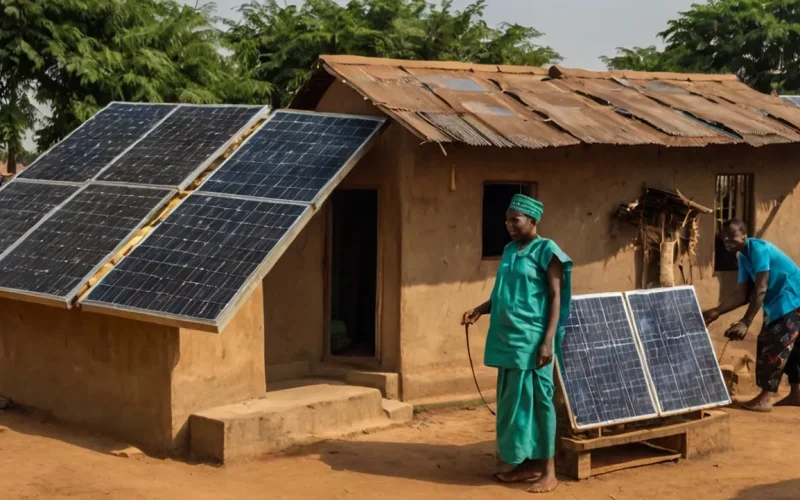
Home solar systems in South Africa: more will be installed if households are given loans, free maintenance and security

Home solar systems in South Africa: more will be installed if households are given loans, free maintenance and security

SOUTH Africa is making efforts to increase the use of solar photovoltaic energy. But it’s happening at a very slow pace. Solar photovoltaic contributes less than 5% to the country’s energy mix, despite the sunny climate, which is very favourable for solar photovoltaic energy generation. So far, less than 10% of households have started using solar photovoltaic power regularly, though evidence suggests rapid uptake in the last few years with a 349% increase in rooftop solar PV capacity from 983MW in March 2022 to 4412MW in June 2023. South Africa urgently needs to change this. It is highly dependent on…
Read More
Shell didn’t consult communities properly about mining the Wild Coast – but how much legal protection do South Africans have?

Shell didn’t consult communities properly about mining the Wild Coast – but how much legal protection do South Africans have?

SOUTH Africa’s Supreme Court of Appeal recently dismissed an appeal by Shell, Impact Africa and the Department of Mineral Resources and Energy to overturn a High Court judgment that halted a seismic survey off the country’s pristine Wild Coast. The High Court found that the right to carry out a seismic survey had been granted to Shell and Impact Africa unlawfully. This was because they had failed to adequately consult the Wild Coast’s affected communities, ignoring the communities’ cultural rights and their use of the land and sea for fishing and generating livelihoods. Environmental law researcher Robert Krause of the…
Read More
World’s oldest termite mounds discovered in South Africa – and they’ve been storing precious carbon for thousands of years

World’s oldest termite mounds discovered in South Africa – and they’ve been storing precious carbon for thousands of years

THE landscape along the Buffels River in South Africa’s Namaqualand region is dotted with thousands of sandy mounds that occupy about 20% of the surface area. These heuweltjies, as the locals call them (the word means “little hills” in Afrikaans), are termite mounds, inhabited by an underground network of tunnels and nests of the southern harvester termite, Microhodotermes viator. I’m part of a group of earth scientists who, in 2021, set out to study why the groundwater in the area, around 530km from Cape Town, is saline. The groundwater salinity seemed to be specifically related to the location of these…
Read More
Senegal’s remote Bassari people talk about climate change, and how their local knowledge is key to coping strategies

Senegal’s remote Bassari people talk about climate change, and how their local knowledge is key to coping strategies

THE Bassari people, a farming community of about 20,000 people, live in an area between Senegal and Guinea. During French colonial rule, the Bassari lost part of their communal land to a national park and were subjected to poll taxes and forced labour. Senegal achieved independence in 1960 and in 2012 the Bassari area was declared a world heritage site, a change that bolstered small-scale tourism. Today, the Bassari peoples’ main livelihood comes from rainfed smallholder farming, supplemented by activities such as petty trade, crafts, wage labour, artisanal gold mining, and gathering honey and wild edible plants. They have limited…
Read More
Farming with a mixture of crops, animals and trees is better for the environment and for people – evidence from Ghana and Malawi

Farming with a mixture of crops, animals and trees is better for the environment and for people – evidence from Ghana and Malawi

FARMING just one kind of crop in a field at a time, and using a lot of chemicals, pose a risk to both people and nature. This simplified intensive agriculture often goes hand in hand with increased greenhouse gas emissions, land and water degradation, and loss of biodiversity. There’s another way to farm: increasing the number of crop and livestock species. This is biologically diversified agriculture. Growing more than just a single crop year after year is one way to diversify. Farmers might rotate between corn one year, then pigeon peas intercropped with peanuts the second year, and beans the…
Read More
South Africa: Gold mine pollution is poisoning Soweto’s water and soil – study finds food gardens are at risk

South Africa: Gold mine pollution is poisoning Soweto’s water and soil – study finds food gardens are at risk

FOR 140 years, gold mines in Johannesburg, South Africa have been leaking wastewater contaminated with heavy metals. The acid mine drainage from Johannesburg’s estimated 278 abandoned mines and 200 mine dumps includes uranium (a radioactive metal), toxic arsenic, copper, cobalt, nickel, lead and zinc. Acid mine drainage can pollute land and water sources up to 20 kilometres away from a mine unless it is remediated by mining companies. The contamination cascades through food webs and poisons river water, plants and animals. Before 1994 in South Africa, African communities were forcibly relocated to places near mine dumps in Soweto, south-west of…
Read More
Ghana’s forests are being wiped out: what’s behind this and why attempts to stop it aren’t working

Ghana’s forests are being wiped out: what’s behind this and why attempts to stop it aren’t working

GHANA has around 7.9 million hectares of forested land (35% of the total land area), according to the Food and Agriculture Organization. Around 7.6 million hectares are primary or naturally regenerated forest, and around 297,000 hectares are planted forest. In 2022, Ghana lost 18,000 hectares of primary forest, a nearly 70% increase from 2021. It was the biggest increase in forest loss of any country in recent years. A new study by the International Union of Forest Research Organisations notes that deforestation rates have risen despite an abundance of sustainable cocoa standards, corporate pledges and carbon-offset projects. The Conversation Africa’s…
Read More
Africa dramatically dried out 5,500 years ago – our new study may warn us of future climate tipping points

Africa dramatically dried out 5,500 years ago – our new study may warn us of future climate tipping points

AROUND five and a half millennia ago, northern Africa went through a dramatic transformation. The Sahara desert expanded and grasslands, forests and lakes favoured by humans disappeared. Humans were forced to retreat to the mountains, the oases, and the Nile valley and delta. As a relatively large and dispersed population was squeezed into smaller and more fertile areas, it needed to innovate new ways to produce food and organise society. Soon after, one of the world’s first great civilisations emerged – ancient Egypt. This transition from the most recent “African humid period”, which lasted from 15,000 to 5,500 years ago,…
Read More
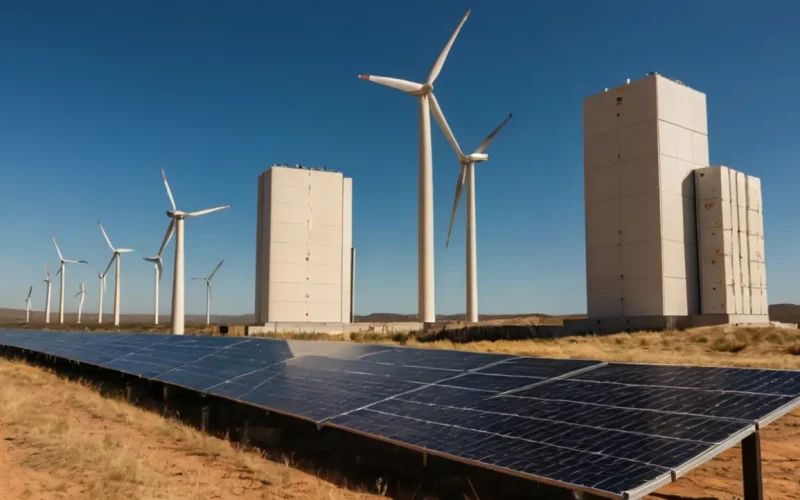
South Africa’s plan to move away from coal: 8 steps to make it succeed

South Africa’s plan to move away from coal: 8 steps to make it succeed

THE South African government’s Just Energy Transition Implementation Plan was launched in November 2023. It is a roadmap guiding the country away from reliance on coal-fired power towards renewable energy alternatives by 2027. It aims to include all communities and workers who will be affected by the energy transition. The plan says everyone should have access to electricity through a mix which includes renewable energy. This energy transition must also create new employment opportunities, particularly in the burgeoning renewable energy sector, and contribute to economic development. At the same time, it must set up an energy future where power is…
Read More