Our website use cookies to improve and personalize your experience and to display advertisements (if any). Our website may also include cookies from third parties like Google Adsense, Google Analytics, and Youtube. By using the website, you consent to the use of cookies.

Electric vehicles could soon be cheaper than petrol cars in Africa – if financing barriers fall

Electric vehicles could soon be cheaper than petrol cars in Africa – if financing barriers fall

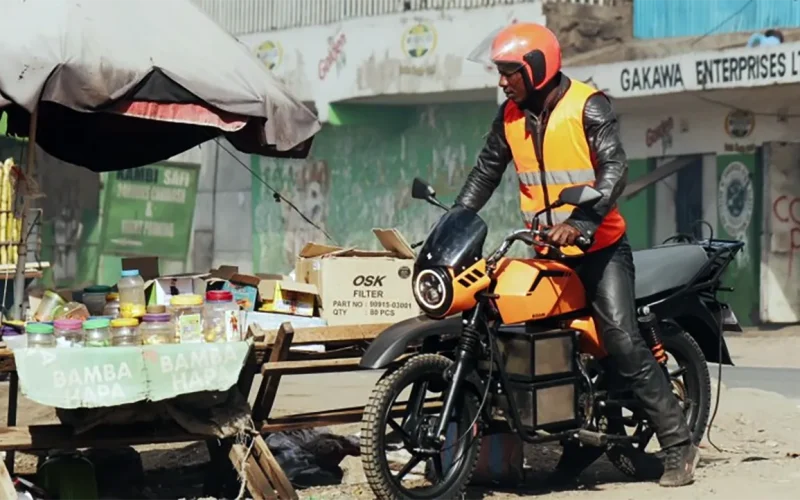
THE cost of electric vehicles (EVs) has long looked like a barrier to adoption in Africa. Most researchers didn’t expect battery power to become affordable enough to replace petrol or diesel on the continent before 2040. But falling battery costs, surging global EV production and abundant solar resources are changing that view. Our new research shows that EVs, particularly when paired with off-grid solar charging, may be cheaper than petrol- or diesel-powered cars in many African countries in the not-so-distant future. However, several factors are still limiting uptake. We argue that financing is a big one. We are researchers working…
Read More
Solar power is taking off in Malawi: but poor households need financial help to make it work for them

Solar power is taking off in Malawi: but poor households need financial help to make it work for them

ACCESS to electricity is widely seen as a cornerstone of sustainable development. It improves quality of life, enables household income generation, and raises living standards. Despite this, 760 million people around the world live without it. The gap is largest in Africa. Eighty percent of people without electricity connections live in sub-Saharan Africa, particularly in rural and hard-to-reach areas. Malawi is a small, landlocked country with one of the lowest electricity access rates in the world. In 2023, only 16% of Malawians had access to electricity, and access was just 6% in rural areas. In Malawi and many other countries…
Read More
Ghana’s cities are getting hotter: they need more trees to keep them cool

Ghana’s cities are getting hotter: they need more trees to keep them cool

GHANA’S cities are expanding at a breathtaking pace. From Madina to Cape Coast, from Sekondi-Takoradi to Tamale, concrete infrastructure is rising, wetlands are shrinking, and open lands are disappearing. But something else is rising quietly alongside this growth. Heat. And not just ordinary heat – dangerous urban heat. Urban heat refers to the rise in temperatures in built-up areas compared to surrounding rural environments, a phenomenon known as the urban heat island effect. It is caused by dense construction materials such as concrete and asphalt that absorb and re-radiate heat, limited vegetation cover, reduced airflow between buildings, and heat generated…
Read More
Tanzania is losing fertile land to soil erosion: what’s happening and what can be done

Tanzania is losing fertile land to soil erosion: what’s happening and what can be done

ACROSS large parts of northern Tanzania, gully erosion – soil erosion caused by flowing water – is cutting deep scars through fertile farmland, grazing areas, roads and even villages. These gullies grow faster every year, and what was once a slow environmental process has accelerated into a humanitarian threat. It has serious consequences for food and livelihood security, infrastructure and biodiversity. Soil erosion is a natural process. Rainfall breaks soil into particles, and flowing water transports them downslope into rivers and lakes. In Tanzania, however, erosion has intensified dramatically over the past 120 years. The region’s steep terrain, highly variable…
Read More
Climate change is hurting Kenyan women working in coastal tourism – they explain how

Climate change is hurting Kenyan women working in coastal tourism – they explain how

I returned home to Kenya’s coast after months of winter in Germany, and the heat felt extreme. Temperatures rose past 35°C by midday under the blazing sun of Kilifi, a tourism destination on Kenya’s shores of the Western Indian Ocean. It is here that international visitors come for pristine beaches, marine excursions, and trips to nearby islands and creeks. As a tourism researcher, I study how women earn a living through coastal small businesses in times of environmental change. My research work in Kilifi brought me into close contact with the everyday realities of climate change in Kenya’s coastal tourist…
Read More
Nigeria and South Africa plan to boost fossil fuel production, risking their climate change pledges

Nigeria and South Africa plan to boost fossil fuel production, risking their climate change pledges

JUST 20 countries produce 80% of the world’s oil, gas and coal. Since 2019, researchers have released regular reports analysing how these governments plan to continue drilling and mining for fossil fuels – and how those plans diverge from the global climate goal set out in the Paris Agreement, which aims to limit temperature rise to less than 1.5°C above pre-industrial levels. The 2025 Production Gap Report found that many of these countries still plan to produce far more fossil fuels by 2030 than is safe for the climate. Scientists Emily Ghosh, Derik Broekhoff, Bathandwa Vazi and Olivier Bois von…
Read More
Climate adaptation has a new global plan. What the Belem indicators are and why they matter to Africa

Climate adaptation has a new global plan. What the Belem indicators are and why they matter to Africa

AT the 2025 global climate summit, COP30, held in Belém, Brazil, one decision stood out with major consequences for Africa: countries agreed on a new set of progress indicators. The “Belém Adaptation Indicators” were developed through a two-year UN process. Although the name may sound technical, the idea is straightforward. For the first time, countries now have a shared way to understand whether the world is actually improving at adapting to climate impacts. Climate adaptation means taking actions to prepare for and cope with the impacts of climate change. These impacts include floods, droughts, heatwaves, coastal erosion, crop losses and…
Read More
Africa’s rarest carnivore: the story of the first Ethiopian wolf ever captured, nursed and returned to the wild

Africa’s rarest carnivore: the story of the first Ethiopian wolf ever captured, nursed and returned to the wild

WHAT’S the value of one animal? When a wild animal is found badly injured, the most humane option is often euthanasia to prevent further suffering. That’s what usually happens, and sometimes for good reason. Even when the resources to rescue one animal are available, a rehabilitated animal brought back into the wild might be rejected by its group or struggle to find food or escape predators. If it does survive, it may fail to reproduce and leave no lasting mark on the population. But every so often, a single case comes along where one animal becomes evidence that intervention can…
Read More
Bloemfontein, South Africa: how to turn clear skies, a planetarium and an observatory into a tourist attraction

Bloemfontein, South Africa: how to turn clear skies, a planetarium and an observatory into a tourist attraction

ASTRO-TOURISM is a niche form of tourism where visitors explore the night sky through stargazing events, guided tours, educational presentations and digital astronomy experiences. Unlike mass tourism, astro-tourism focuses on learning rather than just sightseeing. Astro-tourism could also offer a lifeline to places that don’t have major natural resource attractions that draw tourists. One place that could benefit from astro-tourism is Bloemfontein, situated in the heart of South Africa’s Free State province. It’s never been considered one of South Africa’s popular tourist destinations. That’s because the city lacks a major attraction like the Kruger National Park or Cape Town’s Table…
Read More
South Africa’s G20 presidency is over – what did it achieve for climate and clean energy in Africa?

South Africa’s G20 presidency is over – what did it achieve for climate and clean energy in Africa?

SOUTH Africa opened its G20 presidency with an ambitious message for a world divided by conflict and economic strain: solidarity, equality and sustainability. The Johannesburg G20 leaders’ summit tried to mend deep geopolitical rifts. Even those who chose to boycott the summit remained included, with their chairs left symbolically empty. A G20 presidency is more than a summit of political leaders. It is a series of dialogues between countries that represent 78.9% of the world’s population. The South Africa G20 presidency hosted 177 official meetings and was guided by 15 thematic working groups and groups representing youth, business, women’s rights,…
Read More