Our website use cookies to improve and personalize your experience and to display advertisements (if any). Our website may also include cookies from third parties like Google Adsense, Google Analytics, and Youtube. By using the website, you consent to the use of cookies.

Zambia’s factories burn too much coal – how reusing hot water can cut energy use

Zambia’s factories burn too much coal – how reusing hot water can cut energy use

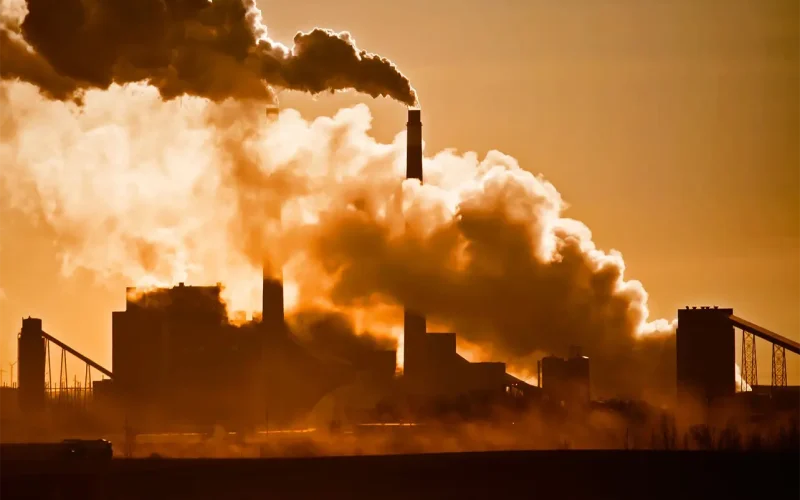
ZAMBIA wants to cut its national greenhouse gas emissions almost in half by 2030. But its 8th National Development Plan aims to transform the country into a “prosperous middle-income nation by 2030” through industrialisation. And here’s the challenge: there isn’t an obvious way to replace the fossil fuels that are used in growing industries. Zambia is badly affected by the climate crisis, with six extended countrywide droughts since 2000. In 2024, the drought was declared a state of emergency and caused nationwide power cuts. We are a transdisciplinary research team of engineers, geographers, social and political scientists, and managers from…
Read More
‘Iron Man’ Downey backs DNA mapping of rivers, wetlands to protect wildlife

‘Iron Man’ Downey backs DNA mapping of rivers, wetlands to protect wildlife

MICHAEL TAYLOR "IRON MAN" star Robert Downey Jr. has backed a new project that will use DNA technology to map information on fish and other wildlife living in and around rivers, lakes and wetlands to advance conservation and attract more money for such efforts. The eBioAtlas, launched on Thursday by the International Union for Conservation of Nature (IUCN) and UK-based company NatureMetrics, aims to unlock private investment and guide government policy on biodiversity. "We are at a point ... where we understand the urgency of addressing biodiversity loss," NatureMetrics founder Kat Bruce told the Thomson Reuters Foundation. "It is really being talked…
Read More
TotalEnergies: French court ruling over false climate claims could boost African cases against polluters

TotalEnergies: French court ruling over false climate claims could boost African cases against polluters

A court ruling in France could give African countries more power to hold corporations to account when they pretend to be environmentally friendly. The Paris Judicial Court found global oil and gas giant TotalEnergies guilty of misleading commercial practices in a case brought by three environmental organisations. The October 2025 ruling marks the first time a fossil fuel major has been punished by the courts for greenwashing – where a company makes misleading claims about being environmentally friendly. TotalEnergies' greenhouse gas emissions are increasing every year, yet in an advertising campaign, the company presented itself as a “major player in…
Read More
How African reps held their ground at COP30

How African reps held their ground at COP30

A determined African bloc mounted a formidable challenge at the latest round of global climate negotiations at COP30, refusing to adopt a framework it views as an unfair shifting of financial burdens and political responsibility onto the low and middle-income countries. The confrontation centred on a technical but politically charged set of measurements known as the global goal on adaptation (GGA) indicator list. For African nations and their allies, the list is not a mere statistical exercise but a mechanism that could lock in inequity for decades. The deadlock revealed a fundamental rift in how the world measures progress on…
Read More
COP30: Africa needs funding to adapt to the climate crisis – what negotiators need to do to secure it

COP30: Africa needs funding to adapt to the climate crisis – what negotiators need to do to secure it

SINCE it was set up in 1992, the United Nations Framework Convention on Climate Change has focused mainly on mitigation. Mitigating the effects of climate change is all about transitioning away from fossil fuels to renewable energy, improving energy efficiency and setting up new forests to absorb greenhouse gas emissions. But this hasn’t worked; greenhouse gas emissions have continued to rise. The impacts of climate change, such as drought and floods, are escalating in frequency and more intensity. The financial costs of paying for the damage caused by extreme weather events are spiralling out of control. These realities have meant…
Read More
The three big reasons why Mozambique is not adapting to climate change and what needs to be done

The three big reasons why Mozambique is not adapting to climate change and what needs to be done

AROUND the world, societies are looking for ways to live with climate change. Adapting to a hotter and harsher future means scientists, governments, and communities must find ways to protect essential resources like land, homes, farms and water. Buildings need to stay cooler and withstand storms and floods, and crops need to survive more severe rains and droughts. Biologist and climate change scientist Serafino Afonso Rui Mucova studies how nature responds to human activity and changing weather in Mozambique, and how people can help ecosystems cope with climate change. He spoke with The Conversation Africa about what’s holding Mozambique back…
Read More
“When harvests fail and rains delay” Emily Nderitu shows the world how to talk about climate change in Africa

“When harvests fail and rains delay” Emily Nderitu shows the world how to talk about climate change in Africa

THE humid air of the Amazon hangs heavy as dusk settles over the sprawling city of Belem, a world away from the familiar heat of her native Kenya. Yet for Emily Wanja Nderitu, the setting feels familiar in another way, for it is once again a frontline in the global climate struggle, a place where stories must be told if justice is to be won. Nderitu, who works with Doc Society, a global organisation supporting independent storytellers, believes that Africa’s climate narrative must be reclaimed from the margins. “COP is an event. Climate is not an event,” she said with…
Read More
COP30: Zimbabwe’s forest and energy projects reveal the downside of carbon credits

COP30: Zimbabwe’s forest and energy projects reveal the downside of carbon credits

CARBON offsets are a way for companies or countries that pollute the air to “cancel out” some of their carbon emissions by funding projects that protect forests, plant trees, or provide clean energy – sometimes on the other side of the world. Polluting companies in the US, Europe, Asia or elsewhere can buy one carbon credit from a green project anywhere in exchange for emitting one metric tonne of carbon dioxide (CO2). But do these projects benefit the African countries that host them? Rural development researcher Fadzai Chipato studied two carbon offset projects in Zimbabwe. Her research found that these…
Read More
Five key issues at the UN climate summit in Brazil – and why they matter to you and the planet

Five key issues at the UN climate summit in Brazil – and why they matter to you and the planet

THE world’s most important climate summit – known this year as COP30 – has begun in the Amazonian port city of Belém, Brazil. It promises to be contentious: key countries haven’t submitted new climate plans, and negotiations are held up by disputes over who should pay for climate action. We attended a preliminary round of negotiations in June, which ended with very few concrete agreements. Many outcome documents were instead heavily caveated as “not agreed”, “open to revision”, or “without formal status”. Those fractious pre-summit talks followed a disappointing COP29 in Azerbaijan last year. This year, here are five key…
Read More
Climate tipping points are close: scientists urge radical action before it’s too late

Climate tipping points are close: scientists urge radical action before it’s too late

New research has found that the world has reached the first of many Earth system tipping points. These will cause catastrophic harm unless humanity takes urgent action. A tipping point is a moment in the Earth’s climate system where even small changes can lead to significant, often irreversible consequences. Some of the most well-known global tipping points are melting ice sheets at the north and south poles, the dieback of the Amazon rainforest and the collapse of vital ocean currents. If these happen, food systems could break down and sea levels would rise rapidly. Tipping points also speed up global…
Read More