Our website use cookies to improve and personalize your experience and to display advertisements (if any). Our website may also include cookies from third parties like Google Adsense, Google Analytics, and Youtube. By using the website, you consent to the use of cookies.

Grid or solar: looking for the best energy solution for the rural poor

Grid or solar: looking for the best energy solution for the rural poor

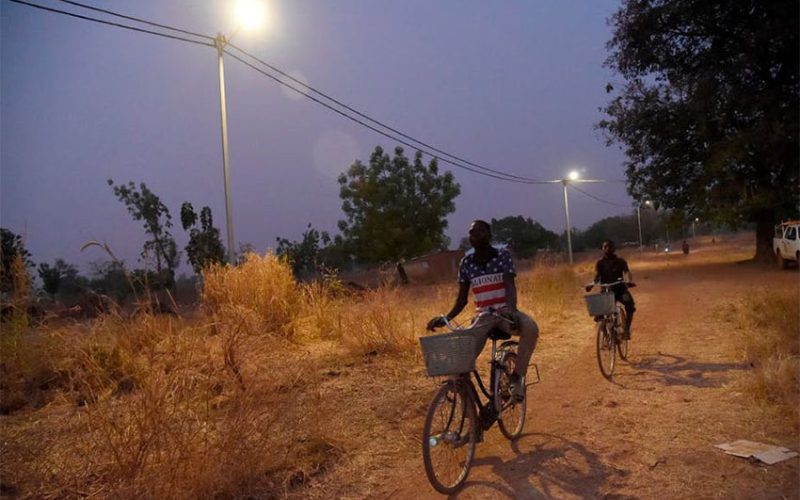
SOUTH Asia has made tremendous progress in connecting rural areas to the electricity grid but the number of people in Africa without access has scarcely changed since 2010. More than half a billion people in Africa don’t have access to electricity, meaning the continent hosts 72% of the world’s non-electrified population. The UN Sustainable Development Goals have set a universal goal of ensuring access to affordable, reliable, sustainable and modern energy for all by 2030. To achieve this, the continent will require a big electrification push. But what kind of electricity makes sense in rural Africa to make the most…
Read More
More countries hike climate pledges, piling pressure on major emitters

More countries hike climate pledges, piling pressure on major emitters

KATE ABNETT A group of mostly smaller countries submitted new, more ambitious climate pledges to the United Nations this week, raising pressure on big emitters including China to do the same ahead of a major U.N. climate summit in November. U.N. climate chief Patricia Espinosa said that as of Saturday the United Nations had received new pledges from 110 countries, out of the nearly 200 that signed the 2015 Paris climate accord. "It is still far from satisfactory since only a little over half the parties (58%) have met the cut-off deadline," Espinosa said in a statement, urging laggards to…
Read More
Africa’s leap to clean energy seen needing policy change, investment

Africa’s leap to clean energy seen needing policy change, investment

KIM HARRISBERG RENEWABLE energy is expected to account for less than 10% of Africa's electricity generation by 2030, showing massive investment is needed to unlock the continent's wind and solar power potential, researchers said on Monday. Drastic policy change and investment will also be needed if the notion of Africa "leapfrogging to renewables" is plausible, according to the authors of a new study by the University of Oxford, published in the academic journal Nature Energy. Using machine-learning techniques to analyse more than 2,500 power plants in 54 African countries, the article showed non-hydro renewable energy, such as geothermal, solar and wind energy,…
Read More
Donors pledge $14 bln for ‘Green Wall’ to hold back Sahara

Donors pledge $14 bln for ‘Green Wall’ to hold back Sahara

DEVELOPMENT banks and states have pledged a total of $14.32 billion over the next four years to build a "Great Green Wall" to help contain desertification in Africa's northern Sahel region, French President Emmanuel Macron has announced. Speaking at an international biodiversity summit in Paris that his government is hosting, Macron said the pledges had exceeded the initial target of $10 billion. Creeping desertification of land on the edges of the Sahara desert that used to be productive is plunging people into desperate poverty and driving some to migrate. The project covers a strip of land stretching 8,000 km (5,000…
Read More
Global temperatures in 2020 among highest on record – WMO

Global temperatures in 2020 among highest on record – WMO

TIMOTHY GARDNER Global temperatures in 2020 were among the highest on record and rivaled 2016 as the hottest year ever, according to international data compiled by the World Meteorological Organization and released on Thursday. The heat came even as a global economic slowdown from the COVID-19 pandemic cut deeply into emissions from fossil fuels, adding evidence that carbon dioxide concentrations already in the atmosphere have set the planet on a warming track. The WMO report included data from the U.S. National Oceanic and Atmospheric Administration (NOAA) and the UK Met Office, both of which ranked 2020 as the second-warmest year…
Read More
COVID-19 has shown what happens when we destroy nature – 2021 must be the year we change course

COVID-19 has shown what happens when we destroy nature – 2021 must be the year we change course

MARCO LAMBERTIN FOR years, we have ignored the silent crisis of biodiversity loss, but we cannot risk another damaging decade for nature COVID-19 is an unprecedented global health crisis. But it has also been a wake-up call to the risks posed by our destructive relationship with the natural world. The 2021 Global Risk Report, published this week by the World Economic Forum, reveals that environmental concerns including climate change and biodiversity loss - linked to the rise in global pandemics - are among the top long-term risks the world will likely face in the next 10 years. Science is clear…
Read More
Worried about Earth’s future? Well, the outlook is worse than even scientists can grasp

Worried about Earth’s future? Well, the outlook is worse than even scientists can grasp

COREY J. A. BRADSHAW, Matthew Flinders Professor of Global Ecology and Models Theme Leader for the ARC Centre of Excellence for Australian Biodiversity and Heritage, Flinders University DANIEL T. BLUMSTEIN, Professor in the Department of Ecology and Evolutionary Biology and the Institute of the Environment and Sustainability, University of California, Los Angeles PAUL EHRLICH, President, Center for Conservation Biology, Bing Professor of Population Studies, Stanford University ANYONE with even a passing interest in the global environment knows all is not well. But just how bad is the situation? Our new paper shows the outlook for life on Earth is more…
Read More
Why rural electrification won’t fix deforestation in Zimbabwe

Why rural electrification won’t fix deforestation in Zimbabwe

ELLEN FUNGISAI CHIPANGO, Postdoctoral research fellow, University of Johannesburg RELIANCE on biomass such as fuelwood for energy in rural areas has a strong bearing on Zimbabwe’s environment. Rural communities in Zimbabwe meet 94% of their cooking energy requirements by using traditional fuels, mainly fuelwood, and 20% of urban households use wood as the main cooking fuel. For this reason, unsustainable fuelwood use patterns are driving deforestation. Estimates are that deforestation has been high in the country, peaking at 330,000 hectares of forests destroyed between 2010 and 2014. Policymakers attribute deforestation to human activities such as the clearing of land for…
Read More
After drought, Kenya’s herders hammered by coronavirus curbs

After drought, Kenya’s herders hammered by coronavirus curbs

WESLEY LANGAT PETER  Olankai, who keeps cattle, sheep and goats, has struggled to buy and sell his animals in Kenya's Kajiado County as the coronavirus pandemic closed markets and ushered in movement restrictions and curfews that have eaten away at his income. "Our livelihood is reliant on livestock - we sell these animals to get money to buy food and other family needs, but now we can't," he said earlier this month. Olankai, 46, lives in Kisamis village in remote Maasai territory where there is no road network and connecting with buyers is a challenge. Now at home with his…
Read More
With climate change, conflict and COVID, stresses grow for Malian villagers

With climate change, conflict and COVID, stresses grow for Malian villagers

LAURIE GOERING NEARLY four decades ago, farmers in the small central Malian village of Dlonguebougou grew their millet crops with little more than hoes, and local mud-hut shops sold just the basics: salt, sugar, tea, cola nuts, kerosene and cigarettes. The vast empty reaches of the Sahel, stretching north into the Sahara Desert, offered endless grazing and land for farm expansion, residents told Camilla Toulmin, a researcher who has chronicled the community since the early 1980s. Today, however, life is changing in Dlonguebougou, as in many other villages across the drylands of West Africa. Some mud homes now sport satellite…
Read More